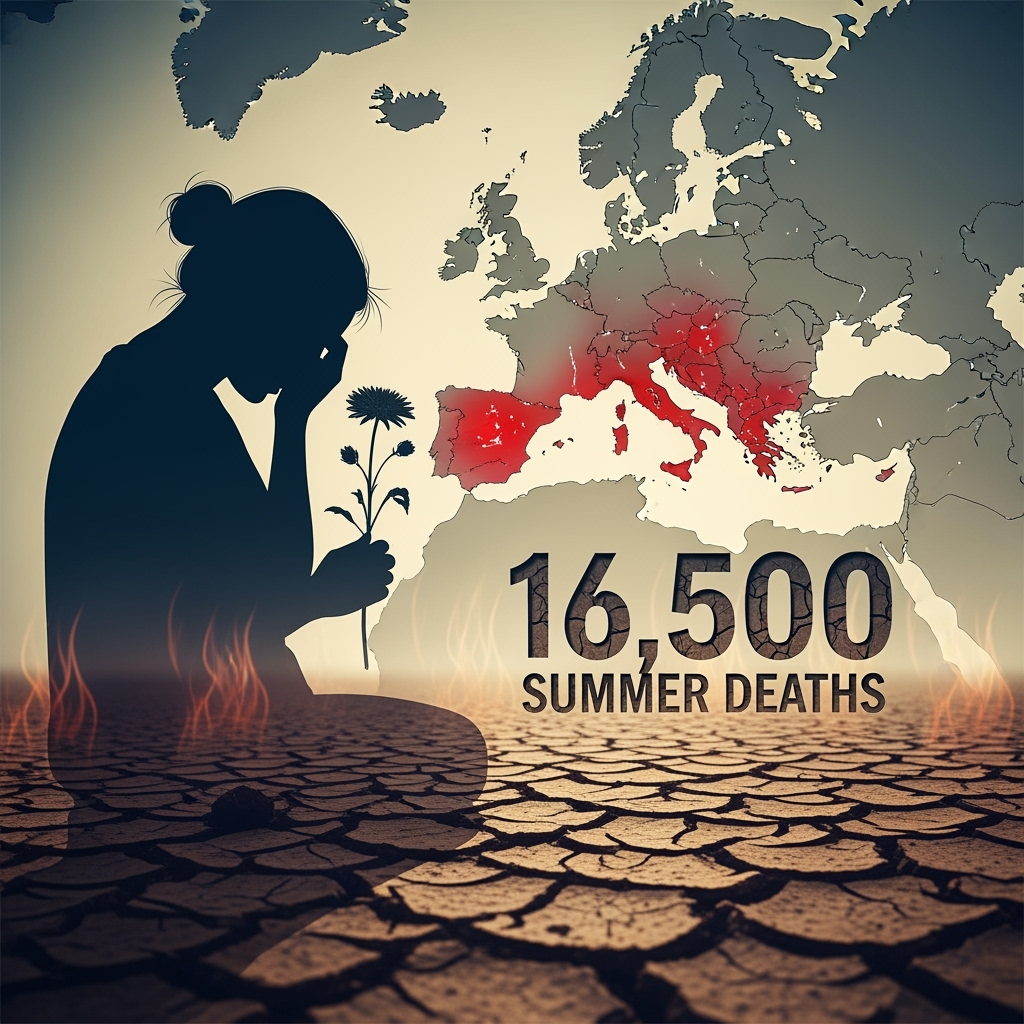
On Wednesday, scientists revealed that human-induced climate change, specifically rising temperatures, may have caused around 16,500 deaths in European cities this summer. This estimate was derived from models predicting these impacts before official statistics are available.
This swift study is part of ongoing efforts by climate and health experts to promptly associate heatwave-related fatalities with global warming, bypassing the prolonged process of peer-reviewed publication.
It’s important to note these figures weren’t directly recorded in the cities but were projections based on modeling methods validated in previous studies.
Heatwave death tolls are often underestimated because hospitals typically record deaths under heart, respiratory, or other health issues, which are exacerbated in the elderly during extreme heat.
A UK research team used climate models to estimate that global warming increased temperatures by an average of 2.2 degrees Celsius in 854 European cities from June to August.
Based on historical data showing how high temperatures raise mortality rates, they estimated about 24,400 additional deaths occurred in those cities during this period.
They compared this figure to a scenario without the 1.3C increase from human-driven climate change.
Approximately 70%—or 16,500—of these additional deaths were linked to global warming, according to the rapid attribution study.
This indicates climate change may have tripled heat-related deaths this summer, as noted by experts from Imperial College London and the London School of Hygiene & Tropical Medicine.
The team had previously used similar methods to analyze a single European heatwave starting in late June, finding comparable results.
Due to delays in data publication by most countries, researchers couldn’t compare their estimates to actual excess deaths recorded this summer.
“Real-time statistics are currently unavailable,” but the estimates are “reasonably accurate,” said co-author Friederike Otto at a press briefing.
‘Even More Alarming’
The estimates align with previous peer-reviewed studies, like a Nature Medicine article reporting over 47,000 heat-related deaths in the summer of 2023.
Many leading climate and health researchers endorsed the study.
“What makes this finding particularly alarming is the scientifically robust yet conservative methods used,” noted atmospheric scientist Akshay Deoras from the University of Reading.
“The true death toll might be higher.”
Rome had the highest estimated climate-related deaths at 835, followed by Athens with 630, and Paris with 409.
Over 85% of these deaths were among individuals aged 65 or older.
Researchers highlighted the study does not cover all of Europe, as certain regions like the Balkans were excluded.
“A mere 2-4C rise in heatwave temperatures can mean life or death for thousands, which is why heatwaves are known as silent killers,” said co-author Garyfallos Konstantinoudis.
This year marked Europe’s fourth-hottest summer on record.