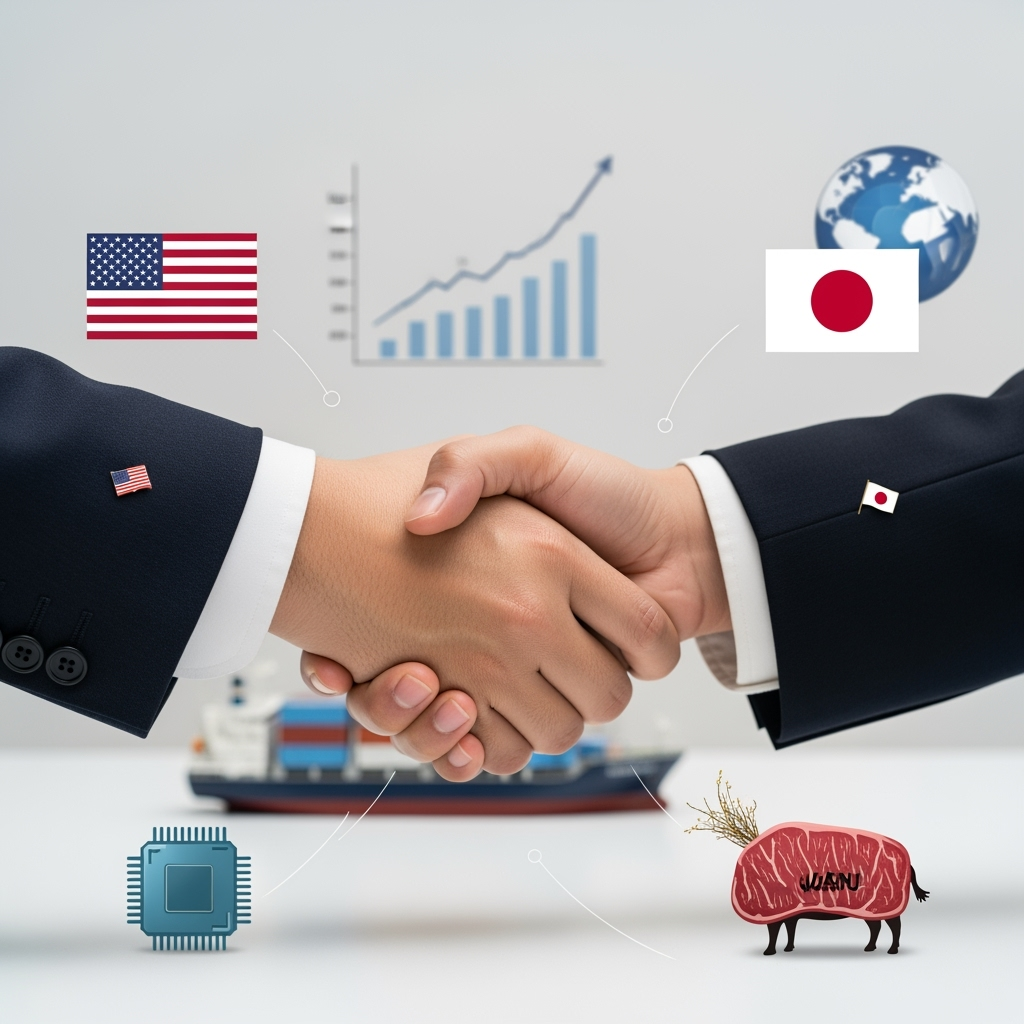
The White House statement reads: “Under the agreement, the United States will apply a basic tariff of 15 percent on nearly all Japanese goods imported into the U.S. market, with special arrangements for automotive sectors, spare parts, aviation products, generic pharmaceuticals, and natural resources not extracted or produced locally.” The statement clarified that the goal of the agreement is to achieve a balance in the trade balance and create a “predictable” environment for trade between the two countries. In return, Japan will open its markets to American goods, including a significant increase in imports of agricultural products such as rice, corn, and soybeans, along with energy and space technology, as well as lifting restrictions on American cars. The agreement also stipulated that Japan would invest around $550 billion in the U.S. economy, and U.S. President Donald Trump described the agreement with Tokyo as a “huge deal, perhaps the biggest ever.” Earlier, U.S. Treasury Secretary Scott Bisent stated that the tariffs imposed by Trump on the U.S.’s trading partners could bring the U.S. economy between $300 billion and $600 billion annually. On their part, scientists from Yale University estimated that the tariffs could cost American households $2,400 annually, noting that even if consumers decided to consume cheaper products, the losses would still be estimated at about $2,000. Trump signed an executive order on 69 countries, with the decision set to come into effect on August 7th. The percentages will range between 10 percent and 41 percent, depending on the country.