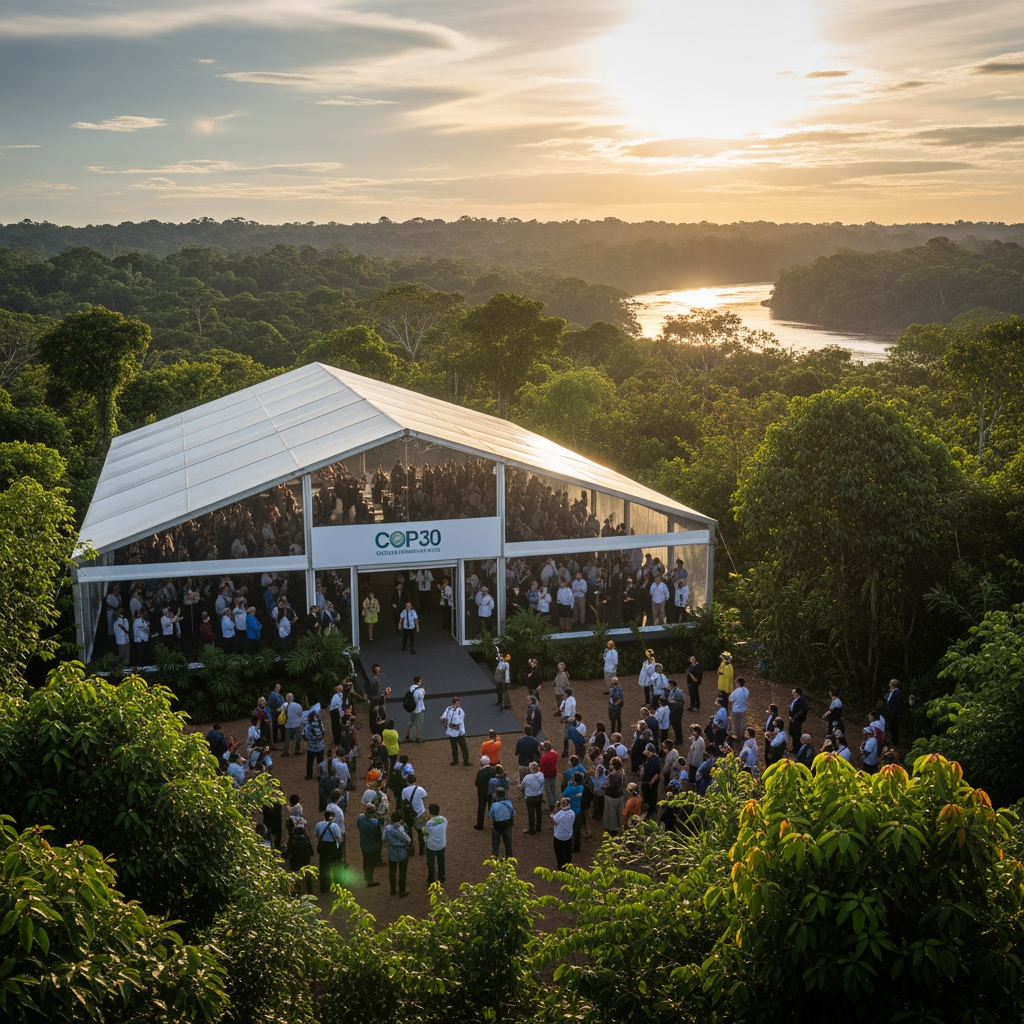
Annually, global nations unite to tackle the critical issue of climate change. This year’s event holds significant importance, as the 30th UN Climate Change Conference, known as COP30, commenced yesterday and will continue until November 21, 2025, in Belém, Brazil, a gateway to the Amazon rainforest.
For Brazil and the world, this is more than just a meeting; it’s a symbolic return. Thirty-three years ago, Brazil hosted the Rio Earth Summit, where the UNFCCC was first signed, committing nations to combat global warming. Now, as COP30 returns home, the world must face the commitments it has yet to fulfill.
Understanding COP and Its Importance
A COP, or Conference of the Parties, includes nations that signed the 1992 climate treaty. It emphasizes that climate change impacts everyone, but not equally, urging wealthier nations, the major polluters, to lead in addressing the issue.
These summits have led to key agreements like the Kyoto Protocol and the Paris Agreement, yet global emissions rise, and the 1.5°C target is slipping away. COP30 is seen as a crucial opportunity to bridge promises with action.
Why COP30 Stands Out
This year, Brazil’s presidency emphasizes action over declarations, urging nations to meet prior commitments, such as reducing fossil fuels and boosting renewable energy. COP30 will likely be the first to acknowledge the failure to remain under the 1.5°C threshold, making it a pivotal moment for the planet’s future.
Hosting the summit in Belém highlights the importance of protecting natural ecosystems, offering a voice to Indigenous and local communities, who have long safeguarded these lands.
Brazil aims for COP30 to focus on inclusion, equity, and environmental justice, ensuring vulnerable populations have representation.
COP30’s Agenda and Key Themes
COP30 will concentrate on six essential themes shaping the Action Agenda, connecting negotiations with real-world impacts.
The conference will address strategies for reducing emissions, adapting to climate change, and securing climate finance. It will also focus on renewable energy, biodiversity, and climate justice.
The event will feature Thematic Days, each exploring different agenda pillars:
> November 10–11 will discuss adaptation, cities, infrastructure, and more, setting a foundation for global resilience.
> November 12–13 will cover health, jobs, education, and introduce the Global Ethical Stocktake for fairness in climate governance.
> November 14–15 will focus on the energy transition, aiming to triple renewable energy capacity and improve efficiency.
> November 17–18 will emphasize natural stewardship and highlight voices of Indigenous peoples and local communities.
> November 19–20 will address food systems and equity, focusing on agriculture, gender, and diversity issues.
The closing sessions will stress the role of science and technology in climate solutions.
Participants
Delegates from nearly 200 countries, alongside private sector, non-profit, academic, and civil society representatives, will attend. Notable groups include the Alliance of Small Island States and G77 + China, advocating for stronger financial support.
The BASIC group will likely have a significant role, showcasing the Global South’s influence in climate policy, particularly as the U.S. steps back from its leadership role.
COP30 Overview
Event: 30th UN Climate Change Conference (COP30)
Dates: November 10–21, 2025
Venue: Belém, Pará State, Brazil
Host Nation: Brazil
Focus: Fulfilling past promises, forest protection, climate justice
Themes: Energy transition, biodiversity, food systems, social development, cities and innovation
Significance: First COP in the Amazon; marks 33 years since the Rio Earth Summit
Participants: 190+ countries, world leaders, NGOs, youth, and civil society