The ministry stated that Minister Yarub Badr and Damascus Governor Maher Idlbi held discussions with a delegation from the ‘Emirati Company for Investment in Projects.’ These talks focused on the technical, financial, and executive aspects related to the project, paving the way for drafting a memorandum of understanding that includes investment and implementation mechanisms within the framework of a partnership with the private sector. Badr mentioned that the project is in urban transport development, confirming the ministry’s commitment to securing necessary funding and technologies in cooperation with international partners, according to the highest standards.
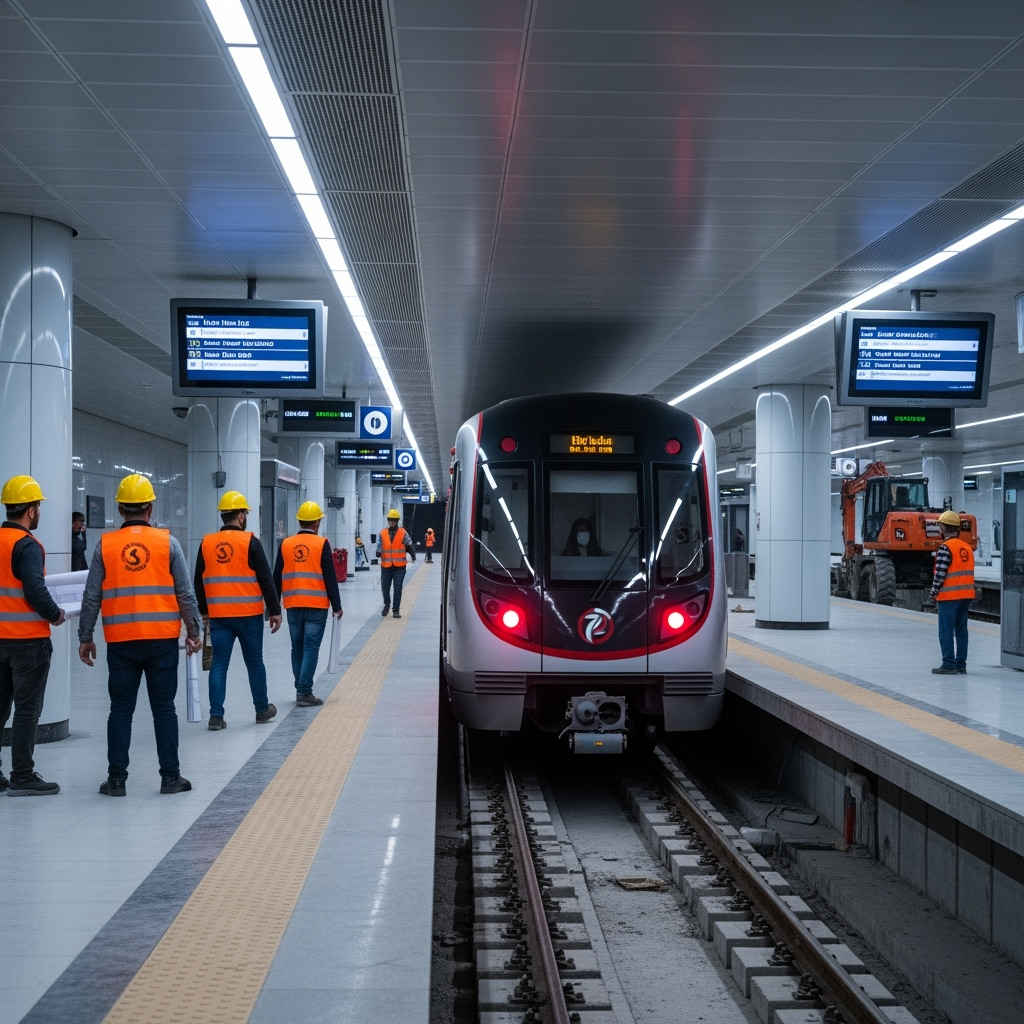
During the meeting, both parties emphasized the project as a structural axis for developing the public transport system in the capital due to its role in reducing congestion, limiting environmental pollution, and improving urban life quality. In turn, Ali Asbar, Director of Land Transport Affairs at the Syrian Ministry of Transport, stated in an interview with Syrian media that the project extends for 16.5 kilometers from Muadamiyat al-Sham in the west to Qaboun in the east, including 17 main stations designed to serve around 840,000 passengers daily.
Asbar revealed that executing the project would take between 5 to 7 years, involving the operation of between 29 to 40 trains, each with a capacity of 1,100 passengers, and speeds reaching up to 80 km/h. The ‘Damascus Metro’ project is considered one of the most prominent initiatives the Syrian government relies on to reduce congestion and enhance transport efficiency. Efforts are currently underway to reactivate it through international investment partnerships following years of suspension due to economic challenges, according to the Syrian Ministry of Transport.