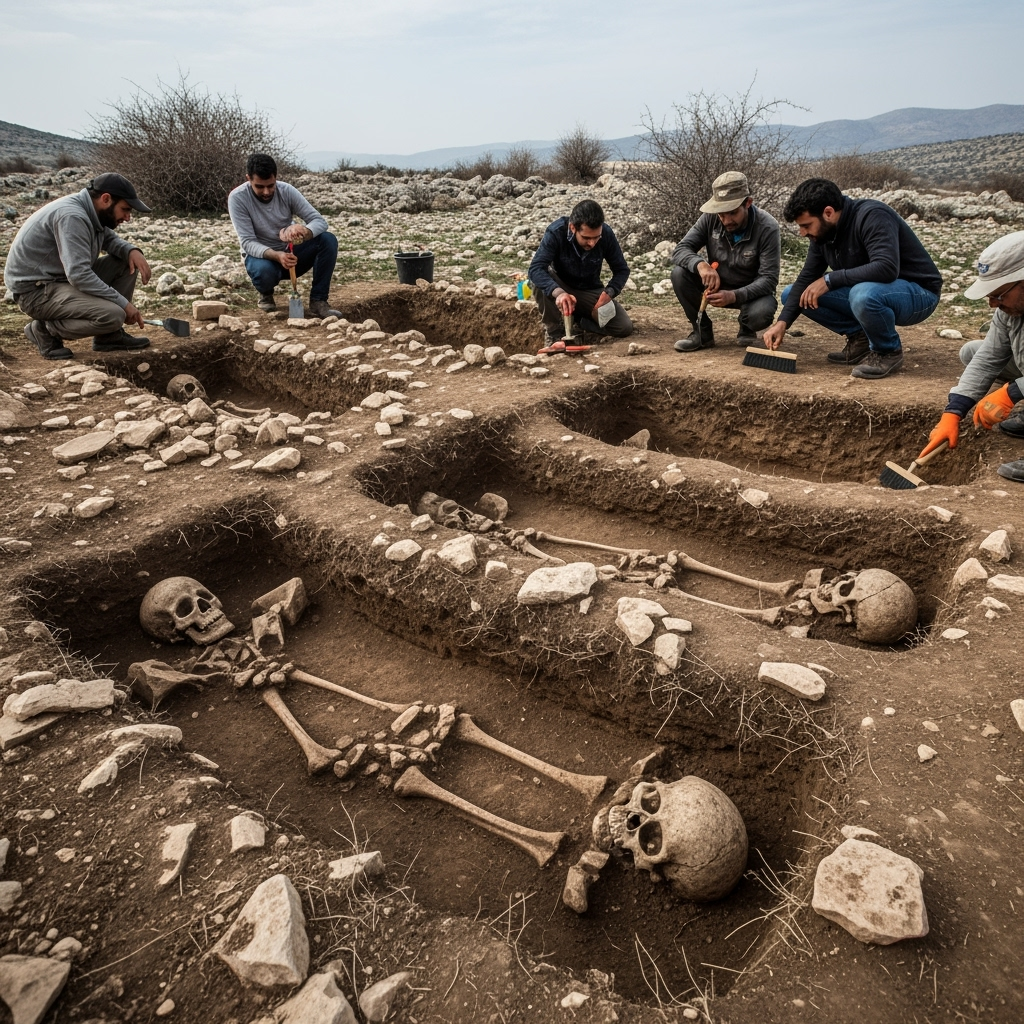
According to the report, “The graves are likely to belong to non-Lebanese individuals who participated in the battles between armed factions in the region between 2016 and 2017,” indicating that these conclusions were reached based on consistent testimonies from local chiefs, residents, and security forces present in the area, in addition to satellite imagery verification showing the changes at the site and their possible dates, according to Lebanese news.
The report states, “There is no data indicating the presence of missing persons from the town of Arsal or members of the Lebanese army and internal security forces, which reinforces the hypothesis that those buried at the site are non-Lebanese. They may be fighters from groups such as the Al-Nusra Front or ISIS terrorist organizations, or from other nationalities. Additionally, the consistent testimonies and data reported a large number of makeshift graves in this military and border area, which calls for a comprehensive plan to address this reality.”
The statement added that “Due to the nature of the site and its security risks, the committee recommended suspending any exhumation activities currently and keeping the site closed and protected until additional information becomes available or a formal request is made by the families of missing persons.” It called on the Ministry of Defense to conduct a comprehensive field survey of this border and military area and to create an accurate map of the scattered makeshift graves.
In May of last year, Lebanon announced the discovery of a mass grave in the Arsal outskirts, containing five decomposed bodies, noting that “security forces immediately moved to the scene and began an investigation.”