As dusk descends on Dubai, the streets of Karama and Bur Dubai come alive, illuminated by the festive lights and spirit of Diwali, set for Monday, October 20.
Balconies are draped with string lights, LED lamps flicker softly on window sills, and candles gleam on driveways. Sweet shops overflow with vibrant trays of sweets and savories, especially in Dubai’s historic areas.
Diwali, also called Deepavali, is a major and widely celebrated festival in India and among Indian communities globally, including in the UAE. For Indian families across the Emirates, Diwali is more than just a festival—it’s a connection to home, a way of maintaining cultural roots even when far away.
Stay updated with the latest news. Follow KT on WhatsApp Channels.
‘Giving’ While Celebrating
Geetanjali Kumar, a UAE resident for 18 years, shares that for her family, Diwali is about giving as much as it is about celebrating.
“When away from tradition, it’s the time to teach our children,” she said. “We cook traditional dishes, invite friends like family, and prepare grocery gift packs for those in need.”
Each year, Geetanjali’s family makes hampers of rice, lentils, and essentials for community helpers—security guards, drivers, and cleaners—and distributes them with their children’s assistance.
“It’s simple but teaches empathy,” she said. “It’s the essence of Diwali—spreading light in others’ lives.”
Her husband, who runs a shipping business, holds a morning prayer at his office, inviting staff families. In the evening, Geetanjali lights diyas at home, and the family gathers for dinner.
“We must observe such festivals to pass our culture to the next generation, no matter where we live,” she added. “As a teacher, I want children to learn that true joy comes from kindness and togetherness.”
Sweet Nostalgia and Glowing Memories
In Arabian Ranches, Sheetal Sablepatil busies herself with cleaning and dough kneading. For her, Diwali starts with decluttering, not lights.
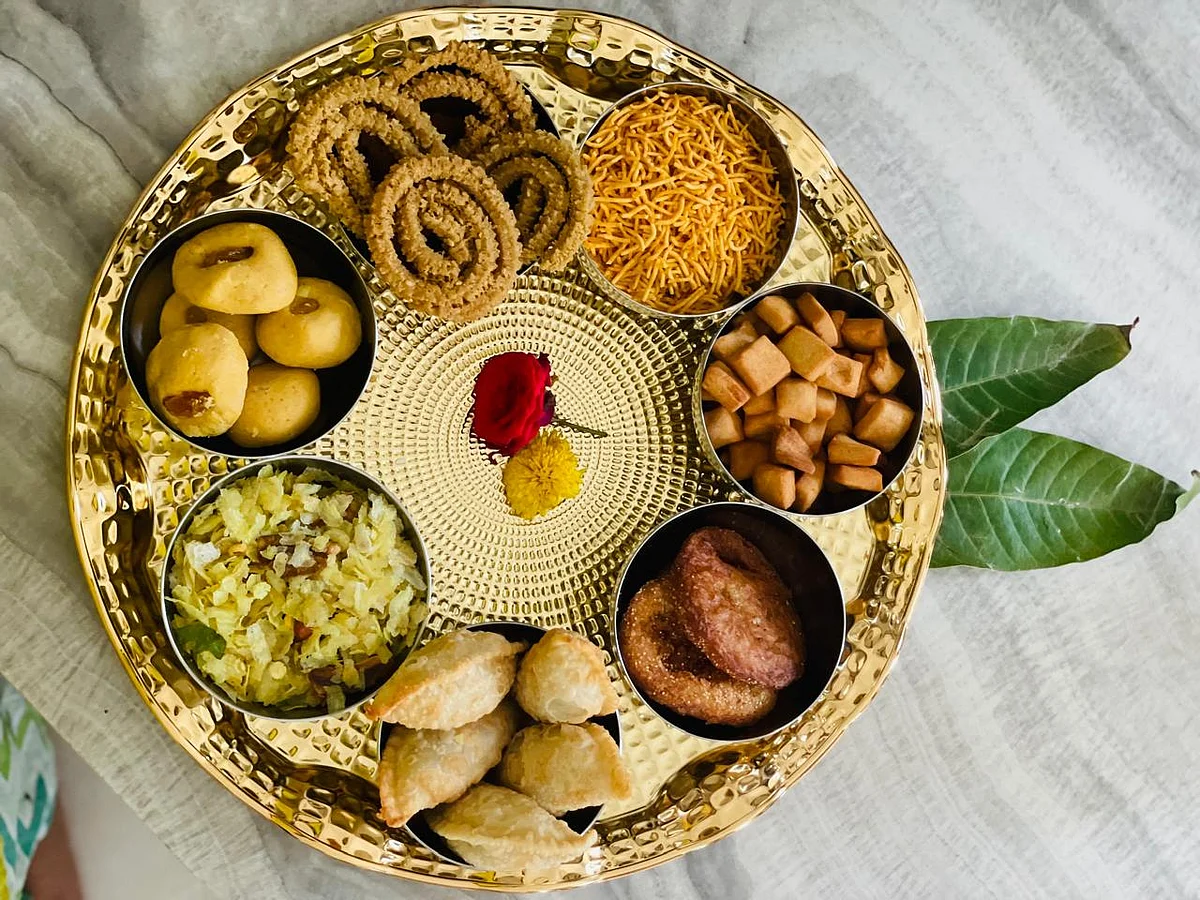
“I learned from my mother—clear the old, make room for the new,” she said. “We make karanjis, a Maharashtrian sweet filled with coconut.” Her kitchen is filled with homemade treats—laddoos, sev, chiwda, and shakkar pare.
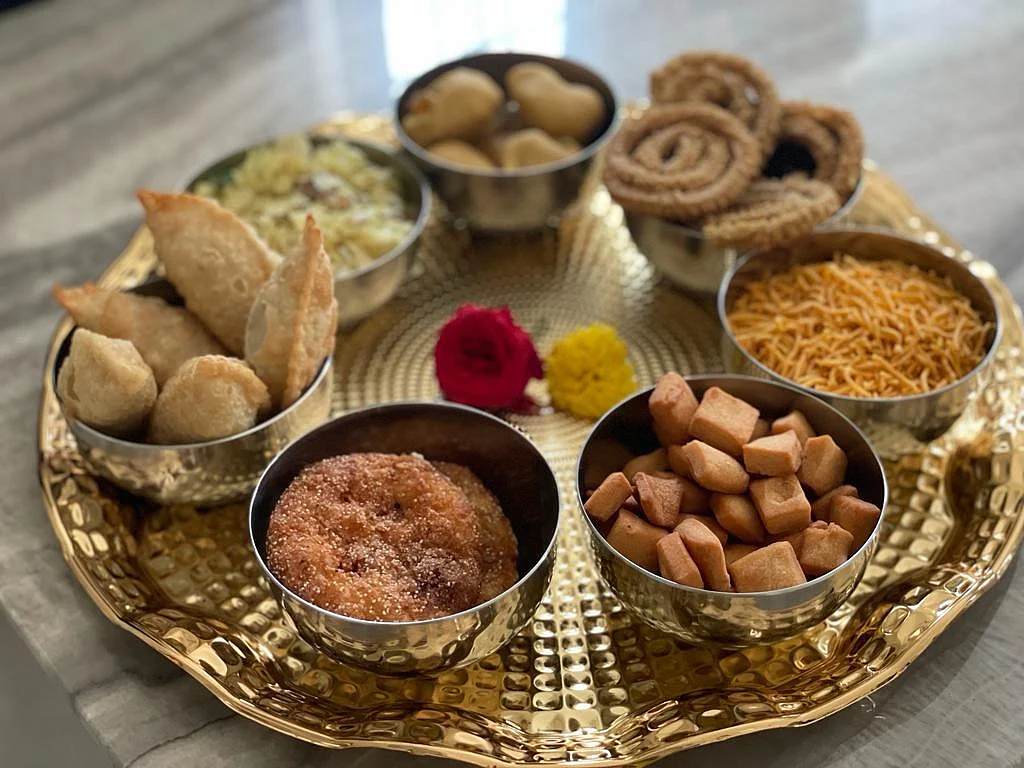
Sheetal Sablepatil prepares Diwali delicacies
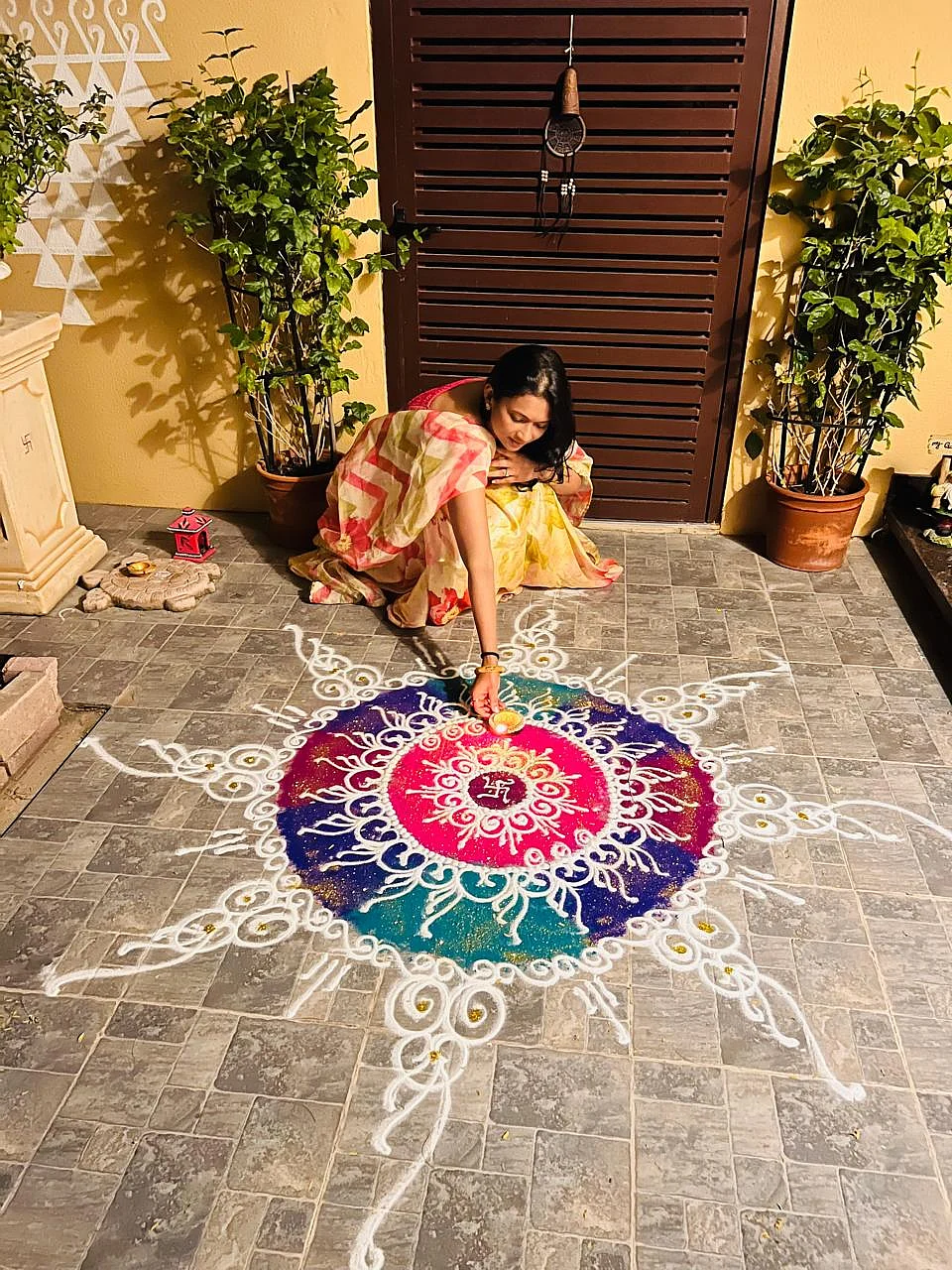
Sheetal Sablepatil creates floor patterns called rangoli to decorate her home.
“I prefer making them at home so my children experience this tradition,” Sheetal said. “They may not have school holidays in Dubai like in India, but they observe. Observation makes a big difference.”
Her villa glimmers with lights, and for 18 years, she and her closest friends gather for one evening—a tradition that endures. “Diwali is about celebrating bonds with family, friends, and everyone in our lives. I cherish it with lights and laughter, not firecracker noise,” she smiled.
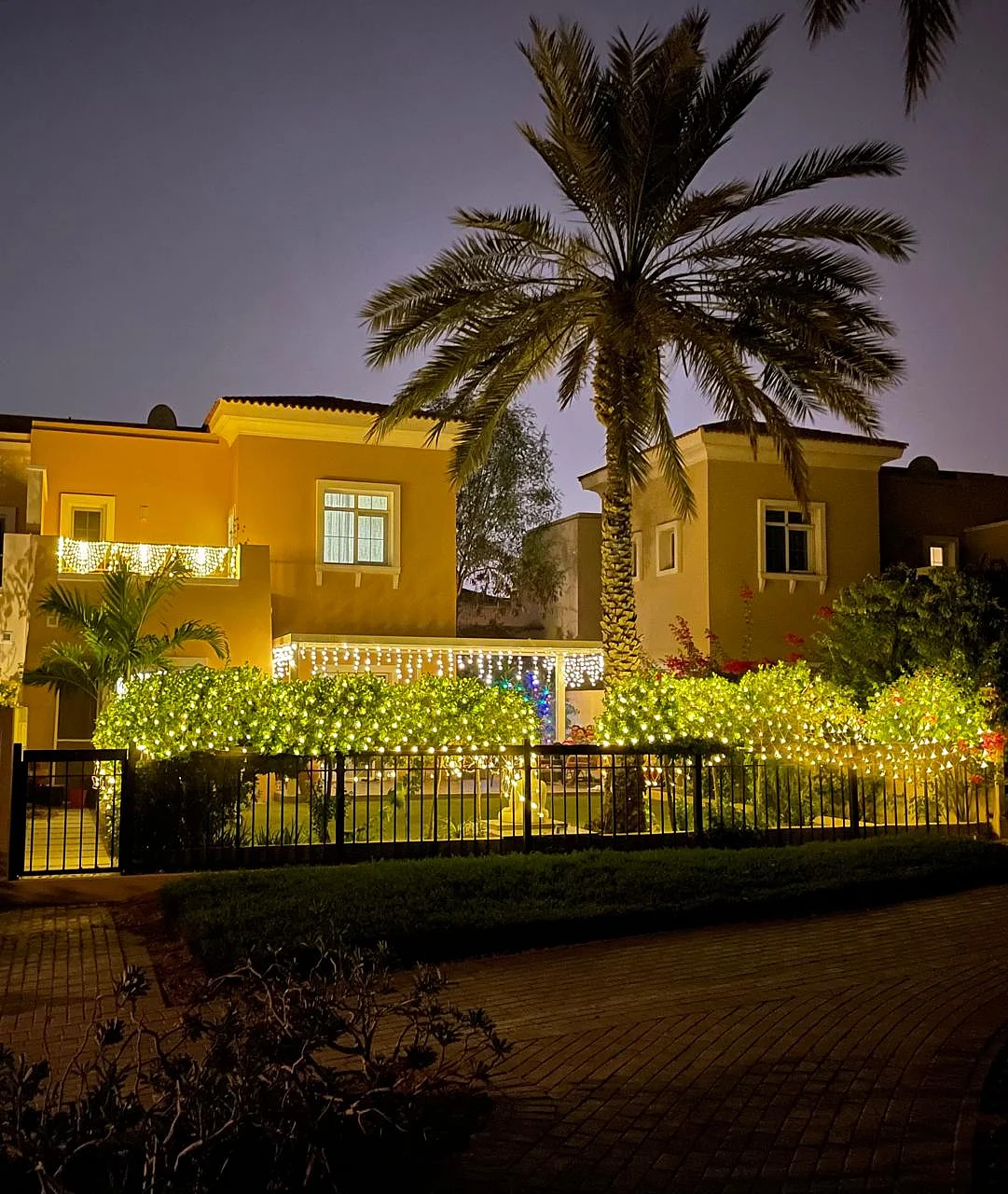
Sablepatil’s decorated Arabian Ranches villa
The Sablepatils also hold a small prayer at their office, starting a new accounting book—a tradition that persists in today’s digital age.
“It’s symbolic—beginning anew with gratitude,” she explained. “Each Diwali day has meaning and purpose. For us, it starts early with abhyang snan—the oil bath and prayers. It energizes the day.”
Her memories reach back to an unforgettable time.
“In 2006, we were in Jumeirah, and some Emirati families driving by wished us Happy Diwali. It was a warm moment, showing the city’s spirit,” she recalled.
“The lights, prayers, and food remind us of our origins,” Sheetal said. “It’s how we bring a piece of India into this beautiful city, our home.”
Balancing Faith, Festivity, and Work
In the Springs, yoga instructor Ritu Agarwal strings fairy lights across her villa’s terrace. The house glows as her family prepares for five days of Diwali—from Dhanteras to Bhai Dooj.
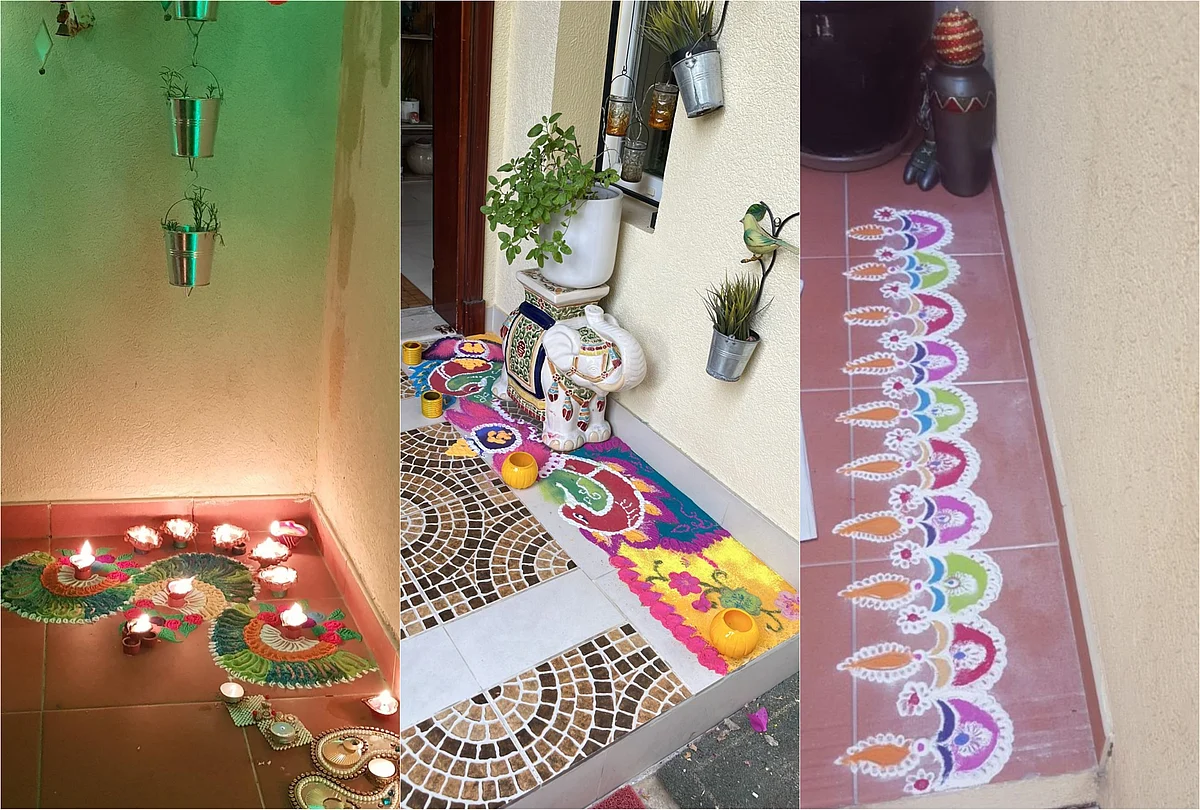
Rangoli decoration at Ritu Agarwal’s villa
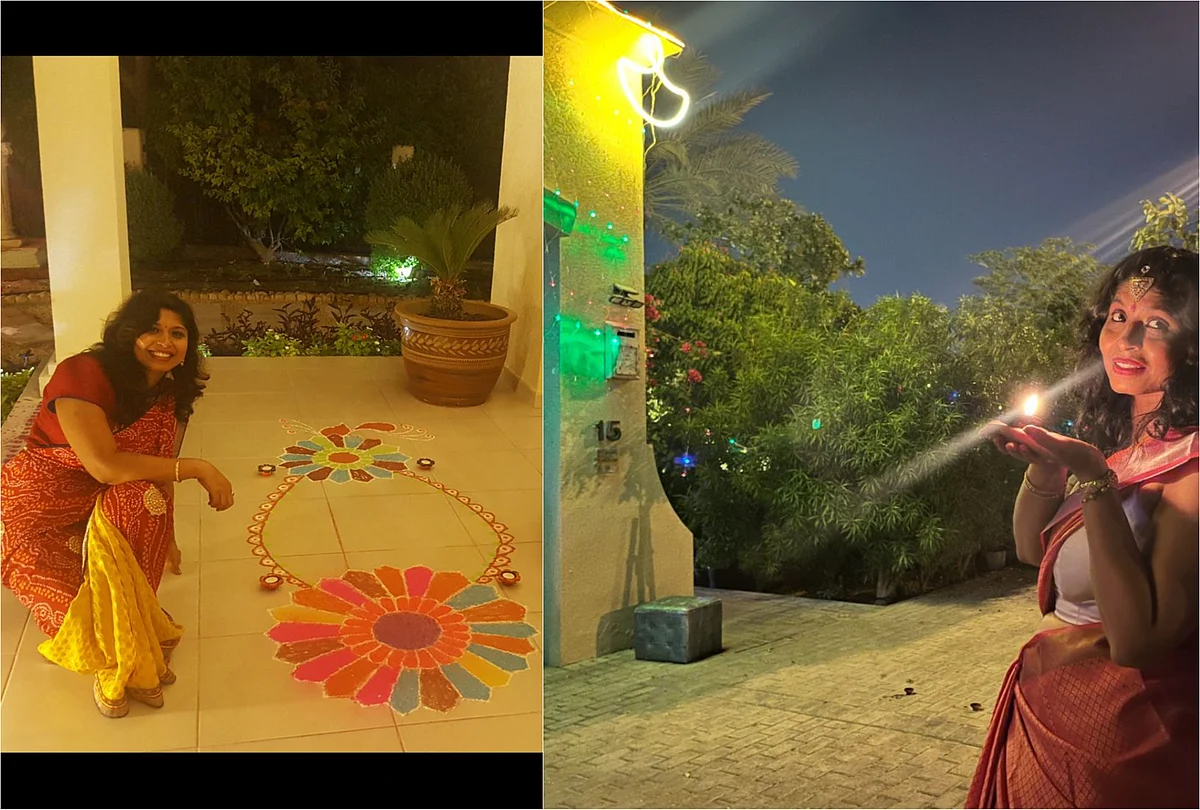
“We light up the entire villa and perform prayers most days,” she said. “On Dhanteras, we buy gold, and on the main Diwali day, we have a special prayer. One day, I prepare 18 special dishes.”
Agarwal finds beauty in celebrating in Dubai by balancing.
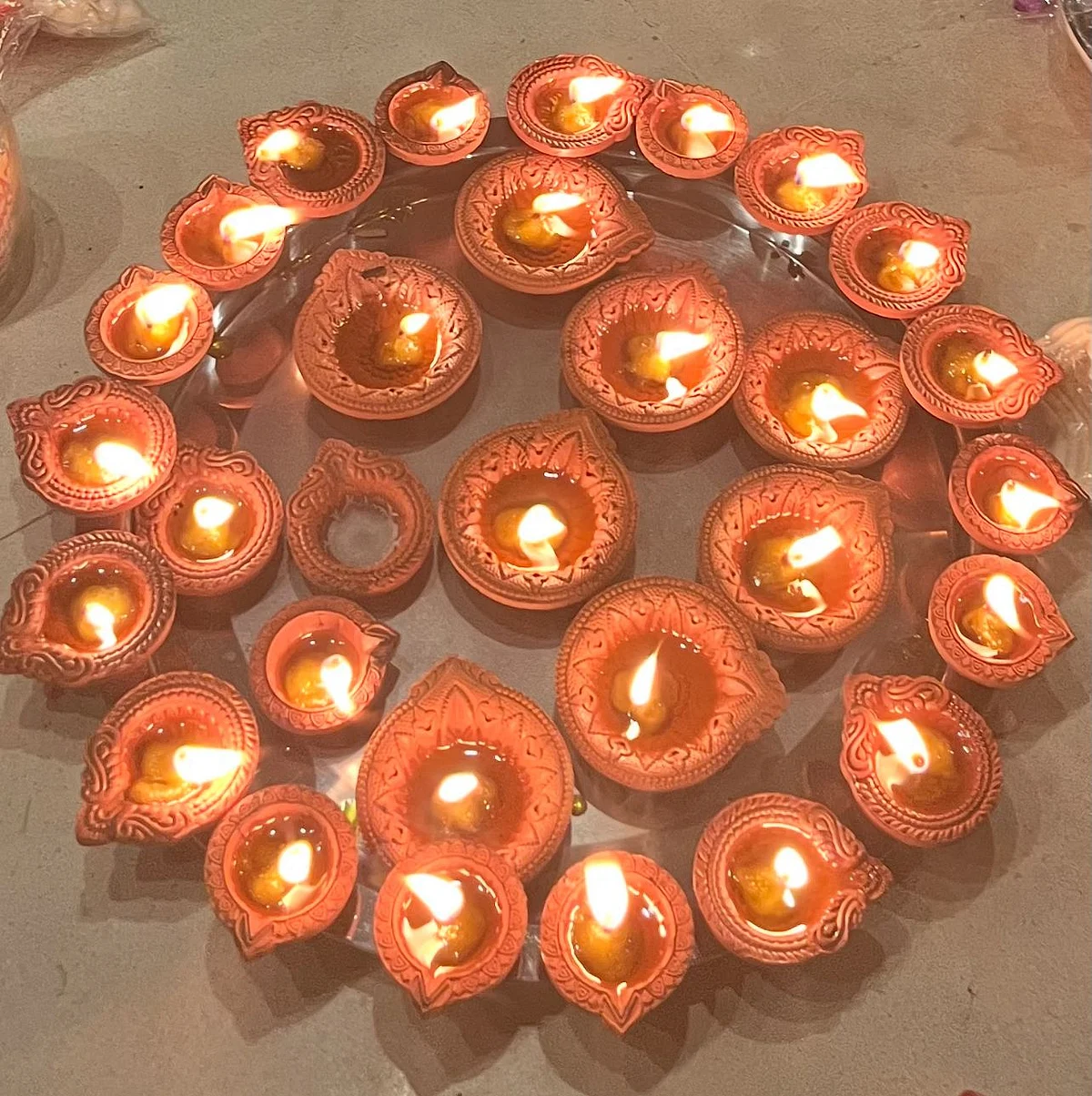
“Our karmabhumi—our work place—is Dubai, and we respect its pace,” she said. “It’s not a holiday here, but we celebrate equally. My husband works, my son goes to school, and I teach yoga. We gather for evening prayers. Work is worship.”