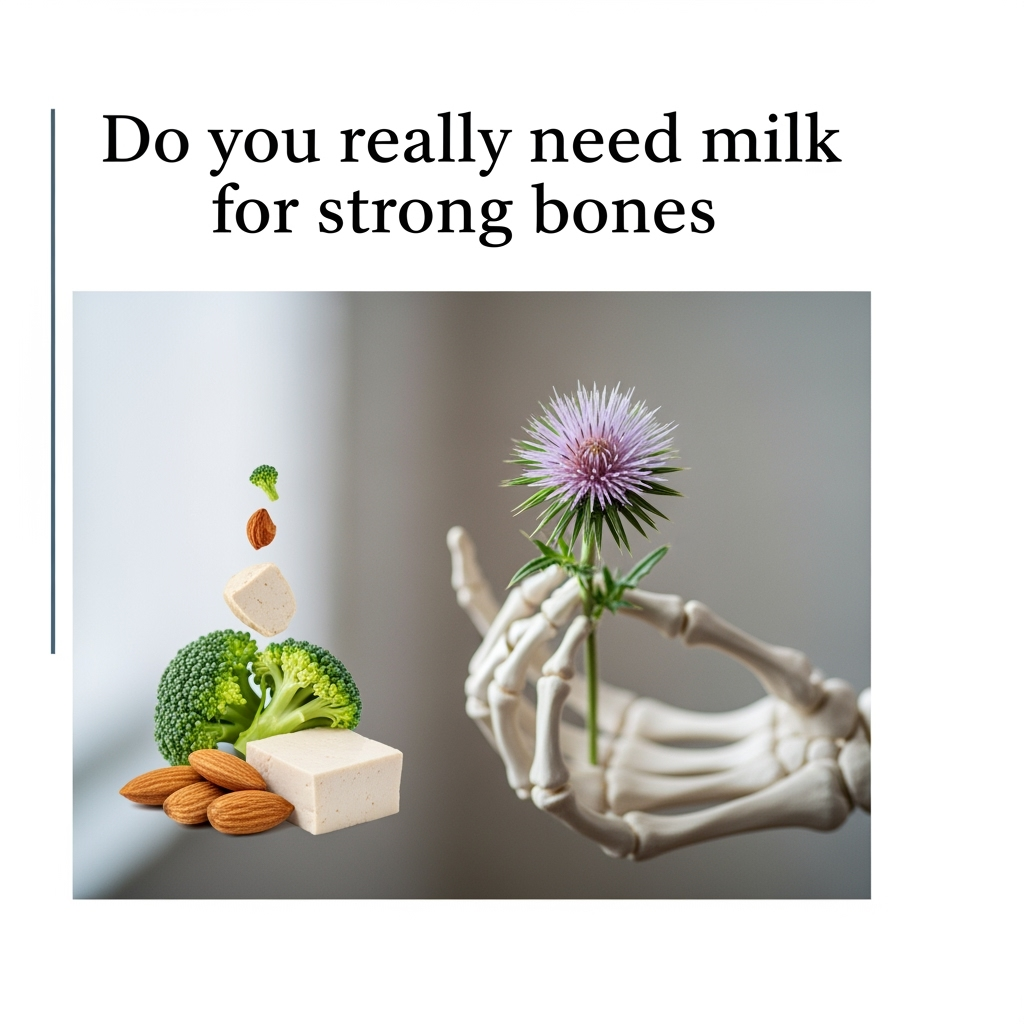
Q: I’ve always been told that milk is necessary for strong bones. Is this true?
A: For many years, Americans have been encouraged to include milk in their diets through school programs and marketing, believing it essential for health.
The belief that milk strengthens bones arises because bones are made of calcium, and a cup of whole milk provides about 300 milligrams. Therefore, consuming three cups daily was thought to enhance bone resilience. However, Dr. Walter Willett from Harvard’s T.H. Chan School of Public Health notes that this idea is based on short-term studies and dairy industry promotion.
Over one-third of Americans struggle with lactose digestion, and Christopher Gardner from Stanford University states that cow’s milk isn’t necessary. While calcium intake is crucial, especially for certain groups, better sources may exist.
WHAT DOES MILK DO FOR BONES?
Calcium is vital for nerves, muscles, heart, bones, and teeth. The U.S. suggests 1,000-1,200 mg of calcium daily, but this is debated, with countries like the UK recommending only 700 mg.
Clinical trials showed that increasing calcium intake, from dairy or supplements, can boost bone density by up to 3% in children and adults who lack calcium, though not enough to significantly lower fracture risk, Dr. Willett explains. Consuming extra calcium regularly is needed to maintain gains, which might not be worthwhile.
Dr. Willett points out that the idea of needing lots of calcium is based on short-term studies. A review of 79 milk studies from 1999 to 2003 revealed over a third had dairy industry funding.
Evidence suggests strong bones can exist without milk. A 2020 review found countries with low hip fracture rates also consume less milk. Analyses of multiple studies show no link between increased milk intake and reduced fracture risk.
Such studies can’t definitively link milk to bone health, says Dr. René Rizzoli, former head of Geneva’s bone diseases department. Clinical trials are needed to confirm any fracture prevention from milk.
Ultimately, exercise and overall diet are more crucial for bone health than relying solely on milk, Dr. Rizzoli advises.
DO SOME PEOPLE NEED MILK MORE?
Children aged 9-18 and older adults, whose bone density often decreases post-50, require more calcium.
Low calcium prompts the body to extract more from food, but this ability reduces with age. Insufficient calcium leads the body to draw from bones, weakening them, Dr. Gardner notes.
A 2021 Australian clinical trial studied over 7,000 older adults, comparing those who maintained two dairy servings daily to those who increased to 3.5. Over two years, the higher dairy group had an 11% lower fall risk and a 33% lower fracture risk, with better weight, muscle, and bone density maintenance. However, it’s unclear if stronger bones or other factors reduced falls and fractures, says Sandra Iuliano from the University of Melbourne.
Milk is a convenient calcium source, rich in protein, potassium, and phosphorus, says Jeri Nieves from NYC’s Hospital for Special Surgery. Tofu, bony fish, leafy greens, and fortified juices or plant milks are also good, albeit lower in calcium per serving.
Fermented dairy like yogurt and cheese might be the best calcium sources, supporting gut health, being lactose-friendly, and more linked to reduced fracture risk than milk, Dr. Rizzoli adds. For instance, 1.5 ounces of Cheddar cheese offers the same calcium as a cup of milk.
“Enjoy milk if you like it. If not, find other sources,” Dr. Nieves concludes.
The article originally published in The New York Times.