Amidst the dazzling lights and iconic architecture of Dubai Design District, Dubai Design Week makes a grand return for its 11th edition. Over a decade later, this event not only highlights the city’s growing status as a global design hub but also showcases its ability to stand independently, nurtured by local talent and a rich cultural identity.
Under the patronage of Sheikha Latifa bint Mohammed bin Rashid Al Maktoum, Chairperson of the Dubai Culture and Arts Authority, the event gathers designers and creatives to exchange ideas, collaborate, and explore how design can shape a sustainable future.
The programme offers diverse experiences including installations, exhibitions, talks, workshops, a lively marketplace, the contemporary design fair Downtown Design, and Editions—the region’s premier limited-edition art and design fair, symbolizing regional creative ambition.
This year’s highlights include Tashkeel, founded in 2008 by Sheikha Lateefa bint Maktoum, as a studio and gallery for visual artists and designers. Through its Tanween programme, established in 2013, Tashkeel unites nine UAE-based designers to develop functional innovations tackling sustainability challenges in design.
Tashkeel will present the Tanween Collection 2025 at Downtown Design 2025, featuring products that celebrate material experimentation and environmental consciousness. This year’s collection includes notable names like Hessa Al Ghandi, Sketch & Space Studio (Amna Alshamsi & Hanan Rafiee), Tasneem Al Nabhani, Jasim Alnaqbi, and more, drawing inspiration from leftover fabrics to discarded metals, blending modern sustainability with Emirati traditions.
Sarah Al Dulaimi, an Iraqi-British artist, designer, and architect, explains, “Sustainability is not just a design aesthetic but a responsibility to address real-world issues. I chose to work with fabric due to the fast fashion sustainability crisis and aimed to tackle it locally. My ‘Oculus’ collection uses discarded chiffon offcuts from abaya tailors in Madinat Zayed, Abu Dhabi.”
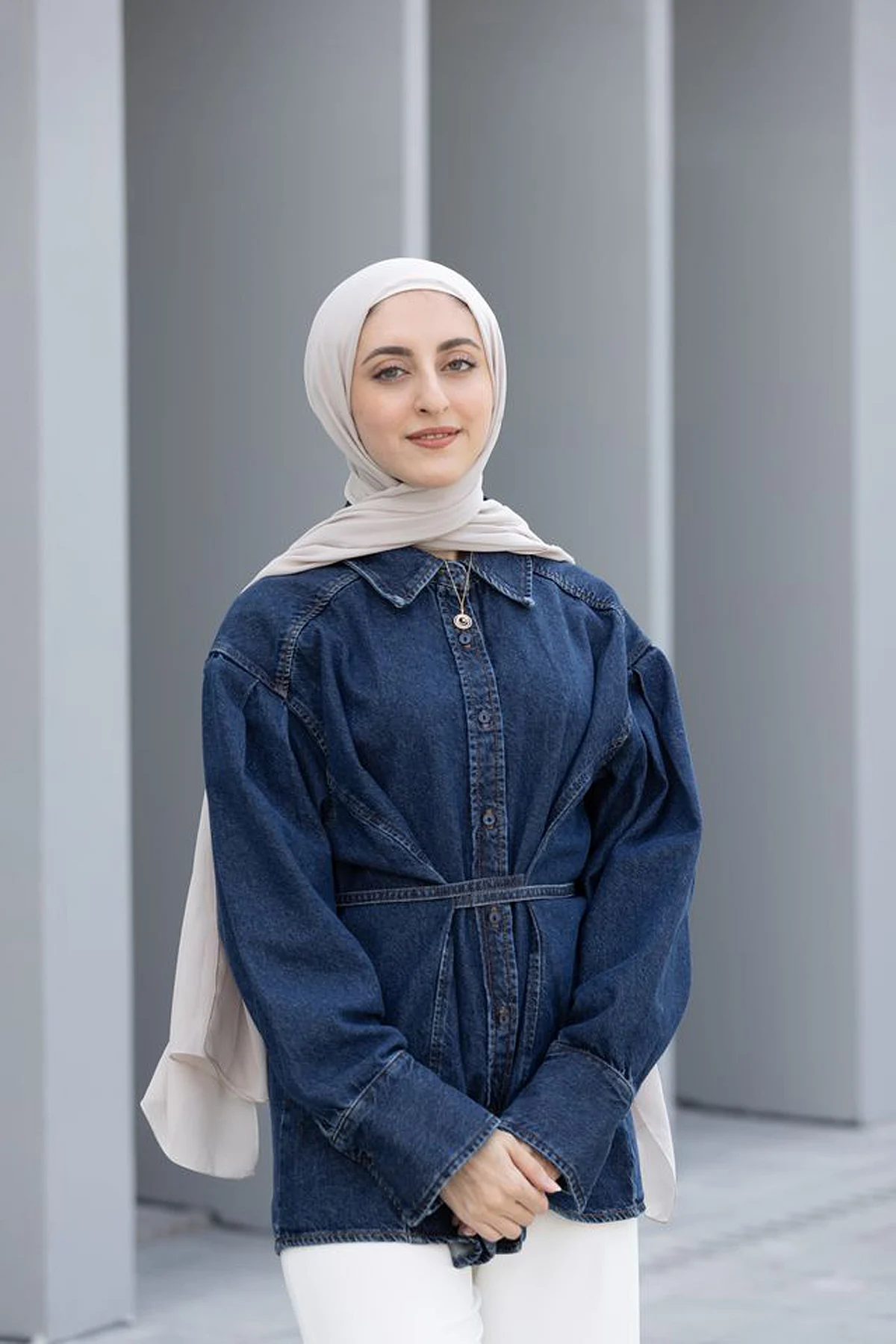
Sarah Al Dulami
Her participation in Tanween opened doors to collaborations with UAE sustainable fabric market leaders, enriching her research. “I spent time with tailors in Madinat Zayed during Eid season, learning from their skills and advice, collaborating throughout the program to develop the idea.”
Al Dulaimi believes fabric waste can be crafted into luxury design pieces. “Oculus is a metaphor for identity, privacy, and presence in Emirati and Arab culture, revealing unexpected colors when illuminated.”
Jassim Alnaqbi, founder of Taqseem Studio, finds inspiration in UAE scrapyards. “Mountains of discarded metal initially full of potential now forgotten. With over 5 million tonnes of industrial waste produced annually, much remains underutilized.” He aims to give this metal a second life, repurposing stainless steel to resemble brass, akin to heirlooms gaining new meaning over generations.
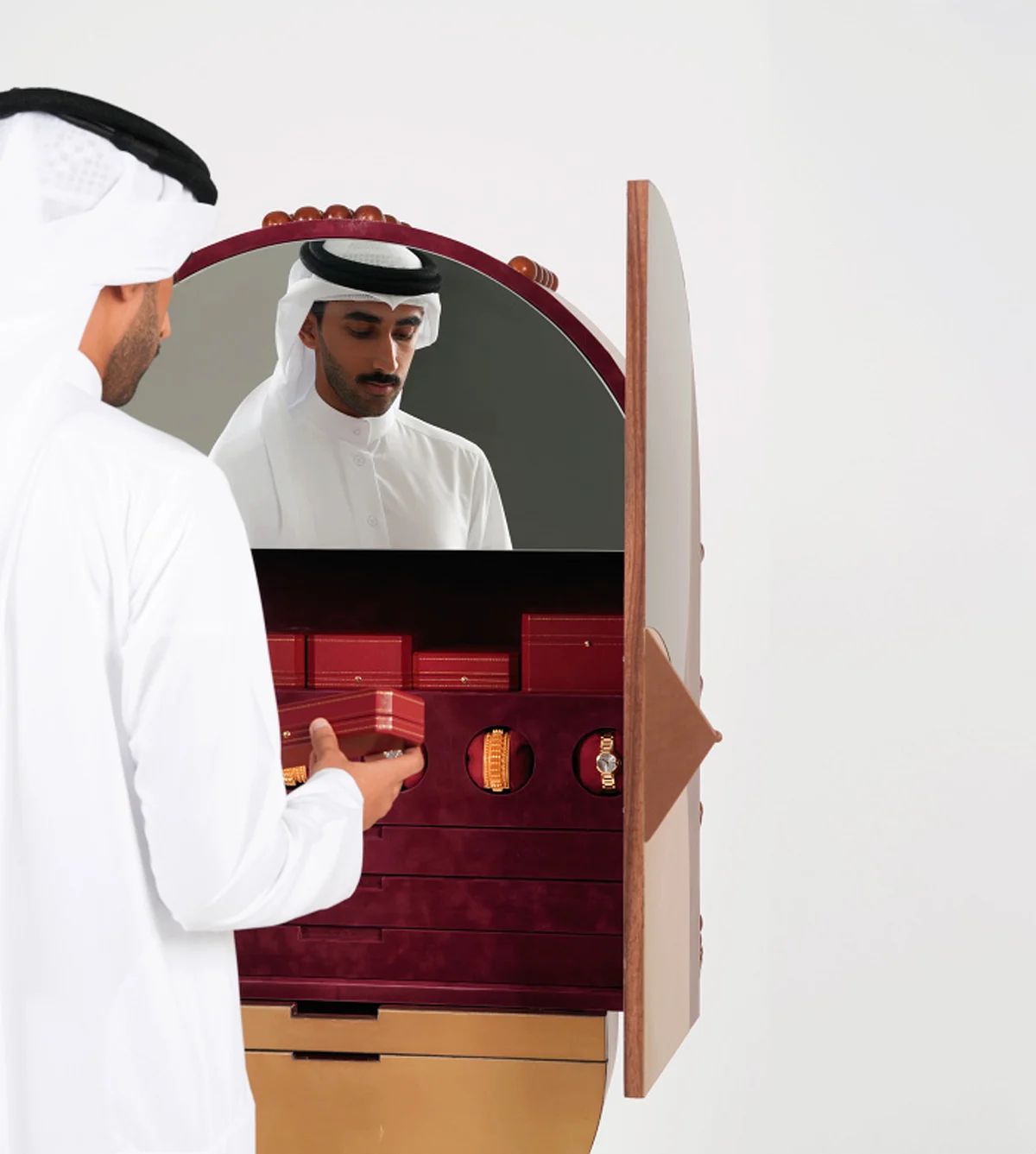
Jasim Alnaqbi
His Haila collection reflects Emirati heritage, inspired by the cardamom-shaped bangle ‘حبة الهيل’. “Haila, meaning wealth, fragrance, abundance, and femininity, embodies beauty, memory, and value.” He adds, “Gold is not merely ornamental but a form of security, as expressed in the saying ‘الذهب زينه و خزينه’.”
Hessa Al Ghandi, an Emirati interior designer and founder of Hessa Archives, focuses on rhythm and instinct, drawing on Emirati heritage. “Forms echo light, wind, and Emirati landscapes. Lamah (لمّه) means gathering, uniting people and stories, embodying connection, memory, and belonging.”
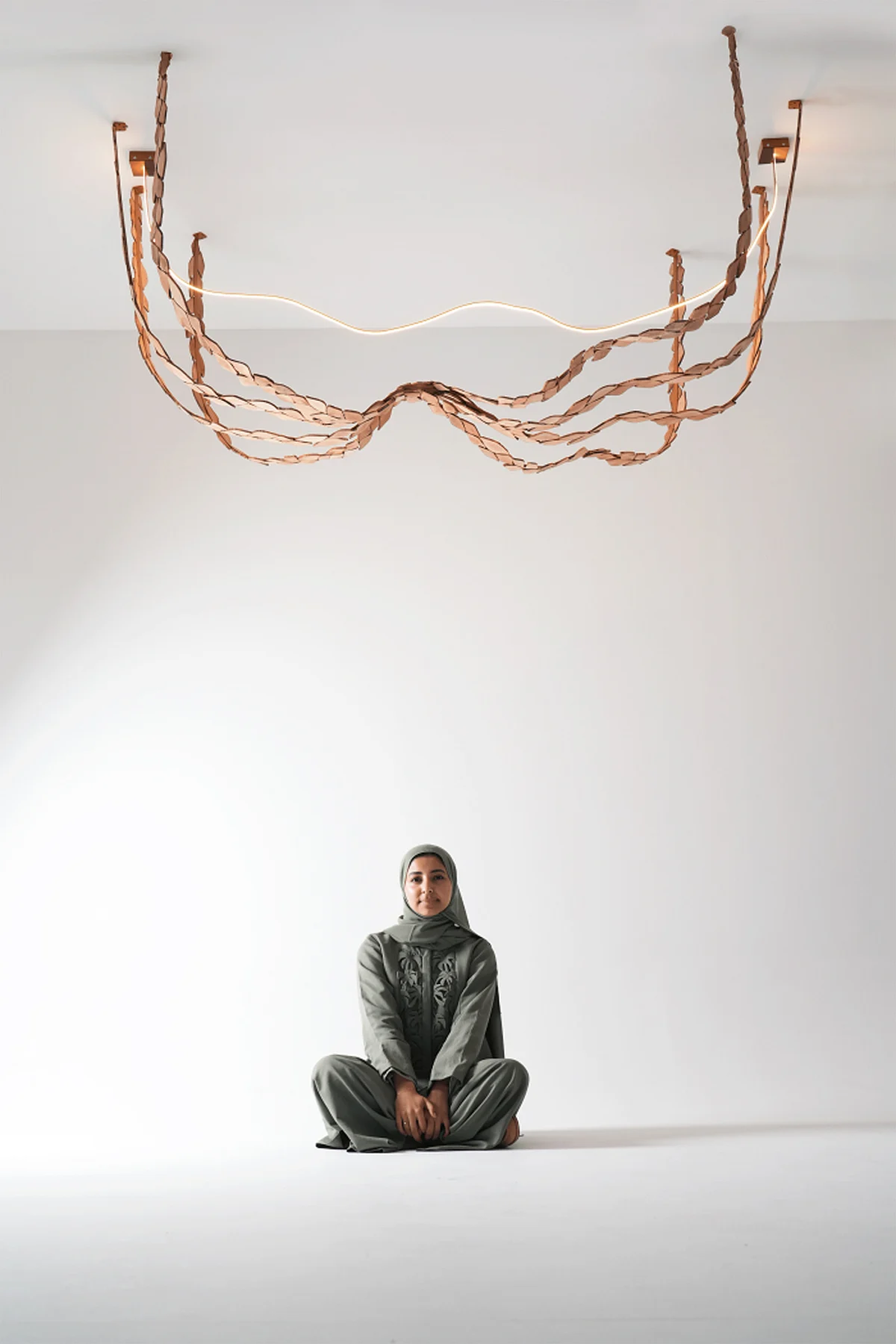
Hessa Al Ghandi
These projects aim to enrich the global creative space. Al Ghandi hopes her work contributes to the UAE’s design identity by celebrating material honesty and memory. “Our design identity is evolving, and if Lamah encourages others to appreciate what exists here, it fulfills its purpose.”
Alnaqbi echoes this, stating his collections signify a growing Emirati design voice, seeing heritage as a source of innovation rather than a constraint.
This year’s theme, ‘Community’, resonates through the programme. As Al Dulaimi states, “The future of design lies in empathy, collaboration, and rethinking our values.”