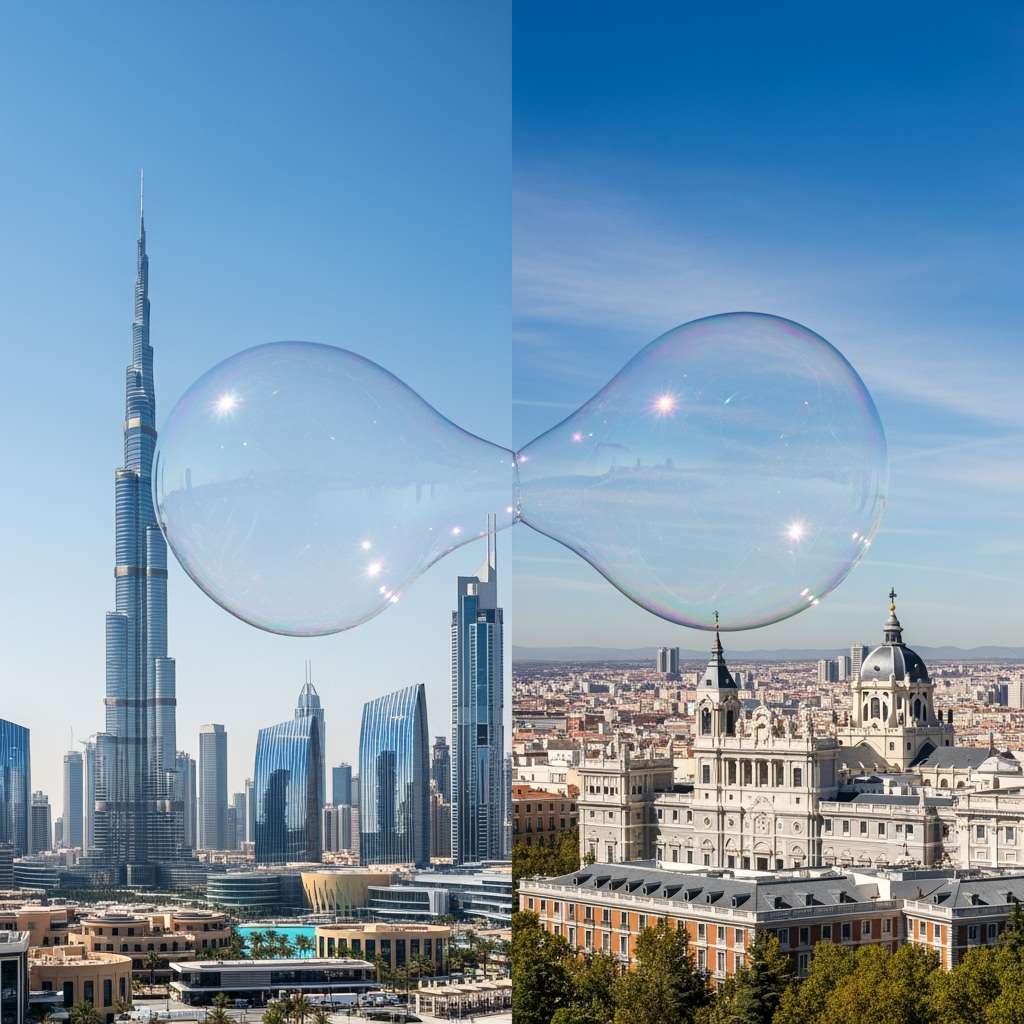
In 2025, Dubai and Madrid have experienced significant increases in property market bubble risks.
The Global Real Estate Bubble Index 2025 by UBS, published on Tuesday, shows Dubai climbing from 14th to 5th place, while Madrid moved from 16th to 10th.
“Since mid-2023, real estate prices have soared by double digits, now standing 50% higher than five years ago—the steepest rise among all cities in the report. Consequently, the risk of a housing bubble has surged for the second year in a row, reaching a high level,” noted the Swiss bank.
Stay informed with the latest updates. Follow KT on WhatsApp Channels.
The report highlighted that income growth hasn’t kept pace with soaring home prices, as Dubai’s population has increased by nearly 15% since 2020 due to an immigration boom, tightening the housing supply. “Additionally, building permits indicate that new constructions could hit levels last seen in 2017, and competition for foreign real estate investments with Abu Dhabi and Riyadh is growing,” UBS stated in its annual report.
In the years following the pandemic, Dubai and the UAE have seen remarkable growth in population and demand for real estate, both for buying and renting. This has led to a significant increase in property prices and rents over the past four years.
Globally, Miami faces the highest bubble risk, with Tokyo and Zurich also at high risk. Los Angeles, Geneva, and Amsterdam show elevated risks too.
Global housing markets have generally cooled on average.
“Overall exuberance has diminished, with the average bubble risk in major cities decreasing for the third consecutive year,” said Matthias Holzhey, the lead author of the study at UBS Global Wealth Management’s chief investment officer.
UBS identified Hong Kong as the least affordable city in the report, requiring about 14 years of income to purchase a 650 sqft apartment.