Monica Prasad, a marketing expert and mother of two living in Mudon, treasures her biweekly trips to Dubai Hills Mall. It’s her go-to spot for family shopping, movie nights, or dining with friends. “Dubai doesn’t offer much street shopping, so malls are the go-to for anything from shoes to pens!” she chuckles. “What I appreciate about Dubai Hills is its manageable size, excellent brands, and chic atmosphere.” Her visits often span four hours, mixing shopping, socializing, and weekend rituals.
To Prasad and many in Dubai, malls are more than just shopping centers; they’re hubs of connection, convenience, and leisure.
Mall enthusiasts have more to celebrate now. Dubai’s mall scene is evolving, with new projects and major renovations underway.
While globally malls struggle against e-commerce, in the UAE, they’re thriving, attracting more visitors and solidifying their status as business and tourist magnets.
Exciting Developments
The year 2025 has indeed been marked by mall announcements and expansions. Key highlights include:
The Dubai Fountains, adjacent to Dubai Mall, reopened after its first renovation phase, with Phase 2 promising even more tech-driven features.
Dubai Mall developer Emaar introduced The District, a Dh1.5 billion expansion adding 279 new outlets.
Majid Al Futtaim’s Dh5 billion investment to transform Mall of the Emirates by 2027 will add 20,000 sq m of retail space, an advanced IMAX, an indoor-outdoor dining area, a wellness club, and the New Covent Garden Theatre.
MAF is also launching a mall in the Ghaf Woods community, offering shopping, dining, and fun in a lush setting.
On the Palm, Nakheel Mall rebranded as Palm Jumeirah Mall, introducing new international and local fashion and dining brands.
These revamped malls are also welcoming new international brands like Haribo at Dubai Festival City Mall, SKIMS and Ulta Beauty at Mall of the Emirates, and Primark at multiple locations.
In summer, Dubai’s top malls hosted ‘mallathons,’ converting spaces into indoor tracks.
In Abu Dhabi, Yas Mall expanded, along with Yas Bay and Etihad Arena, while Sharjah’s City Centre Al Zahia is now the largest mall in the Northern Emirates.
Even Al Ain saw the development of Remal Mall, proving secondary cities also attract large-scale retail.
The Significance of the Mall Economy
Malls are integral to the UAE’s economic and social landscape. Joerg Meiser, Partner at Monitor Deloitte, describes them as “strategic pillars in the city’s visitor economy.”
Their role has evolved into immersive, multi-sensory destinations combining fashion, food, leisure, and culture. Analyst Niranjan Gidwani calls this a natural market evolution, noting these expansions reflect strong retail demand and a shift toward integrated-lifestyle experiences.
Malls significantly contribute to tourism and the economy. In 2024, the UAE welcomed over 28 million visitors, with Dubai accounting for 18.72 million stays. Tourists, more than in any other destination, indulge in retail activities. According to DET data, 99% of 2024 visitors stopped by Dubai Mall, the world’s most visited place for two consecutive years, attracting 111 million visitors in 2024.
Beyond shopping, malls impact real estate, hospitality, and job creation. “This multiplier effect makes mall investments crucial for the city’s economic flywheel,” Meiser says.
For consumers, malls are modern urban lifestyle statements. Studies show six in 10 UAE residents visit a mall weekly, spending Dh100–Dh500 per trip. Dining is a major attraction, transforming malls into “living extensions of communities,” fulfilling social, recreational, and experiential needs, according to Gidwani.
The Anchor for Festivals and Tourism
Malls, offering multi-dimensional experiences, are ideal partners for Dubai’s tourism authorities.
Mohamad Feras, AVP Retail & Strategic Alliances at DFRE, explains that mall partnerships extend beyond retail. “Malls are key to Dubai’s tourism appeal, shaping visitor experiences. For many, a Dubai visit isn’t complete without mall time, offering luxury fashion, global dining, indoor ski slopes, aquariums, art, and seasonal events,” he says.
These collaborations involve joint planning, thematic alignment, and promotional rollouts to ensure campaigns create citywide excitement. Whether it’s DSF and DSS exclusive deals, flash sales, Ramadan activations, or prize promotions, the synergy between DFRE and malls brings Dubai’s retail calendar to life. “We support the retail economy by driving footfall and sales while strengthening Dubai’s dynamic hotspot positioning,” Feras adds.
The 2024 DET Survey revealed 77% of travelers visited for leisure, with 10-day stays driven by bucket-list motivations. Developers integrate immersive anchors, curated dining, live events, and seamless digital experiences. “The result is higher dwell time, increased cross-category spend, and a rationale for expansion,” Meiser says. “Seasonal campaigns boost consumption and traffic. These expansions focus on enhancing malls as full-day destinations, integrating retail, events, technology, and lifestyle.”
The last DSS saw a 110% increase in consumer spending, with over 1,200 winners receiving prizes worth more than Dh20 million from over 1,050 brands at 3,800 retailers.
The Rise of Community Malls
While size matters, a quieter revolution is happening: the rise of community malls.
Major players focus on large expansions, but smaller neighborhood malls are transforming their areas. Gidwani notes, “Smaller malls like Nad Al Sheba and City Centre Shindagha boost real estate appeal and community living.”
Nad Al Sheba Mall, a 500,000 sq ft destination with over 100 stores, wellness facilities, padel courts, restaurants, and supermarkets, is a prime example. Along with The Square in Nad Al Sheba Gardens and DxBike in Meydan, it has enhanced real estate values and made the neighborhood self-sufficient.
For residents, these malls bring daily conveniences closer to home. Monica Prasad, for example, often visits Ranches Souk 2 near her Mudon home. “The restaurants are great and meet my needs,” she says.
Developers are responding. Projects like the Dh210 million Sobha Hartland Community Mall focus on local connection and quality of life. Ravi Menon, Co-chairman of Sobha Group, aims to create “community-focused integrated spaces.”
How Dubai Ducks the E-commerce Wave
These efforts have had a global impact. While e-commerce was expected to overtake physical stores, Dubai has defied this trend. Globally, e-commerce accounts for just over 20% of sales, but Dubai’s malls offer a “differentiated value proposition.” “Malls don’t see online as a threat but an enabler,” Meiser says. “Many retailers use a ‘showrooming model,’ where products are experienced in-store, but delivery is e-commerce-based, integrating shopping into a day’s outing. Events like DSF and DSS amplify traffic, creating spikes in retail activity that online can’t replicate. For residents, malls provide a climate-controlled ‘third place’ for socializing, while tourists include mall visits in their itineraries.”
Gidwani agrees, noting strategic investments in infrastructure and retail innovation have created a harmonious ecosystem. “Dubai’s logistics, digital payments, and hybrid models enhance convenience while preserving physical space appeal. This allows malls to remain vital amid e-commerce growth,” he says. Meiser adds that e-commerce isn’t a threat to Dubai malls as they’ve moved up the value chain. “From places to buy, they’ve become places to be,” he says.
The Risks and Challenges
While the mall economy seems robust, sustaining growth is challenging. Developers must innovate to maintain footfall. There’s also the glamor downside: managing energy use, environmental impact, and waste to meet Dubai’s zero landfill goals. “Developers are integrating smart systems, green designs, and circular waste practices, but balancing technology with sustainability and planning for slowdowns is critical,” Gidwani warns.
Meiser highlights the challenge of managing visitor experience in three stages: pre-visit, in-visit, and post-visit. In the first stage, retailers identify only 15-27% of visitors, making personalization difficult. “This makes true personalization impossible,” he says.
In the in-visit stage, orchestration is key, where parking, wayfinding, tenant coordination, and F&B impact visit quality. Finally, the post-visit stage risks disconnection. “Too often, relationships end when visitors leave. Deloitte’s ‘Future of Shopping Malls’ study shows malls with Visitor Experience Centres achieve 20-40% higher dwell times and 25-35% more repeat visits,” Meiser says. He predicts growth will be driven by how effectively malls orchestrate Visitor Experience. “Deloitte’s Framework suggests using AI to analyze satisfaction, identify pain points, and recommend solutions. Those who succeed will turn malls into ecosystems people choose and return to.”
The Mall of the Future
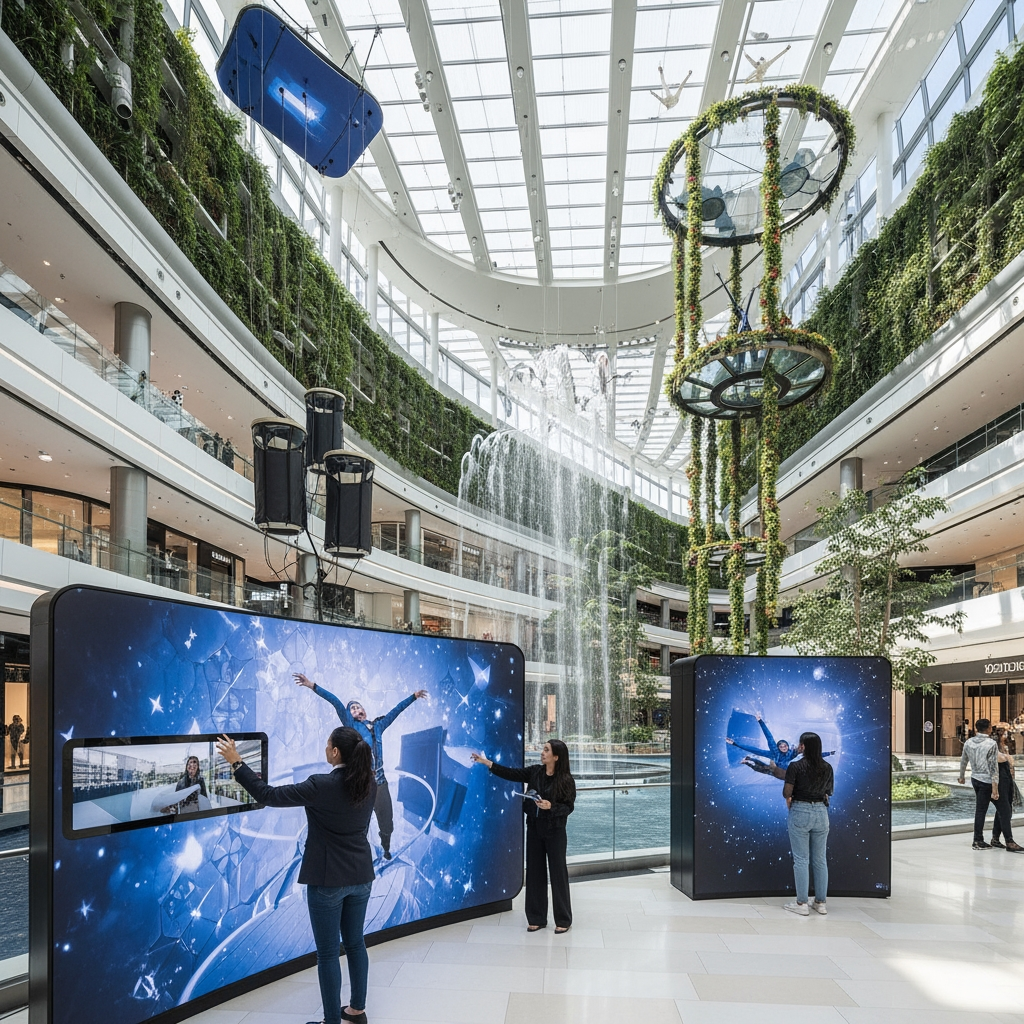
Gidwani envisions the Mall of the Future in Dubai as an immersive lifestyle destination blending retail, dining, wellness, culture, and entertainment with technology. “These malls will feature AI-powered personalization, AR shopping experiences, smart environments, contactless payments, and digital concierges. Hybrid ‘phygital’ models will blur online and offline retail lines,” he predicts.
Given the developments, we may be just a few years from this future.