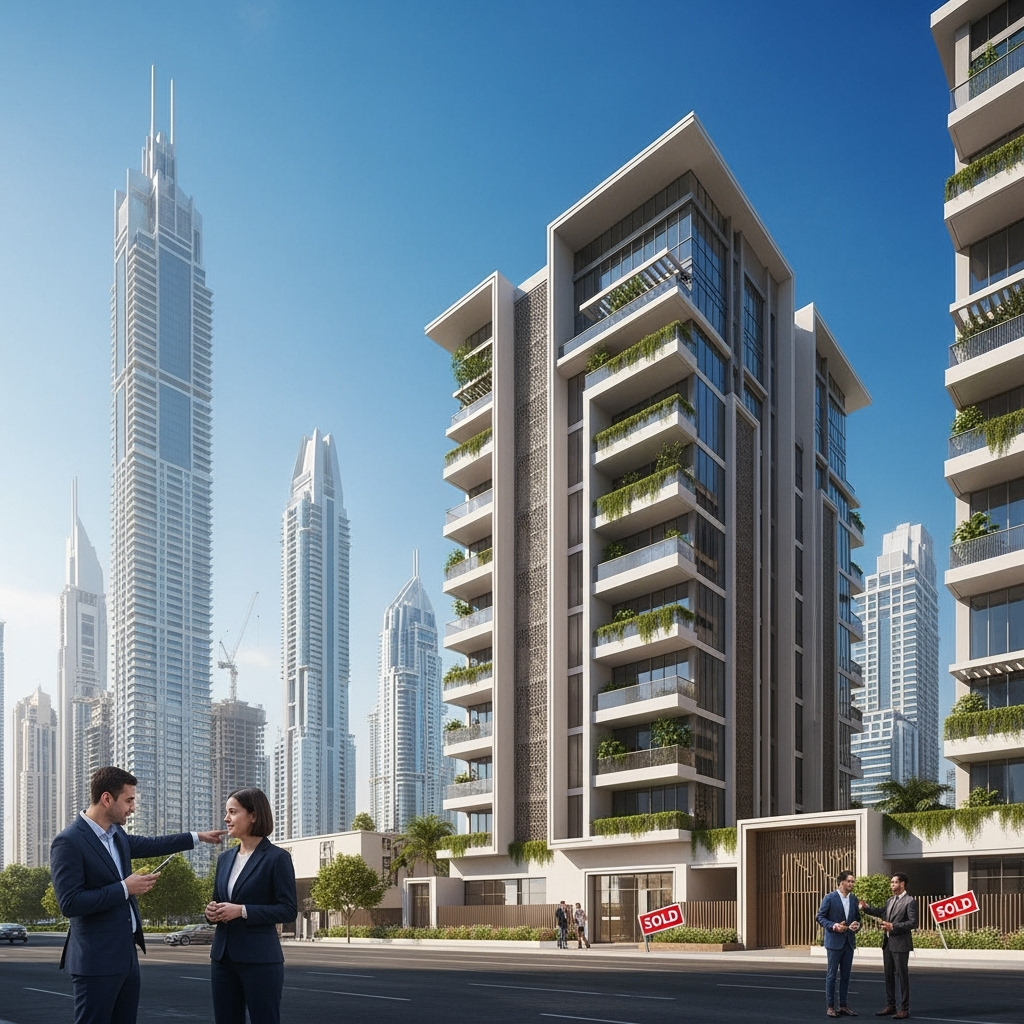
In August, Dubai’s residential real estate market once again showcased its resilience, confidently overcoming the seasonal slowdown. Demand from investors, end-users, and tenants remained robust for apartments, villas, and townhouses.
According to Betterhomes, monthly activity was softer, yet significantly higher than last year, solidifying Dubai’s status as a premier real estate destination.
Sales in August saw 17,710 transactions, a 5.9% drop from July, with deals totaling Dh42 billion, an 18.6% decrease month-on-month. However, year-on-year comparisons revealed a 10% increase in both transaction volumes and values compared to August 2024. Prices remained stable, with the average sales price per square foot rising to Dh1,932, up 2.1%.
Stay informed with the latest news by following KT on WhatsApp Channels.
Off-plan projects continued to dominate, comprising 73% of all transactions. Developers like Binghatti, Emaar, and Sobha Group led sales, with apartments, particularly one-bedroom units, being the most popular. In the villa and townhouse sector, family-sized homes were preferred, with four-bedroom units making up 46.3% of sales.
Betterhomes reported an 11% increase in buyer leads in August, with investors making up 59% of buyers and end-users 41%. The lending environment is maturing, as mortgage-backed purchases surpassed cash deals at 58%.
“August demonstrated the deep-seated confidence in Dubai’s property market. The 10% year-on-year growth in transaction value shows Dubai’s continued appeal to investors and families alike. Even with a slight dip in sales activity, prices rose to Dh1,932 per square foot. At Betterhomes, we saw an 11% rise in buyer inquiries, signaling enduring market confidence,” said Cristopher Cina, director of sales at Betterhomes.
The leasing market was equally strong. Rental transactions reached 41,504 in August, a 5.7% increase from July. New leases are becoming a key feature, with 18,186 new contracts — 44% of activity — compared to 40% in July. Renewals accounted for the remaining 56%, indicating tenant mobility and stability.
Rental growth was most notable in Jumeirah’s villa segment, with average annual rents increasing by 4.2% to Dh539,000, while Mirdif apartments saw a 5.5% rise to Dh88,000. Betterhomes noted a 38% increase in tenant inquiries, with apartments making up nearly half of the demand, followed by townhouses at 32%. Payment flexibility remains crucial, with one-cheque and four-cheque options being the most common at 30% and 32% respectively.
“August was a period of new beginnings. Nearly half of all leasing activity came from new contracts, highlighting a trend of people choosing to call this city home. Tenant inquiries at Betterhomes increased by 38%, demonstrating resilient and expanding demand, positioning Dubai as a top global rental market,” said Rupert Simmonds, director of leasing at Betterhomes.
In August, the most desired communities were Dubai Marina, Business Bay, and Jumeirah Village Circle for apartment sales, while Arabian Ranches, Dubai Hills Estate, and Jumeirah Golf Estates were most popular for villas.
These patterns align with broader market indicators. Dubai Land Department’s data shows total property sales in August exceeded Dh51 billion over 18,715 transactions, marking an 8.7% annual rise. Apartments led, with volumes up almost 30% compared to August 2024, while villa sales softened. Analysts like CBRE and ValuStrat report double-digit annual growth in Dubai’s average residential prices, with rental yields among the highest worldwide.
Experts assert that August’s performance underscores Dubai’s ability to offer opportunities, stability, and growth, driven by international investor interest, rising rental demand, and an evolving financing landscape.
Despite potential price correction warnings as supply increases, the outlook remains positive. Over 70,000 units are expected by 2025, yet ongoing population growth, with Dubai’s residents surpassing four million, and foreign investment inflows are likely to sustain demand.