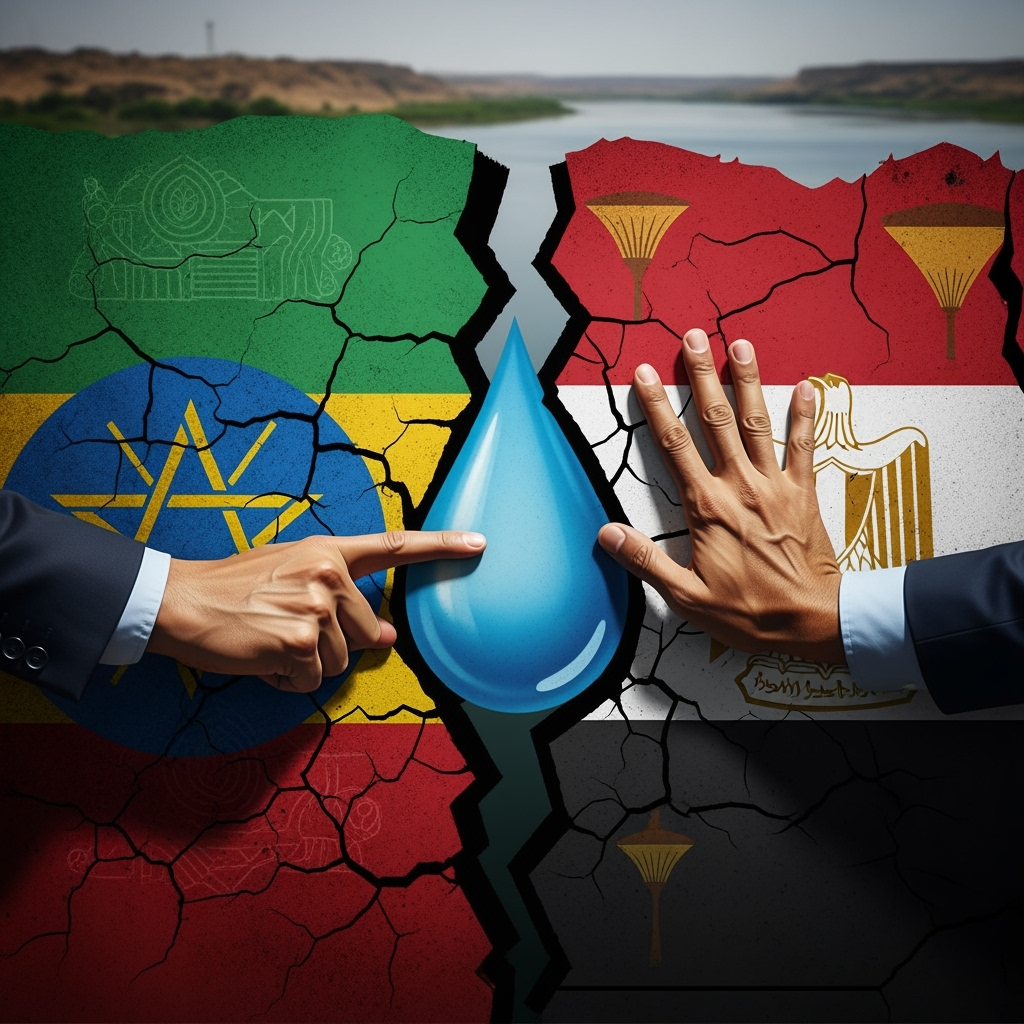
The Egyptian Ministry of Foreign Affairs, represented by its Minister, Badr Abdel Aty, confirmed in an official statement that “attempts to falsely legitimize the dam do not change its reality as an illegal unilateral measure, bearing no legal consequences on the Eastern Nile Basin system according to international law.” The Ministry emphasized that “Ethiopian actions represent a new breach, adding to a long series of violations, including ignoring the presidential statement issued by the Security Council on September 15, 2021.” Egypt also reiterated in its statement its absolute rejection of all unilateral measures that affect the rights and interests of the downstream countries, Egypt and Sudan.
The statement noted that “since the beginning of the Ethiopian project, Cairo has adhered to the utmost self-restraint and has resorted to diplomacy and international organizations, stemming from its belief in the importance of cooperation and achieving shared interests for the peoples of the Nile countries. In contrast, Addis Ababa chose obstinacy, stalling, and imposing a fait accompli with political motives aimed at rallying the internal front at the expense of the rights of neighboring countries.” It stated that “any misconceptions that Cairo might turn a blind eye to its existential interests in the Nile River are sheer delusions.”
Egypt concluded by affirming that “any notion that Cairo might relinquish its existential interests in the Nile River is an illusion,” emphasizing its adherence to applying international law rules and its complete rejection of Ethiopia’s attempts to unilaterally control water resources, while retaining its right to take all measures guaranteed by international law and the UN Charter to protect its people’s interests.
The statement from the Egyptian Ministry of Foreign Affairs comes hours after the official inauguration of the “Grand Renaissance Dam” project by Abiy Ahmed in a ceremony attended by several prominent African leaders. The Ethiopian News Agency “ENA” reported today, Tuesday, that the inauguration ceremony included several African leaders, most notably Kenyan President William Ruto, Djiboutian President Ismail Omar Guelleh, Somali President Hassan Sheikh Mohamud, and South Sudanese President Salva Kiir Mayardit. The opening was also attended by senior Ethiopian leaders, parliament and Federation Council officials, as well as military leaders, headed by the Chief of Staff of the Army, Field Marshal Berhanu Jula, along with representatives from regional and international organizations.
The Grand Renaissance Dam is considered a major infrastructure in Ethiopia’s history, and its inauguration comes after years of regional and international controversy over its implications for Nile River waters. Egypt considers that the dam negatively affects its historical right to Nile waters, while Ethiopia argues that the dam will enhance development plans and generate electrical power in the country.