He added in a statement to Sputnik that this exchange included various aspects such as educational, academic, and artistic missions, the exchange of musical and kinetic art groups, as well as the role of Russian experts during many periods in assisting the Egyptian side at the beginning of cultural work, whether in establishing cultural palaces or working as directors in the Opera House and the symphony orchestra.
The Egyptian minister clarified, in response to a question about the possibility of a cultural boom parallel to the economic and commercial boom between the two countries, that there is significant activation in hosting Russian groups, especially musicians, as well as writers, poets, and cultural activists from the Russian side.
He pointed out that Egypt also supervises the activation of culture and plays a pivotal role, cooperating very closely with the Russian side in these cultural, artistic, and knowledge aspects.
Earlier, Egyptian President Abdel Fattah el-Sisi confirmed that they enhance interaction and political consultations between them. Sisi said during his talks with Russian President Vladimir Putin in Moscow on the sidelines of the Victory Day celebrations in May 2025: “We are enhancing our interaction and political consultations. Therefore, I strongly hope that the meeting of the intergovernmental committee between our countries will be held successfully.”
The Egyptian president expressed his gratitude to his Russian counterpart for the warm reception and hospitality and congratulated him on the 80th anniversary of victory in World War II.
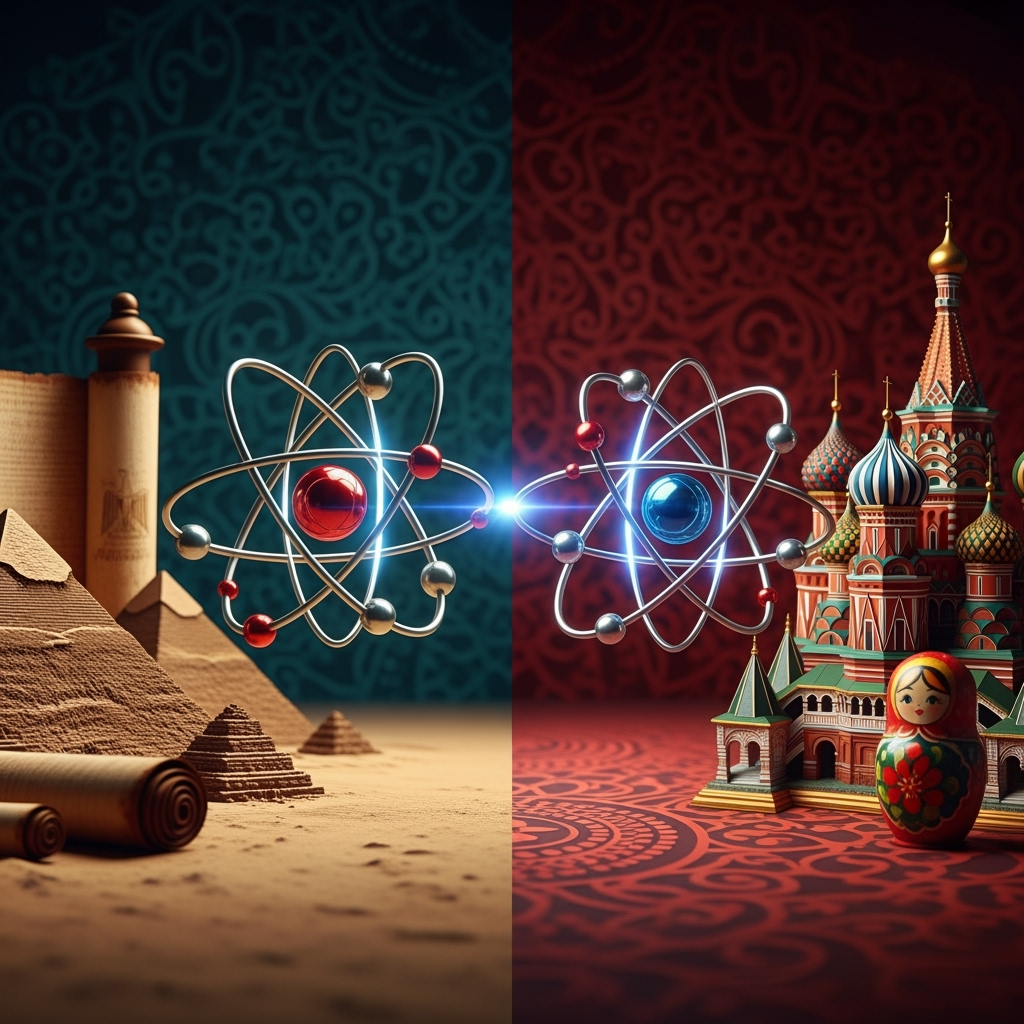
In November 2015, Egypt and Russia signed an agreement on joint cooperation to establish in the Dabaa area overlooking the Mediterranean Sea, northern Egypt, and in December 2017, the station’s contracts came into effect when Russian President Vladimir Putin was on an official visit to Cairo.
The “Dabaa” station includes four “3+” generation reactors using pressurized water with a total capacity of 4800 megawatts, each with a capacity of 1200 megawatts, and the first reactor is scheduled to be launched in 2028.