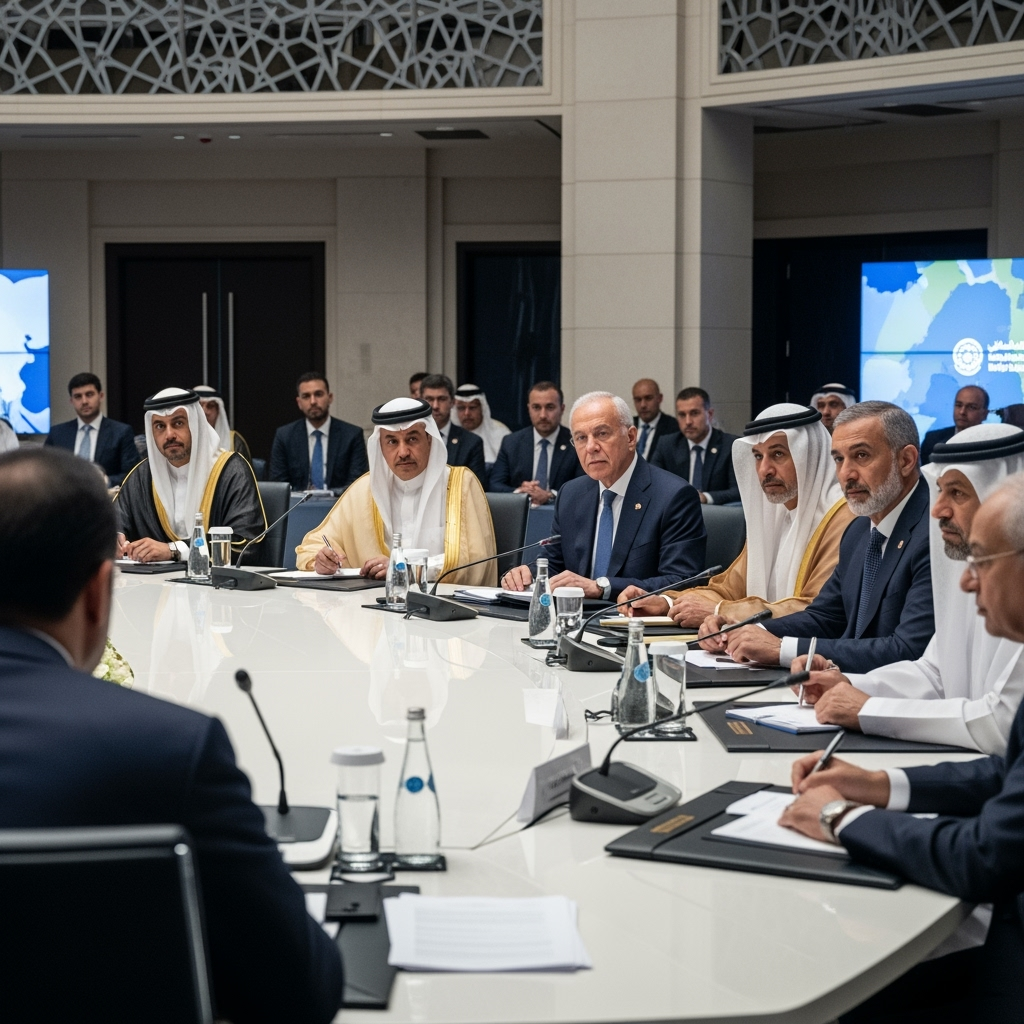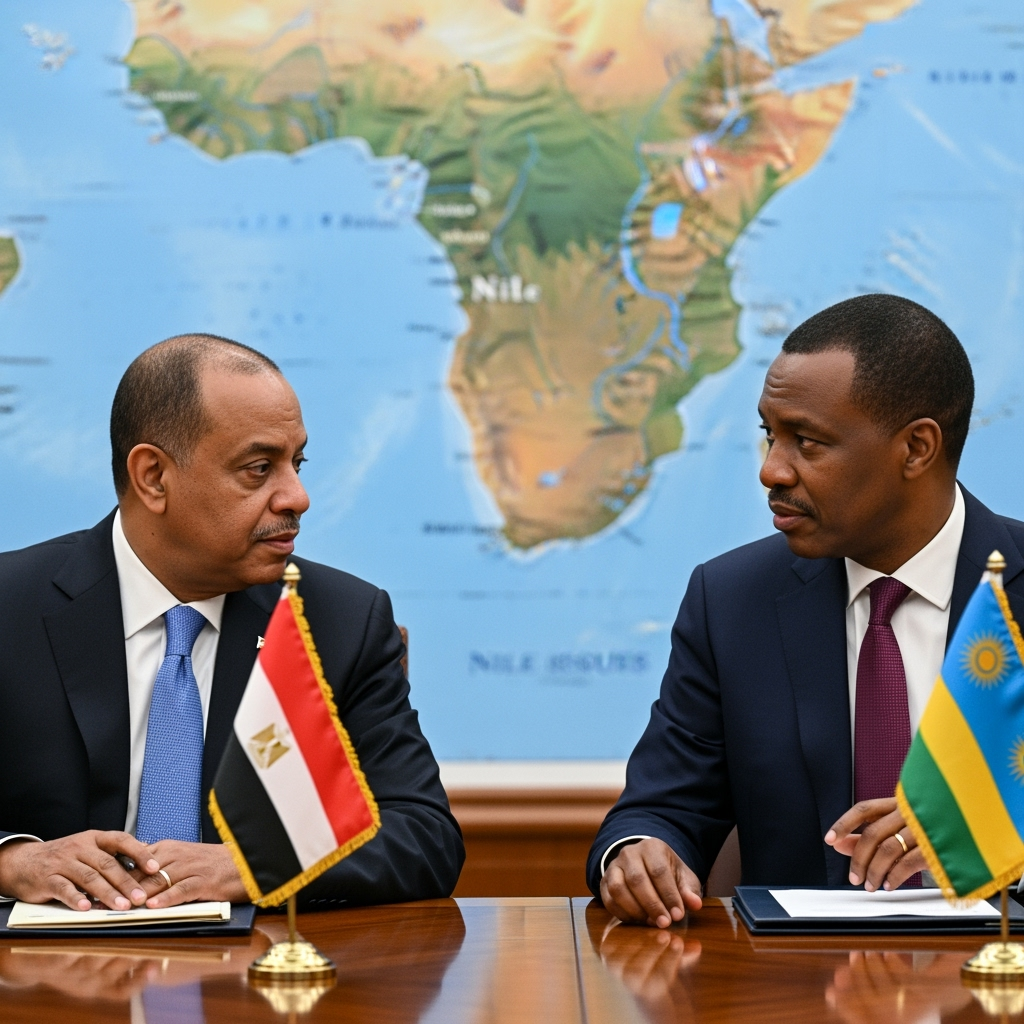
Mohamed El-Shenawy, the official spokesperson for the Presidency, stated that the meeting began with an official reception ceremony, which included the playing of the national anthems of both countries. This was followed by a closed bilateral discussion session, and then expanded talks with the presence of delegations from both countries, according to the Egyptian website “Youm7”. During the meeting, he welcomed his Rwandan counterpart, praising the close historical relations between Egypt and Rwanda, and affirming Egypt’s commitment to enhancing cooperation in economic, trade, and medical fields, with a focus on increasing joint investments in the sectors of pharmaceuticals, medical supplies, food products, and infrastructure.
The meeting addressed a number of regional and international issues, where the presidents discussed developments in the Great Lakes region. President Sisi affirmed Egypt’s support for efforts to achieve security and stability in the region. The discussion also touched on the situation in the region, focusing on enhancing peace and security.
In the context of Nile Basin issues, the presidents exchanged views on enhancing integration among the basin countries and agreed to continue consultations and coordination to face common challenges and ensure sustainable development. Egypt had sent a letter to the President of the Security Council last Tuesday regarding recent developments in the Blue Nile and Ethiopia’s announcement of the completion of the “Renaissance Dam” operation, considering it a unilateral step and a violation of international law.
The Egyptian Ministry of Foreign Affairs, represented by its minister, stated in an official statement that “attempts to falsely legitimize the dam do not change its reality as a unilateral and illegal measure with no legal ramifications on the eastern Nile Basin system according to international law,” emphasizing that “Ethiopian actions represent a new breach added to a long series of violations, including ignoring the presidential statement issued by the Security Council on September 15, 2021.” Egypt also reiterated in its statement its firm rejection of all unilateral actions that affect the rights and interests of the downstream countries, Egypt, and Sudan.
The letter pointed out that “Cairo, since the start of the Ethiopian project, has exercised the utmost restraint, resorting to diplomacy and international organizations, stemming from its belief in the importance of cooperation and achieving common interests for the peoples of the Nile countries. Meanwhile, Addis Ababa chose obstinacy and procrastination, imposing a fait accompli with political motives aimed at rallying internal support at the expense of the rights of neighboring countries.”
Egypt concluded by asserting that “any notion that Cairo might relinquish its existential interests in the Nile River is an illusion,” emphasizing its adherence to the application of international law rules and its total rejection of Ethiopia’s attempts to unilaterally control water resources, while reserving its right to take all measures guaranteed by international law and the United Nations Charter to protect its people’s interests.
The Renaissance Dam is the largest infrastructure project in history, and its inauguration comes after years of regional and international controversy over its implications on Nile waters. Egypt considers the dam a negative impact on its historical right to Nile waters, while the Ethiopian government says the dam will enhance development plans and generate electrical power in the country.