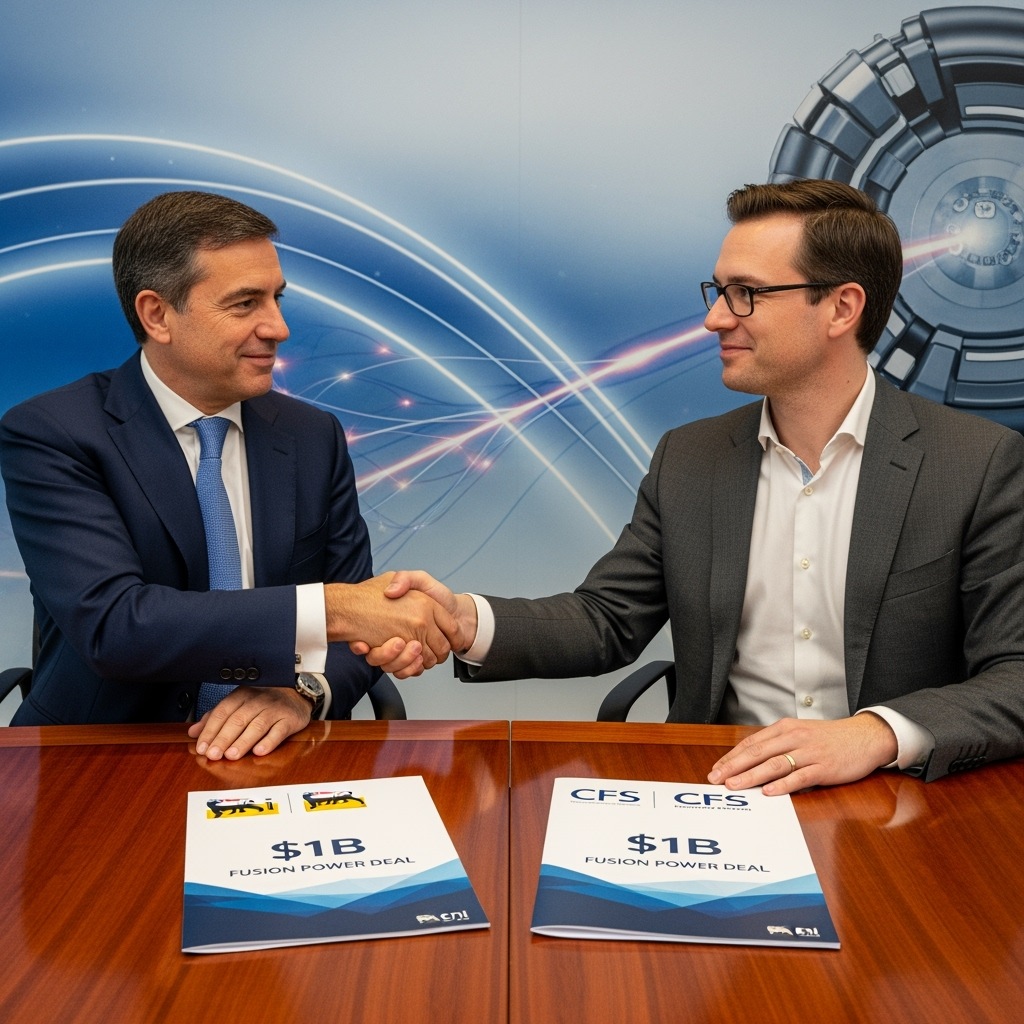
Global energy innovator Eni and US-based Commonwealth Fusion Systems (CFS) have finalized a power purchase agreement (PPA) exceeding $1 billion, broadening their collaboration to bring fusion energy to the market.
As per the agreement, Eni will source decarbonized electricity from CFS’s 400 MW ARC fusion power plant located in Virginia, USA, slated to link to the grid by the early 2030s. This marks Commonwealth’s second PPA in three months for its pioneering grid-scale fusion plant.
In June, Commonwealth signed a PPA with Google for 200 megawatts (MW) from the same Virginia facility. “Eni’s commitment underscores fusion energy’s potential on the grid. Their decision to purchase power from our Virginia plant, as an early supporter, is a significant endorsement,” said CFS co-founder and CEO Bob Mumgaard.
Stay informed with the latest updates. Follow KT on WhatsApp Channels.
Mumgaard added, “Our fusion power attracts a wide range of global clients—from tech giants to traditional energy companies—due to its promise of clean, nearly limitless energy.”
Fusion power aims to produce electricity by harnessing heat from nuclear fusion reactions. CFS is teaming up with the Massachusetts Institute of Technology’s (MIT) Plasma Science and Fusion Center to create Sparc, the world’s first fusion device that generates more energy than it consumes, marking the debut of a net-energy fusion machine. Sparc offers carbon-free and limitless fusion energy.
Eni CEO Claudio Descalzi emphasized that this agreement signifies a pivotal moment where fusion energy emerges as a viable industrial opportunity.
“With rising energy demands, Eni champions the progress of fusion power as a transformative energy model capable of delivering clean, safe, and virtually infinite energy. This global partnership reflects our dedication to making fusion energy a reality, advancing its industrialization for a sustainable energy future,” Descalzi stated.
GCC and Middle East Energy Prospects
Eni is actively involved in oil, natural gas, renewables, and biofuel sectors.
CFS’s Bob Mumgaard noted that Eni, which has roots in the oil and gas industry and is transitioning in the energy sector, shares common ground with oil-producing Gulf nations.
“These countries comprehend energy and its vast implications for society and the economy. They recognize limits but are eager to explore new technologies and sectors. Their enthusiasm is evident,” Mumgaard commented during a Khaleej Times press conference.
He suggested that fusion energy could seamlessly integrate within the Gulf and Middle Eastern economic frameworks as fossil-fuel-based economies evolve with innovations like artificial intelligence.
“While GCC and Middle Eastern countries haven’t yet developed a fusion strategy or made significant investments in fusion, it’s a possibility as they advance in their energy journey. We’ve seen similar shifts in Japan, Germany, the UK, and the US, and expect this trend to continue,” he added.