[Editor’s Note: Originally published in September 2021, this article highlights the unique Christmas traditions of Filipinos, shared with our readers in the UAE and beyond. We’re bringing it back as the world’s longest Christmas season kicks off on September 1.]
Meet the Buraga family. Just last weekend, they hurried to set up their Christmas tree, feeling the pressure to not be late. This was on September 3.
“For our family, the tree goes up by September 1. It’s a tradition we cherish from the Philippines, handed down through generations,” explained Mark Buraga, a Filipino living in Dubai with his wife Aisa, their two kids, and his sisters-in-law.
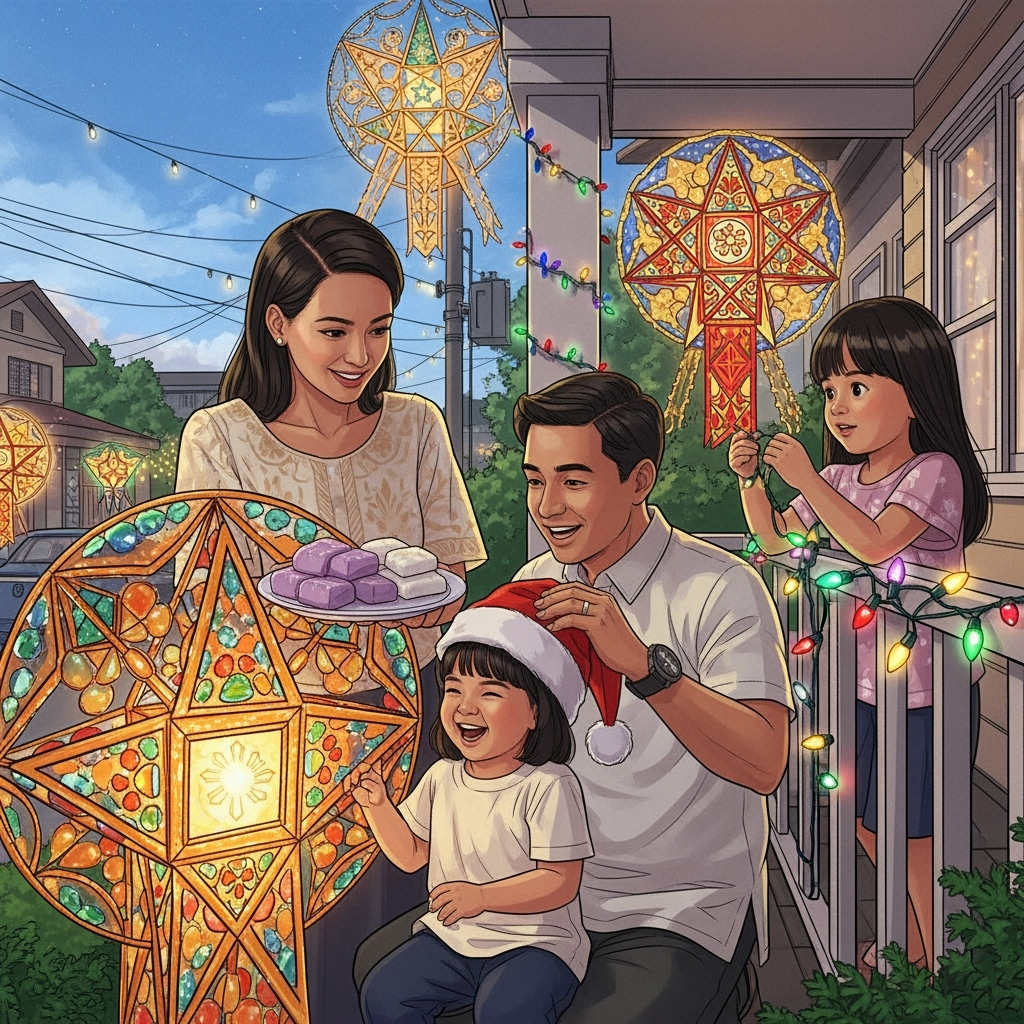
For Filipinos, Christmas begins with the arrival of the -Ber months, extending for about 128 days until Three Kings’ Day, sometimes even 166 days.
In the Philippines, countdowns have already started. Streets and balconies glow with lanterns, while carols fill the air from malls to jeepneys and local stores.
One song dominates the airwaves:
Jose Mari Chan’s 1990 hit Christmas in Our Hearts is so iconic that memes of the musician flood Filipino social media every September:
Expats say extending the Yuletide celebrations reflects Filipinos’ joyful nature and their knack for finding happiness in everyday life.
“We are among the happiest people, despite challenges. Christmas is the happiest season, and we wish it would never end,” said Minerva Maer, an architect in Dubai. Her daughter Francine knows the tradition well:
“We cherish that special, joyful spirit and want it to last longer,” said life coach Lou Olvido Parroco, who ensures everyone in her family joins the annual tree-lighting ceremony.
Nesty Amante, a Dubai-based engineer, also embraces this tradition. Last Saturday, he and his wife Dyan decorated their tree in beige, white, and silver for their young son. When asked why they start early, the couple explained:
>> Unraveling the Tradition’s History
Many Filipinos may not realize there’s more to this custom than meets the eye.
Anthropologist Felipe Jocano Jr suggests it evolved with commercialization, as malls encouraged early shopping.
“Merchants likely promoted early sales to boost gift shopping and reduce inventories,” he noted.
However, Filipino-American historian Kirby Pábalan-Táyag Aráullo argues that this marketing strategy aligns with a practice predating malls.
It traces back to pre-colonial times, even before Spanish explorers brought Christianity to the Philippines in 1521.
“In the Philippines, September ushers in the Amian, the North Wind, marking the festive season of renewal and the end of typhoon season,” Araullo explained in a 2019 YouTube vlog.
This September wind, lasting until February, brings ‘sacred’ birds that devour locusts, safeguarding the rice harvest—a cause for celebration, he added.
When Christianity arrived, many traditional celebrations endured. Araullo, a culture bearer and content creator, shared examples:
>> Bringing the Tradition to the UAE
For 14 years in the UAE, the Buraga family hasn’t missed their September Christmas preparations, especially with two kids now.
“We want our children to enjoy and remember it as we did, keeping the tradition alive for future generations,” said engineer Cyreen Angolluan, Mark’s sister-in-law.
This year, five-year-old Lucio had the key role in the family’s celebration:
“Since childhood, the youngest in our family places the Christmas star. We continue this tradition,” Cyreen said.
Filipinos worldwide agree that nothing compares to celebrating Christmas back home. Amid pandemic travel challenges to Manila, expats recreate the atmosphere however they can.
“We find creative ways to feel at home, like exchanging gifts, cooking traditional dishes, attending online Simbang Gabi masses. We celebrate from afar because the Christmas spirit stays in our hearts,” Amante said.
For the Maer family, their Christmas tree was a balm against the ‘fear and uncertainty’ of Covid-19 in 2020. “We put it up in September last year as a symbol of hope, a reminder that God is greater than any pandemic,” Minerva stated.
Parroco agreed: “Covid-19 led us to reflect deeply on life’s preciousness. We must live every day like it’s Christmas.”
kirstin@khaleejtimes.com