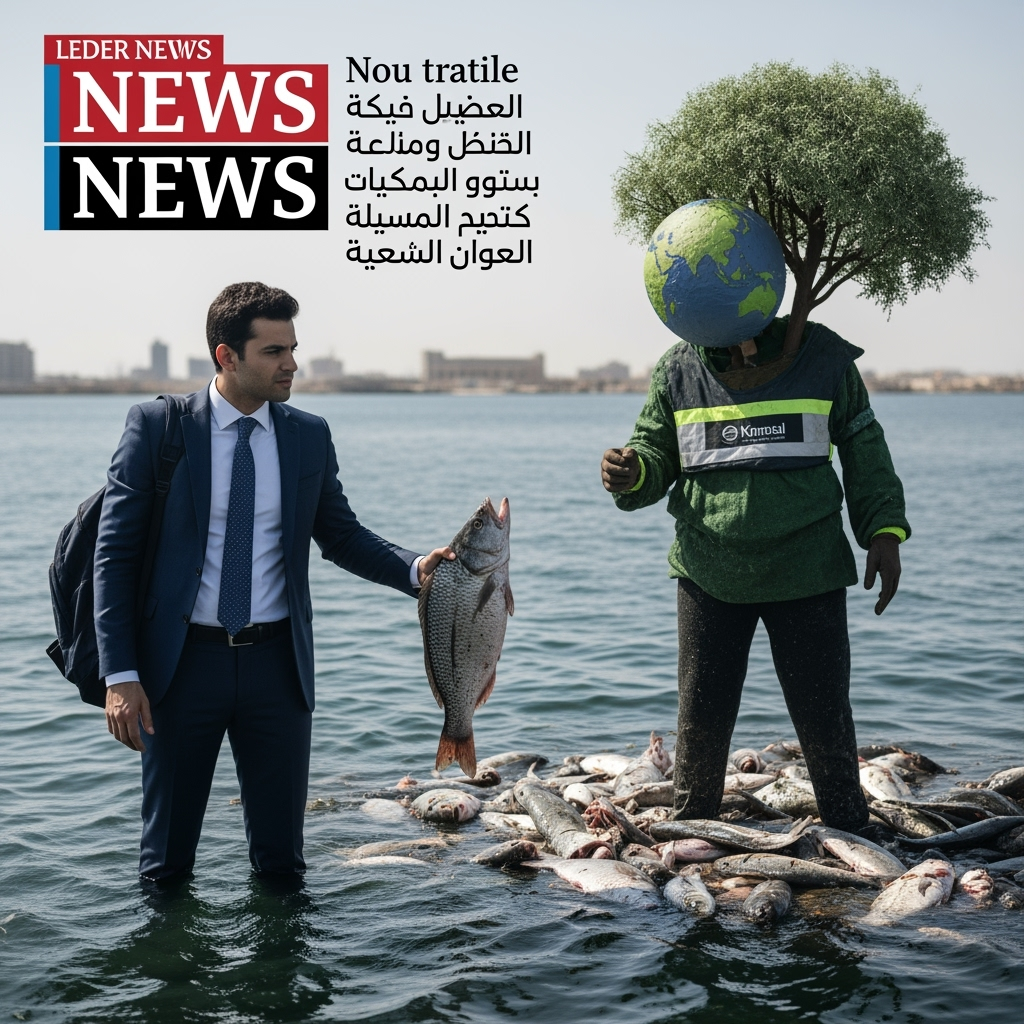
The statement issued by the Lakes Protection and Fish Wealth Development Agency, affiliated with the Ministry of Agriculture, mentioned that fish mortality is a natural phenomenon in light of climate changes and record heat waves experienced globally, as reported by Egypt’s ‘Al-Ahram Gate’ on Sunday. The statement explained that ‘fish are cold-blooded creatures, and therefore, they are directly affected by rising temperatures.’ It noted that marine species farmed in Egypt, such as sea bream, sea bass, and meagre, thrive in a temperature range between 20 and 24 degrees Celsius, indicating that any exceedance of this range harms their growth, adaptability, and disease resistance. The agency pointed out that recent heatwaves have raised water temperatures beyond the suitable level for these species, causing fish stress and mortality. It also highlighted that the decrease in dissolved oxygen, increased ammonia levels, and changing water characteristics were among factors exacerbated by the high fish density in farms compared to their natural environment. The statement confirmed the continuation of technical support and guidance efforts for breeders to address these issues, noting that the Minister of Agriculture has directed to intensify awareness and provide necessary support to ensure production efficiency and preserve fish wealth.
Lake Manzala is classified as one of the largest freshwater lakes in Egypt, covering an area of about 405 square kilometers with a depth of 1.15 meters, located in the northeastern part of the Nile Delta. Lake Manzala is connected to three governorates: Port Said, Dakahlia, and Damietta. It shares its eastern border with the Suez Canal, while the western border is bounded by a branch of the Nile River in Damietta and the northern border by the Mediterranean Sea.