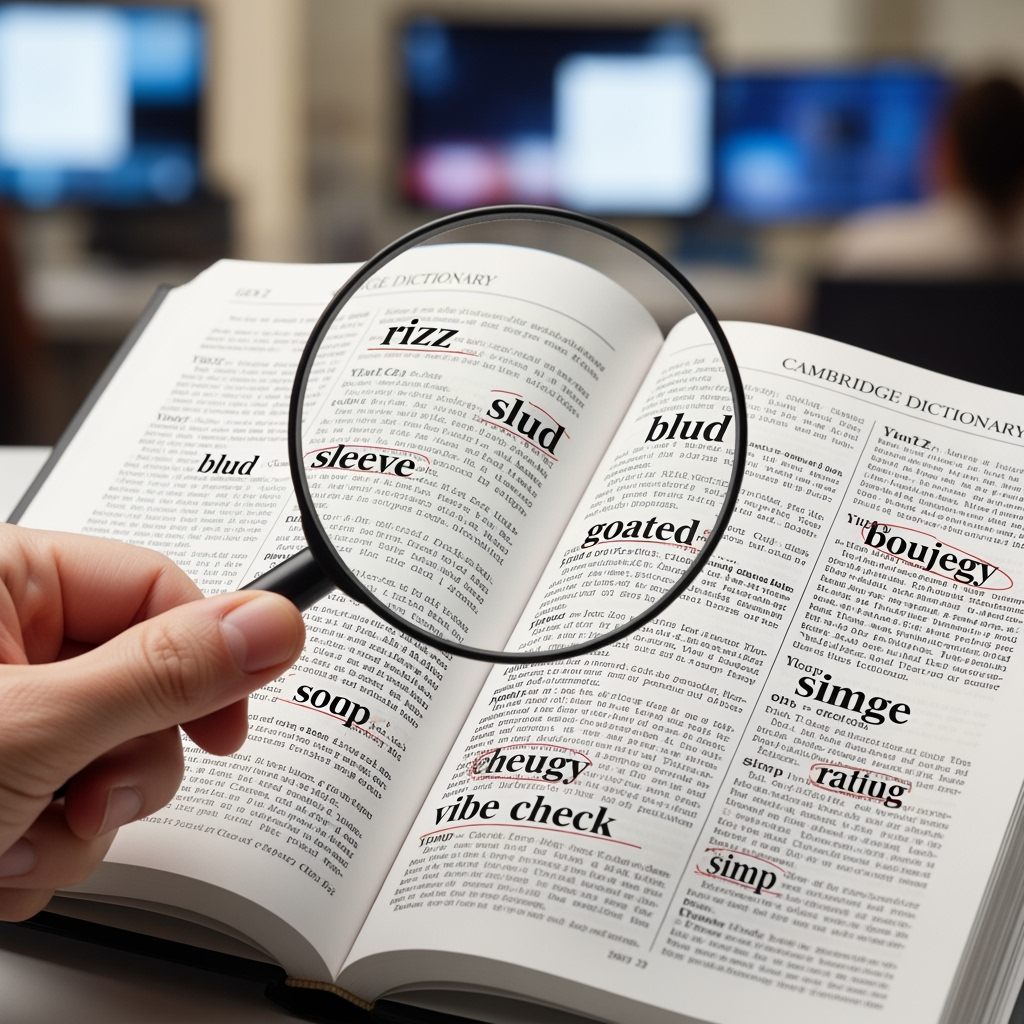
Words like “skibidi”, “delulu”, and “tradwife”, popular among Gen Z and Gen Alpha, are part of the 6,000 new entries added to the Cambridge Dictionary’s online edition over the past year, as announced by its publisher on Monday.
Cambridge University Press explained that “tradwife”, a blend of “traditional wife”, highlights a growing, controversial trend on Instagram and TikTok that promotes traditional gender roles.
The dictionary also tackled the task of defining “skibidi”, a term popularized by online memes, describing it as having “various meanings such as cool or bad, or sometimes used without any specific meaning”.
This nonsensical word was propagated by a YouTube channel called “Skibidi Toilet” and is linked with the mindless “brain rot” content prevalent on social media, consumed heavily by Gen Alpha’s digital lifestyle.
“Delulu”, from “delusional”, is defined by the dictionary as “believing things that aren’t real or true, usually by choice”.
They referenced a 2025 parliamentary speech by Australian Prime Minister Anthony Albanese, who used the phrase “delulu with no solulu” as an example.
“It’s rare to see words like skibidi and delulu enter the Cambridge Dictionary,” remarked Colin McIntosh, Lexical Programme manager at Cambridge Dictionary.
“We only include words that we believe will endure. Internet culture is reshaping the English language, and it’s fascinating to watch and document this evolution in the Dictionary.”
Other new terms include “lewk”, denoting a unique fashion style popularized by RuPaul’s Drag Race, and “inspo”, short for inspiration.
The remote work trend has introduced “mouse jiggler”, a term for a tool used to simulate working when you’re not.
“Forever chemical” also entered the dictionary, referring to synthetic chemicals that persist in the environment for years, with growing concerns over their irreversible impact on human health and the planet amid climate change.