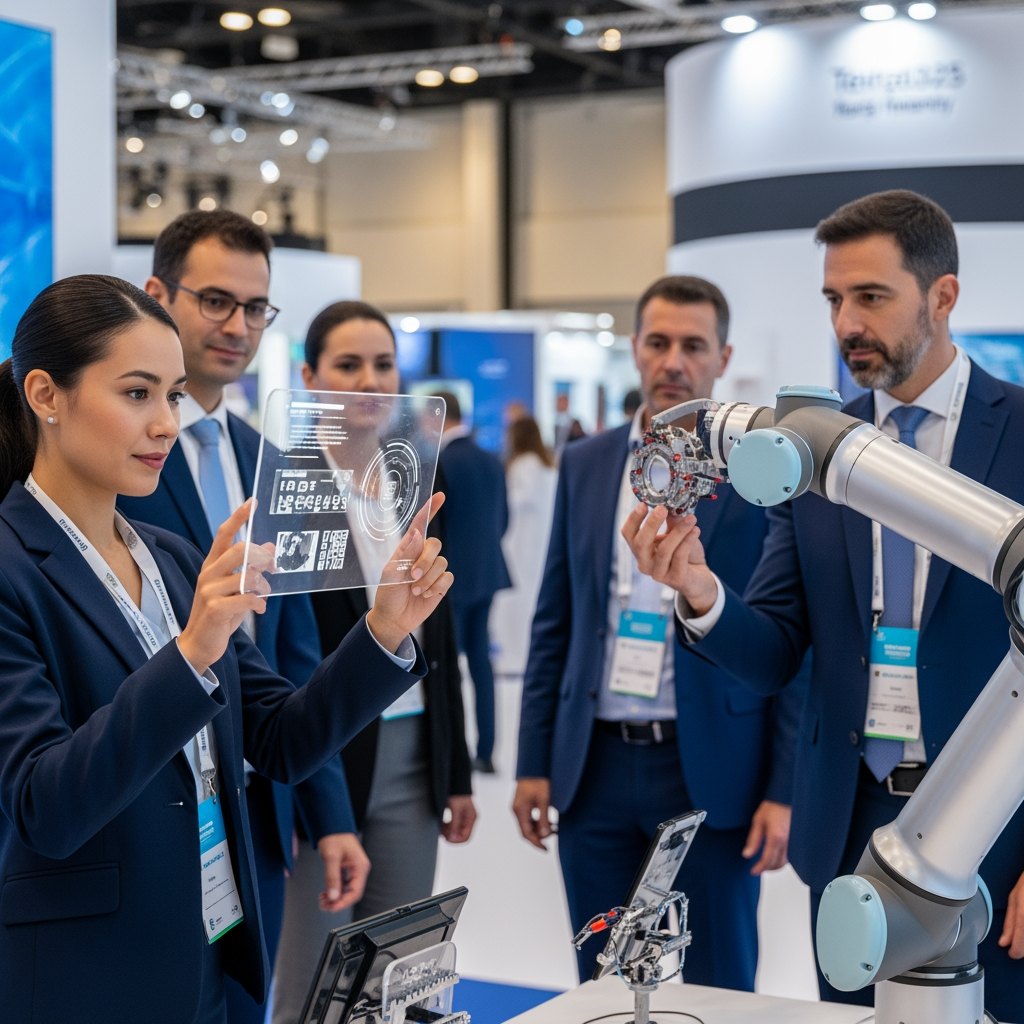
Each year, Dubai transforms into the epicenter of the tech universe during GITEX Global. However, this year, the focus wasn’t solely on technology; it was about the experience. The event evolved from a product showcase to a dynamic dialogue between humans and technology.
Within the exhibition halls, screens faded into the background as presence took center stage. Visitors weren’t merely observing technology; they were engaging with it. From digital humans that smiled back to cameras capable of storytelling, innovation was redefined by emotion rather than performance. The future displayed was neither cold nor mechanical, but intuitive, expressive, and deeply human.
Illuminating Conversations
LEANGLE’s installation vividly embodied this new spirit. The company’s booth, bathed in soft blue light, resembled an art gallery more than a tech space. People queued for hours to interact with something not entirely human but undeniably alive.

Junwei Ye, CEO of LEANGLE.
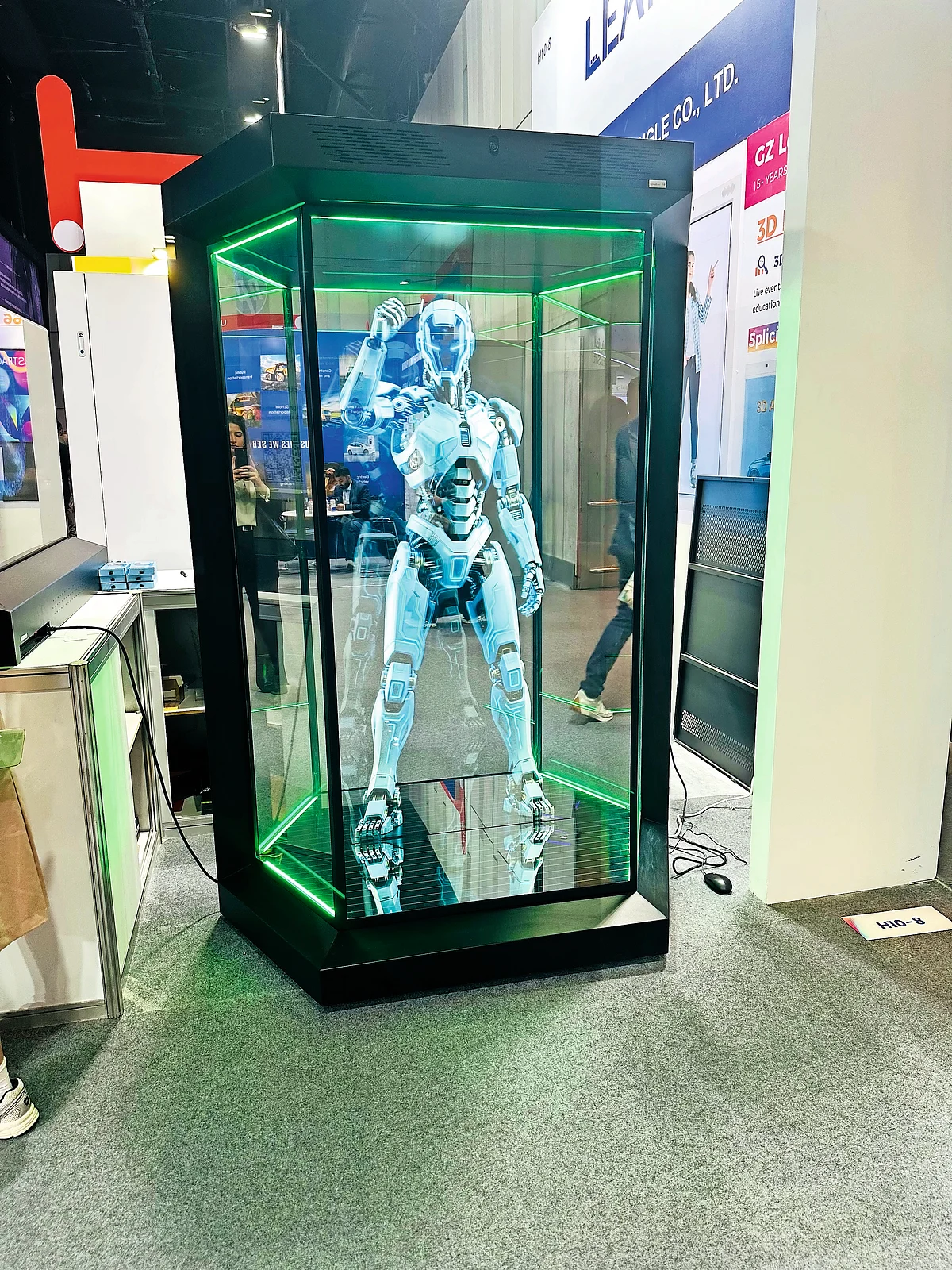
LEANGLE’s AI Digital Human Holographic Pod projected 3D holographic humans so lifelike that many visitors instinctively greeted them. These figures blinked, gestured, and responded with warmth, delivering a surprisingly personal experience.
“GITEX was the perfect platform to demonstrate how LEANGLE’s AI Holographic Pod and 3D transparent screen are pioneering intelligent virtual real interactions, ushering in a new era of AI communication,” stated Junwei Ye, the company’s CEO.
This technology, driven by an advanced digital twin system, created an immersive environment where digital humans could converse with nuance and emotion. They were expressive, articulate, and even charming. One visitor described it as the moment the screen disappeared.
For Ye, the goal was not just to impress but to envision a new type of communication. “The perfect fusion of AI and transparent display represents our vision for the future of immersive interaction,” he explained. “We aim to bridge the gap between the virtual and the real.”
The implications extend beyond entertainment. This technology could allow teachers to appear in classrooms worldwide or enable medical professionals to provide comfort through holographic assistance. LEANGLE demonstrated that the next step in AI isn’t faster thinking but deeper feeling.
Machines That Understand
While holograms captivated imagination, another company focused on practical human connections. Reolink, renowned for its intelligent visual technology, attracted attention with ReoNeura, an AI system that enhances security cameras with the ability to comprehend what they observe.
ReoNeura distinguishes between people, vehicles, animals, and packages, learning to differentiate real events from false alarms. It can even condense hours of footage into concise written summaries, allowing users to understand events without replaying every moment.
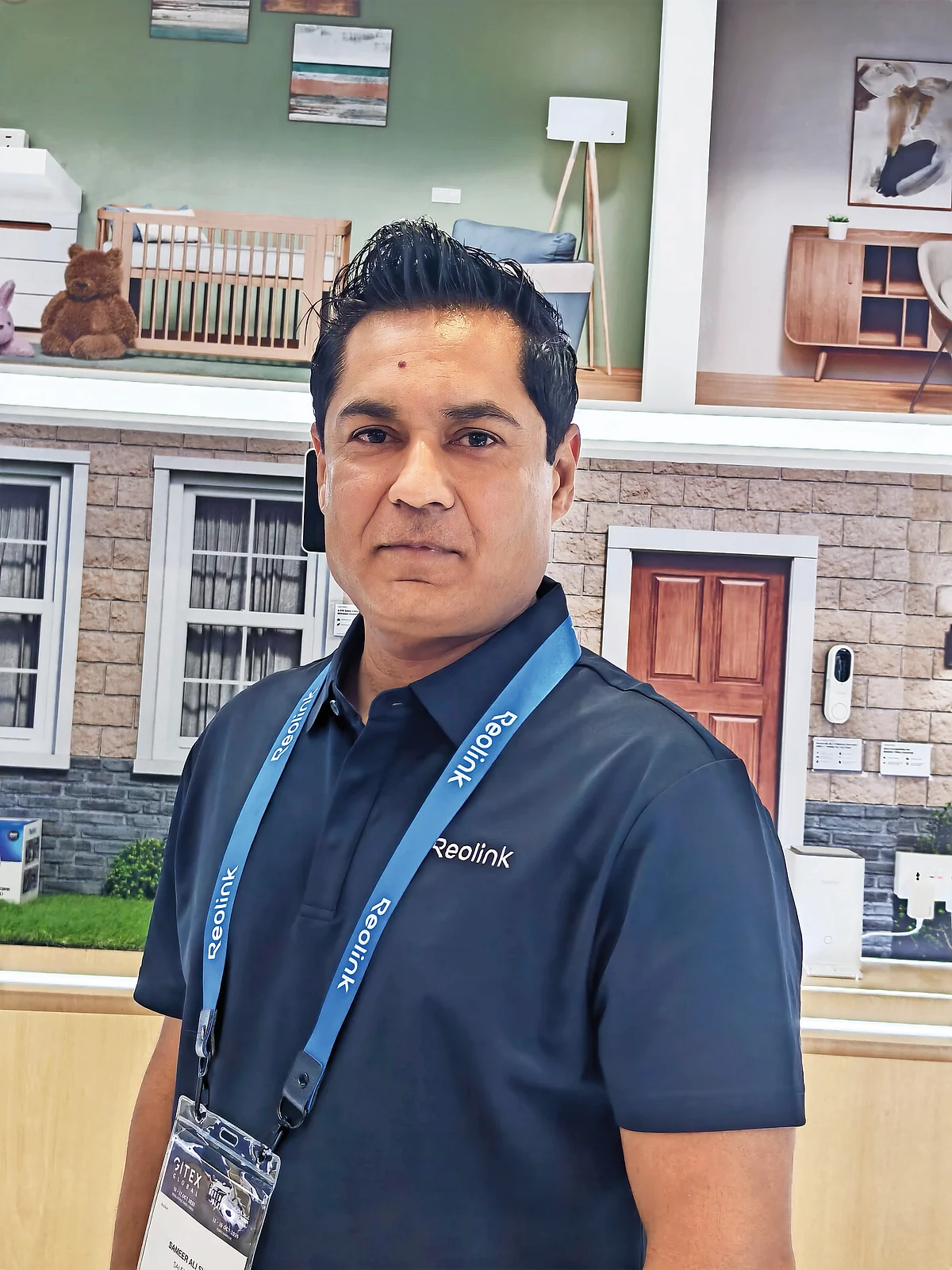
Sameer Ali Syed, Regional Head of Sales for the Middle East, Africa, and India at Reolink.
Reolink also introduced TrackFlex Floodlight WiFi, the first 4K panoramic floodlight camera combining motion tracking with intelligent lighting. The result is surveillance that interprets rather than merely records, offering awareness instead of just observation.
“GITEX Global 2025 has been an incredible platform to showcase how intelligent visual technology is shaping the future of smart security,” noted Sameer Ali Syed, Regional Head of Sales for the Middle East, Africa, and India at Reolink.
He added that discussions with dealers and distributors revealed the rapid growth in demand for AI-driven security in the region. “The interest we’ve seen underscores the value people place on technology that can think clearly and respond intelligently,” he said.
For Reolink, the aim is not to create machines that watch us more closely, but those that help us see with greater understanding. It’s security that feels less mechanical and more mindful.
Emotion: The New Innovation Metric
The most striking theme of this year’s event was the idea that emotion is becoming the true measure of innovation. The technology that moved people wasn’t the most complex or expensive; it was the kind that felt personal.
Every corner of the venue drew visitors to experiences that made them think or smile. They were less interested in statistics and more in sensation. Whether it was a hologram greeting them by name or a smart system adapting to their needs, the focus was clear: technology now succeeds when it connects.
This evolution marks a turning point. Tomorrow’s machines won’t compete solely on power but on empathy, awareness, and understanding. They will be designed to respond, not just react.
Machines may now learn, write, and even see, but it is still human imagination that gives them purpose.
A Region Shaping the Future
The Middle East has emerged as a powerful testing ground for this new wave of innovation. Governments and private enterprises across the region are investing in technology that balances intelligence with intention. Smart city projects, immersive learning platforms, and AI-driven customer experiences are all being developed around the principle that human value comes first.
By hosting events like GITEX, the region continues to prove that progress isn’t about keeping up with global trends but setting new ones. It’s about designing systems that enhance how people live, work, and communicate.
In this context, the innovations presented by LEANGLE and Reolink represented more than technological milestones. They were expressions of a broader cultural shift, showcasing that the fusion of creativity and engineering can be both functional and emotional, both efficient and humane.
Where Technology Meets Humanity
As the final visitors left the exhibition floor, the glow of the holograms and the quiet hum of AI systems lingered like an afterthought. What remained was a sense of possibility. The conversations that shaped this year’s event weren’t about replacing people but rediscovering what technology can make us feel. Progress is no longer measured by speed or scale; it is gauged by presence, awareness, and connection.
Machines may now learn, write, and even see, but it is still human imagination that gives them purpose. The future of innovation will belong to those who can blend intelligence with emotion and function with meaning. This year’s showcase reminded the world that technology isn’t here to outthink humanity but to reflect it. The next great leap forward won’t be mechanical—it will be human.