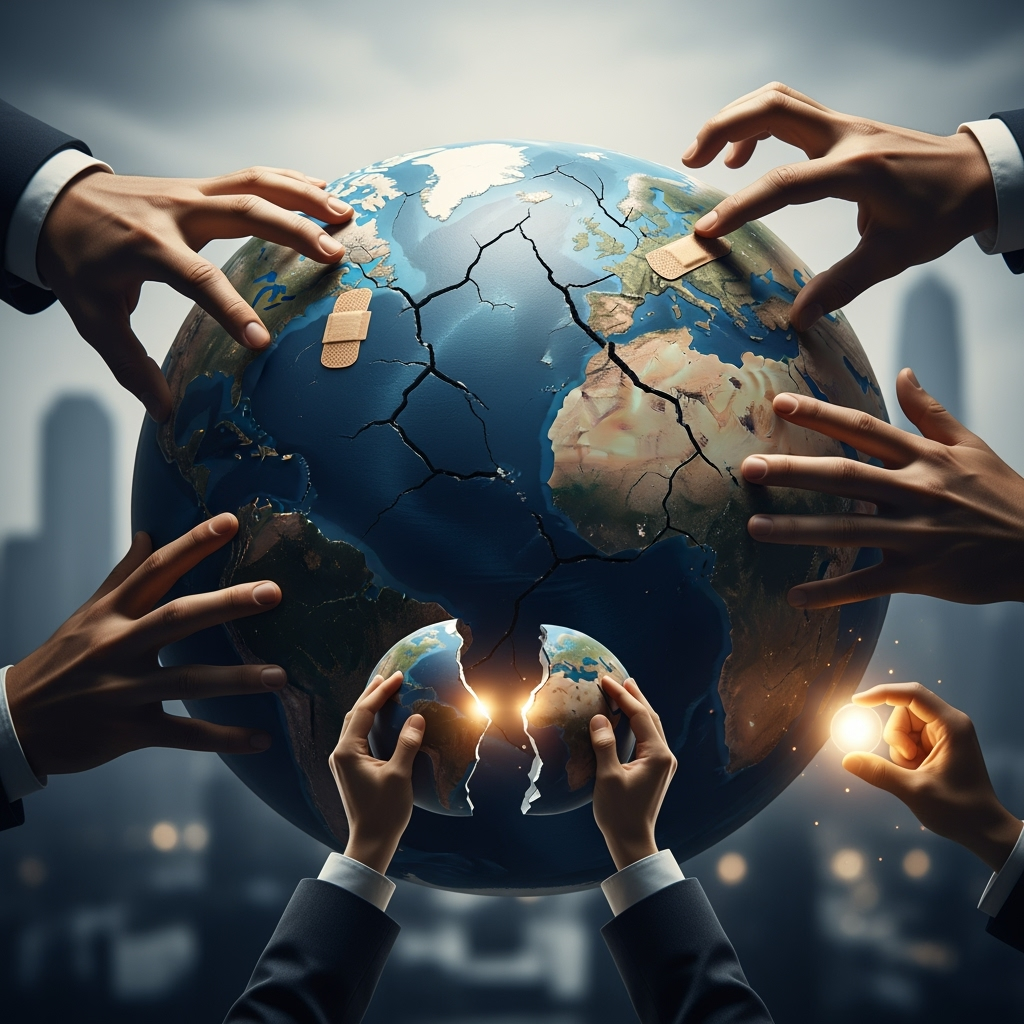
The global arena is facing a “trust crisis” as rising nationalism, weakened multilateral systems, and growing great power conflicts exacerbate global instability, as noted by diplomats and strategists at the Hili Forum in Abu Dhabi. Catherine Ashton, former EU foreign policy chief, emphasized that the world is undergoing a profound transition rather than settling into a “new normal.”
“People everywhere desire safety, security, education, a good quality of life, and opportunities for their children. This is universal. Therefore, I see this as a phase of transition, not normalcy.”
Discussing Europe’s role, she compared the situation to pieces being tossed into the air without a clear outcome. “We don’t know what the final structure will be once these pieces settle. It’s our responsibility, with the guidance of the institutional framework that emerges when peace is achieved.”
Stay informed with the latest updates. Follow KT on WhatsApp Channels.
Middle Powers Must Act Boldly
Former Mexican ambassador to Washington, Martha Bárcena Coqui, stated that middle powers like the UAE, Saudi Arabia, South Africa, India, Brazil, and Mexico must take proactive steps through platforms like the G20, BRICS, or new consultative mechanisms.
“Increased dialogue among middle powers is essential… whether through G20, BRICS, or new consultative frameworks,” she emphasized. “We must act without fear. Fear is the enemy of progress. Standstill is not an option. We must move forward courageously.”
She advocated for prioritizing tolerance and values over extreme nationalism, warning that the latter “leads nowhere.” Bárcena also called for urgent UN reforms, recalling her shock at the Security Council’s inaction during Russia’s invasion of Ukraine. “UN reform is necessary. A new Secretary General will be elected next year. During Russia’s invasion of Ukraine, denial was rampant in the Security Council.”
“We witnessed the UN’s complete paralysis. This cannot continue. We need reforms that give voice and uphold international law, which is crucial for middle powers and the developing world. Without it, transitions will fail,” she added.
Forming Willing Coalitions
From New Delhi, Ambassador Navtej Sarna described the current landscape as unpredictable with weakened institutions. “At one level, the new normal… is defined by unpredictable elements like Trumps, tweets, tariffs, and tantrums.”
He suggested that middle powers should form flexible, issue-focused alliances. “The future will see more coalitions of the willing, based on specific issues. Middle powers collaborating will be beneficial.”
UN Reform is Crucial
Ambassador Welile Nhlapo of South Africa emphasized Africa’s vulnerability to Cold War dynamics and ongoing conflicts, highlighting the need for UN reform. “African conflicts dominate the Security Council’s agenda, yet the continent lacks integration to contribute effectively. Cooperation between the UN and AU remains unrealized,” he noted.
Nhlapo stressed Africa’s determination not to be shaped by external forces again. “The new normal for us will be if the emerging multipolar world delivers on its promises. This time, we’re ready to shape the world we want to live in.”