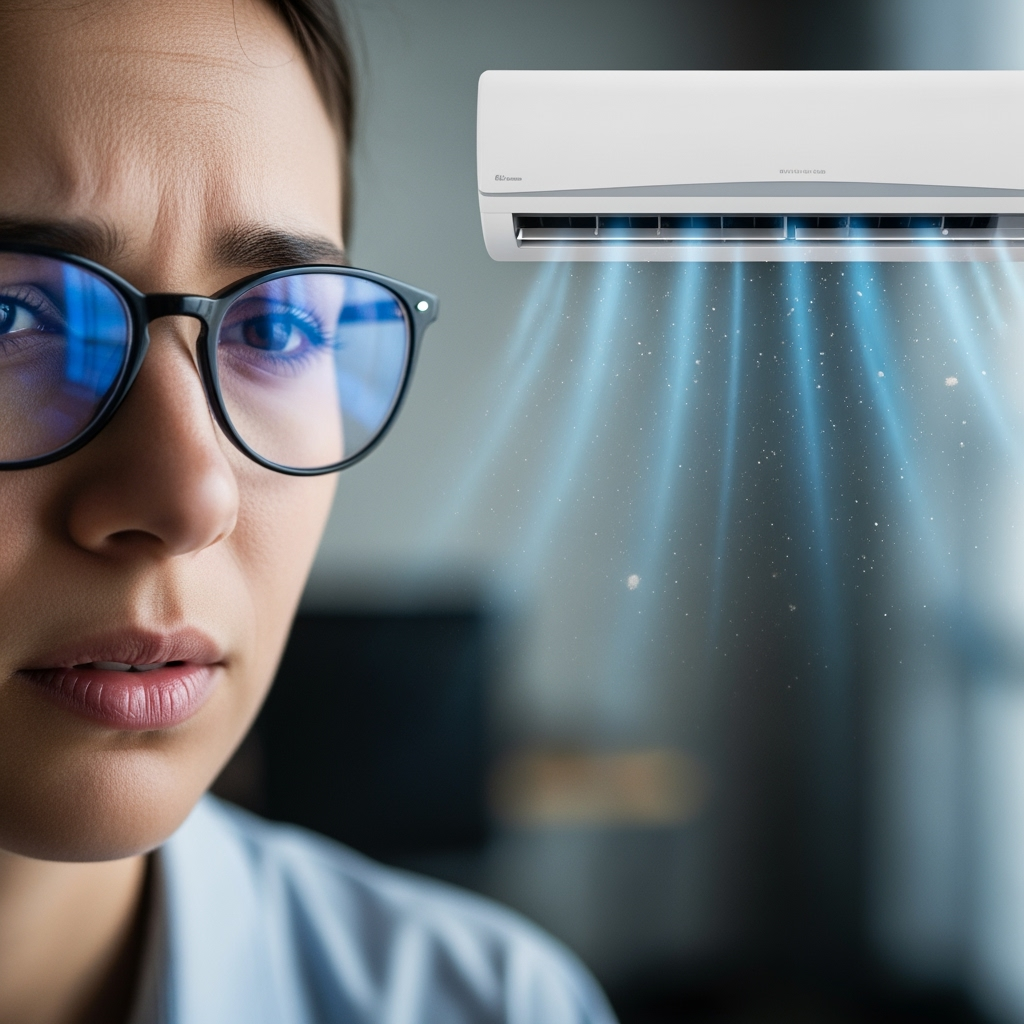
A lecturer in clinical microbiology at the University of Leicester, UK, explains that some people avoid using air conditioning no matter how high the temperature is outside, noting that this fear is not unfounded. ‘Sick Building Syndrome’ is the general term for symptoms that may appear after spending long periods in air-conditioned environments. The symptoms include headaches, dizziness, nasal congestion or runny nose, persistent cough or wheezing, skin irritation or rashes, difficulty concentrating at work, and fatigue. This condition usually affects office workers but can affect anyone who spends long periods in air-conditioned buildings, such as hospitals.
The symptoms of Sick Building Syndrome increase the longer you stay in a particular building and subside after leaving it. A group of air conditioners showed more symptoms consistent with Sick Building Syndrome during the two-year study period, particularly an increased prevalence of allergies. More importantly, it showed that those exposed to air conditioners had impaired lung function and were absent from work more than others, compared to the group not exposed to air conditioners. Other studies have confirmed that workers in air-conditioned office environments have a higher prevalence of Sick Building Syndrome than those who do not work in such environments.
Malfunctioning air conditioners may also release chemicals from air conditioner cleaners or coolants into the building’s air. Chemicals such as benzene, formaldehyde, and toluene are toxic and may irritate the respiratory system. Poorly maintained air conditioning systems can also harbor pathogens that can cause serious infections. For example, the Legionella pneumophila bacterium, which causes Legionnaires’ disease—a lung infection transmitted by inhaling water droplets containing this bacterium—tends to grow in water-rich environments, such as hot tubs or air conditioning systems.
Legionella pneumophila can cause infection when inhaled in water droplets. It often occurs in communal places such as hotels, hospitals, or offices, where the bacteria contaminate the water supply. Symptoms of Legionnaires’ disease are similar to those of pneumonia, causing cough, shortness of breath, chest pain, fever, and flu-like symptoms. Symptoms usually appear two to fourteen days after exposure to the bacteria.
The accumulation of dust and moisture inside air conditioning systems may also create the right conditions for mold growth. For instance, research on hospital air conditioning systems found that fungi commonly accumulate in the water-rich areas of hospital ventilation systems. These can be dangerous for patients at higher risk, such as those with weakened immune systems, organ transplant recipients, dialysis patients, and premature infants. Aspergillus fungi, for example, can cause pneumonia, abscesses in the lungs, brain, liver, spleen, kidneys, and skin, and can infect burns and wounds.
Infections can also be contracted from air conditioners, as one study revealed that children in a Chinese kindergarten contracted the norovirus from their air conditioning system, leading to 20 students suffering from stomach flu. Although norovirus typically spreads through close contact with an infected person or after touching a contaminated surface, it was confirmed in this case that the virus spread through the air—from the classroom bathroom’s air conditioning unit. Several other such cases have been reported.
Another reason that might increase the risk of infections is the way air conditioners control humidity levels, making indoor air drier than outside air. Spending long periods in low-humidity environments can dry out the mucous membranes in the nose and throat. This may affect their ability to prevent pathogens from entering the body, making you more susceptible to deep tissue infections in the sinuses.
Air conditioners are designed to filter out air pollutants, fungal germs, bacteria, and viruses, preventing them from entering the air we breathe indoors. However, this protection can be compromised if the system’s filter is old or dirty, or if it is not cleaned. Thus, ensuring the proper maintenance of air conditioners is crucial for preventing air conditioner-acquired infections.