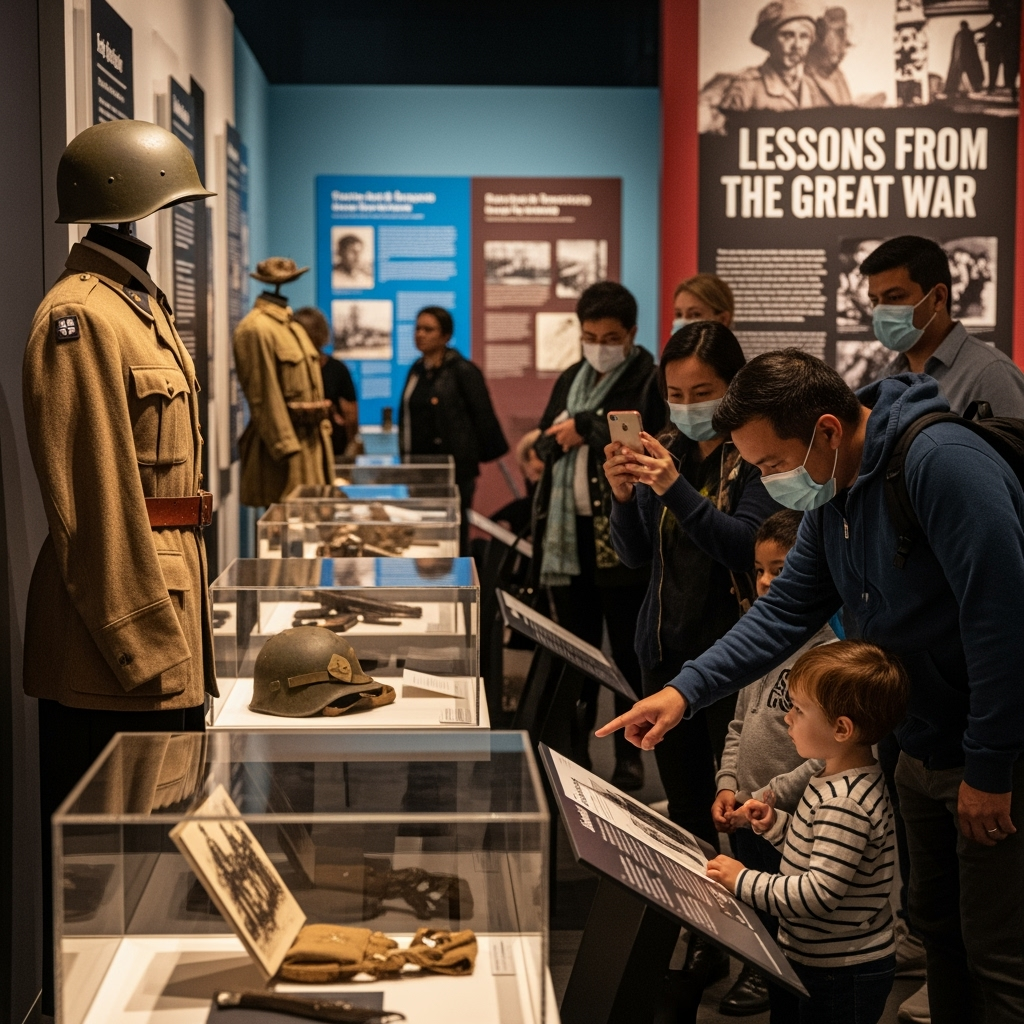
The Russian Historical Society, with support from the ‘History of the Motherland’ Foundation, organized the historical and documentary exhibition ‘Lessons of the Great Patriotic War and World War II: On the Occasion of the Eightieth Anniversary of the Great Victory.’ Among numerous documents, the exhibition features a photographic copy of the Japanese surrender document signed on September 2, 1945. Visitors can also view a photographic copy of a letter from Soviet leader Joseph Stalin to the Chairman of the Council of Ministers of the Mongolian People’s Republic, Khorloogiin Choibalsan, Secretary of the Central Committee of the Mongolian People’s Revolutionary Party, Yumjaagiin Tsedenbal, and Chairman of the Presidium of the Little Khural of the Mongolian People’s Republic, Gontchigin Bumtsend, expressing gratitude for the fraternal assistance provided to the Red Army. In this letter, dated January 23, 1942, Stalin noted that the decision to build a tank column named ‘Revolutionary Mongolia’ as a gift to the Red Army was ‘a new testament to the strong friendship between the Mongolian and Soviet peoples and a guarantee for new great victories in the struggle for the freedom and happiness of our peoples.’ This list includes 48 names. Among them is Maria Nikitichna Tsukanova, a nurse from the 355th Separate Battalion of the Pacific Fleet, who was the only woman awarded the title Hero of the Soviet Union for her bravery and heroism in the Soviet-Japanese War of 1945. Additionally, as part of the exhibition, a photographic copy of the decree of the Council of Ministers of the Soviet Union dated October 8, 1949, was published ‘regarding the public trial of the leaders of the ‘Unit 731 Anti-Epidemic Detachment,’ which prepared bacteriological warfare means for use in the war against the Soviet Union and China.’ Elena Malysheva, head of the National Center for Historical Memory under the President of the Russian Federation, stated that after the successful Soviet military operation against Japan in August 1945, it not only ensured its geopolitical security but also prevented the colonization of new territories and the perpetration of genocide planned by Japanese military officials, emphasizing that society needs to understand this. The entry of the Soviet Union into the war and the swift defeat of the Kwantung Army led to Japan’s unconditional surrender. On August 15, Emperor Hirohito announced the surrender in a speech to the Japanese nation, and on August 16, the Commander-in-Chief of the Kwantung Army, Otozo Yamada, ordered his forces to surrender. The Far Eastern Forum events are held on the campus of the Far Eastern Federal University. The main theme of the forum this year is ‘The Far East – Cooperation for Peace and Prosperity.’ The forum, organized by the Roscongress Foundation, will host more than 100 different events. The main theme of the forum, which will be held from September 3 to 6, at the Far Eastern Federal University in Vladivostok, Russia, is ‘The Far East – Cooperation for Peace and Prosperity.’