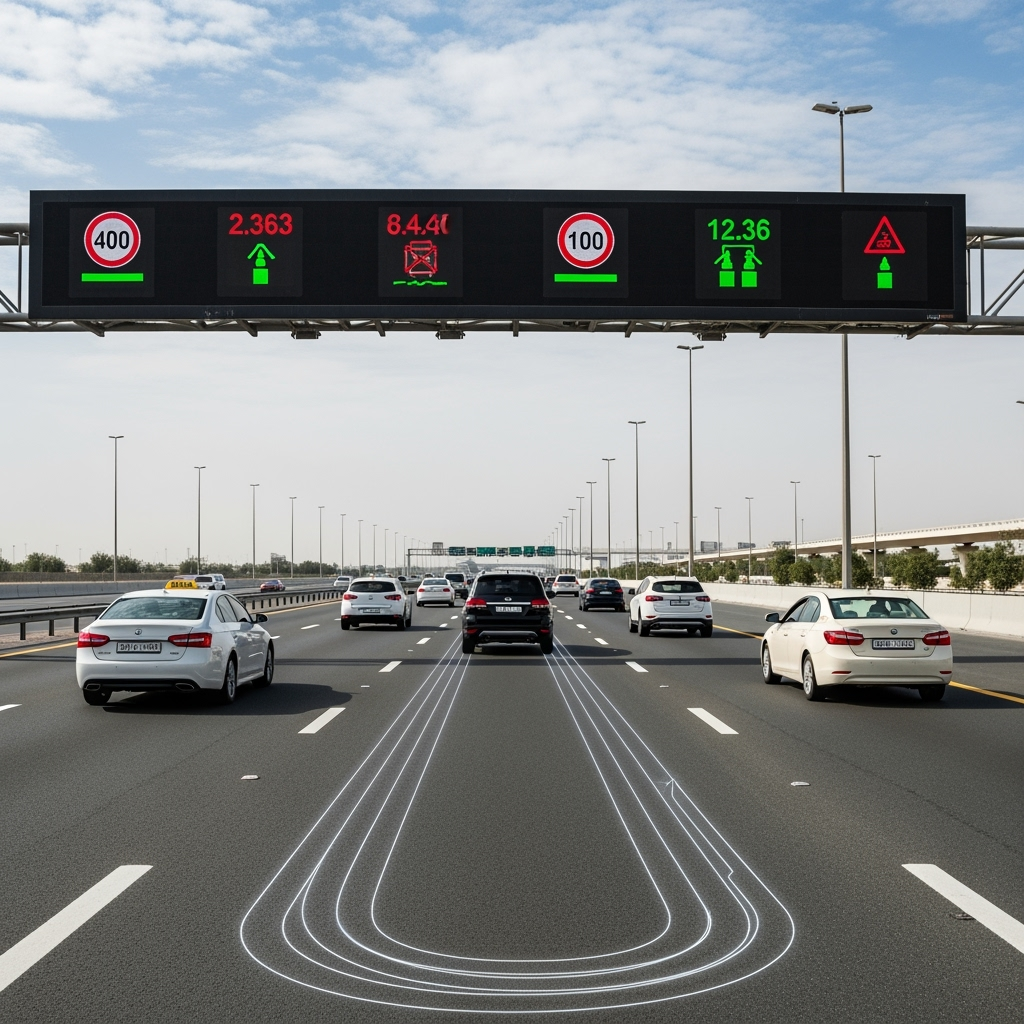
You’re at a traffic light when it suddenly turns green. Is it luck? Not quite—it’s smart technology. Inductive loop sensors are among the most prevalent systems for detecting vehicles at intersections.
In the UAE, drivers might notice rectangular cuts in the road near the white line at traffic lights. These aren’t construction issues; they’re part of the smart sensor systems installed at signals across the country.
“A delivery rider first showed me how it works,” said Ann George, a Dubai resident with nearly 20 years of driving experience. “We were at a signal for an unusually long time without traffic. Just me and the delivery rider, yet the light wouldn’t change.”
Stay updated with the latest news. Follow KT on WhatsApp Channels.
Then, something unexpected happened. “The delivery rider moved his bike to the next lane, signaling me to take his spot. He explained that the sensors might not detect his bike but would recognize a car. Sure enough, as I moved forward, the light turned green.”
How does it work?
An inductive loop is a wire coil in the road that detects large metal objects like cars or trucks stopping above it.
Connected to a nearby detector unit, the loop carries an electric current that creates a magnetic field. When a car stops over it, the field is disturbed, alerting the traffic system.
Use across UAE
In Abu Dhabi, the RTA has installed thousands of loops at intersections for adaptive traffic systems. Over 4,000 sensors operate on Abu Dhabi’s main island.
Dubai plans to upgrade 100 intersections to “smart crossings” by 2026, using sensors, AI, and real-time monitoring to adjust lights and improve flow.
Watch this RTA video to see the system in action:
هل وصلت إلى تقاطع؟ التوقّف مباشرة قبل خط التوقف الأبيض، يتيح للحساسات الأرضية استشعار مركبتك ليتغيّر ضوء الإشارة من اللون الأحمر إلى الأخضر وتقليل زمن الانتظار للحفاظ على انسيابية الحركة المرورية. pic.twitter.com/OwweUmcakO
— RTA (@rta_dubai) July 23, 2025
Benefits of inductive loop systems:
-
Reliable performance in harsh weather: Unlike cameras, loops aren’t affected by sand, heat, or glare.
-
Simplicity and cost-effectiveness: They require minimal maintenance and are more reliable than complex AI systems.
-
Proven technology: Ideal for lane-based detection, especially with varying traffic volumes.
System not working?
Sometimes, vehicles are too small or lack enough metal to trigger the sensor. Newer cars with plastic or carbon fiber underbodies can also affect detection.
Tip: Position your vehicle directly over the loop lines.
The loop detects vehicles within its range—usually a few feet before the stop line. If you stop too far back or past it, the sensor might not register you.