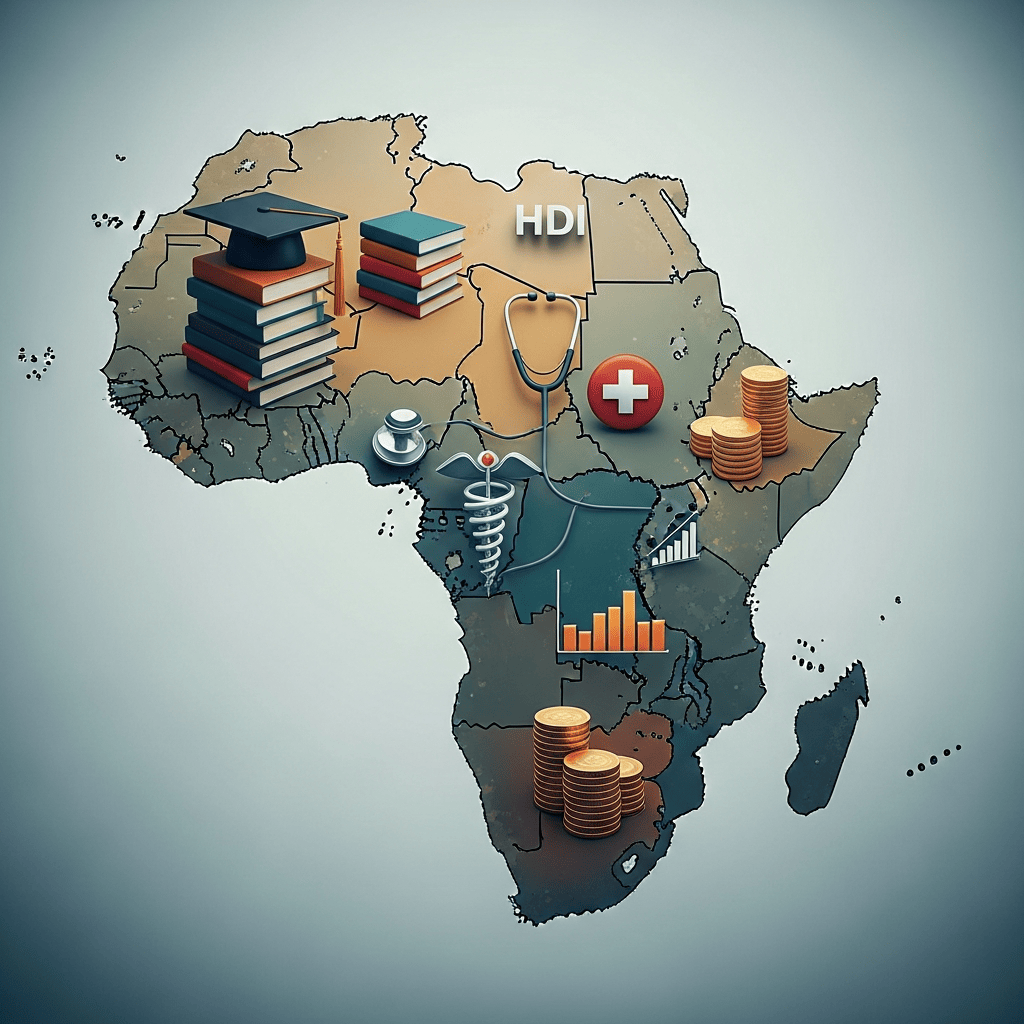
Based on the Human Development Index (HDI), which measures the level of progress across three main axes: life expectancy, education, and individual income, instead of relying solely on GDP. The report, prepared by researcher Fathia Olasupo, explained that advanced countries in the ranking have succeeded in transforming economic growth and public policies into tangible improvements in the quality of life for citizens through long-term investment in health, education, and good governance.
Mauritius tops the ranking as the most developed African country in 2025, due to a long-term commitment to human development and good governance. The country achieved nearly complete enrollment rates in education and literacy, with a recent focus on science, technology, and digital skills through the Education and Skills Development Plan 2023–2027. (0.806) Mauritius maintained its advanced position thanks to intensive investment in education, health, and strong institutions, with recent educational reforms focusing on STEM, lifelong learning, and technical skills linked to the digital economy.
Algeria’s advancement resulted from continuous investments in education, health, and economic diversification. The education sector witnessed a wide curriculum update, with increased focus on technical and vocational education and digital skills. (0.763) Tunisia achieved its advanced position by focusing on human capital and comprehensive social policies. Educational reforms concentrated on reducing school dropout rates, aligning curricula with the labor market, and enhancing digital and technical education.
Egypt advanced in the ranking due to a combination of economic reforms and investment in people. Education witnessed curriculum modernization, expansion in technical and digital education, and programs to support marginalized groups. (0.741) South Africa maintains an advanced position thanks to a diversified economy and developed infrastructure. Education policies focused on digital skills and vocational education, with historical equity programs for disadvantaged groups.
Gabon relied on utilizing oil revenues in developing education and health. Educational reforms included curriculum updates and expansion in vocational and STEM education. (0.731) Botswana’s advancement is attributed to political stability and prudent management of diamond wealth. The country invested in basic and higher education, with programs to prepare youth for the modern labor market.
Libya’s ranking reflects gradual improvement in human development after years of conflict. The education sector underwent restructuring, including expansion in vocational education and linking it to reconstruction. (0.710) Morocco entered the top ten list thanks to long-term reforms in education and health. Modern strategies focused on curriculum modernization, reducing the gender gap, and expanding digital education.
The report confirmed that successful African experiences in 2025 show that real development is not measured by economic growth alone, but by the extent to which public policies reflect on human health, education, and living opportunities. It concluded that countries that continue to invest in human capital, enhance governance, and sustainability will lead the African developmental scene in the coming years.