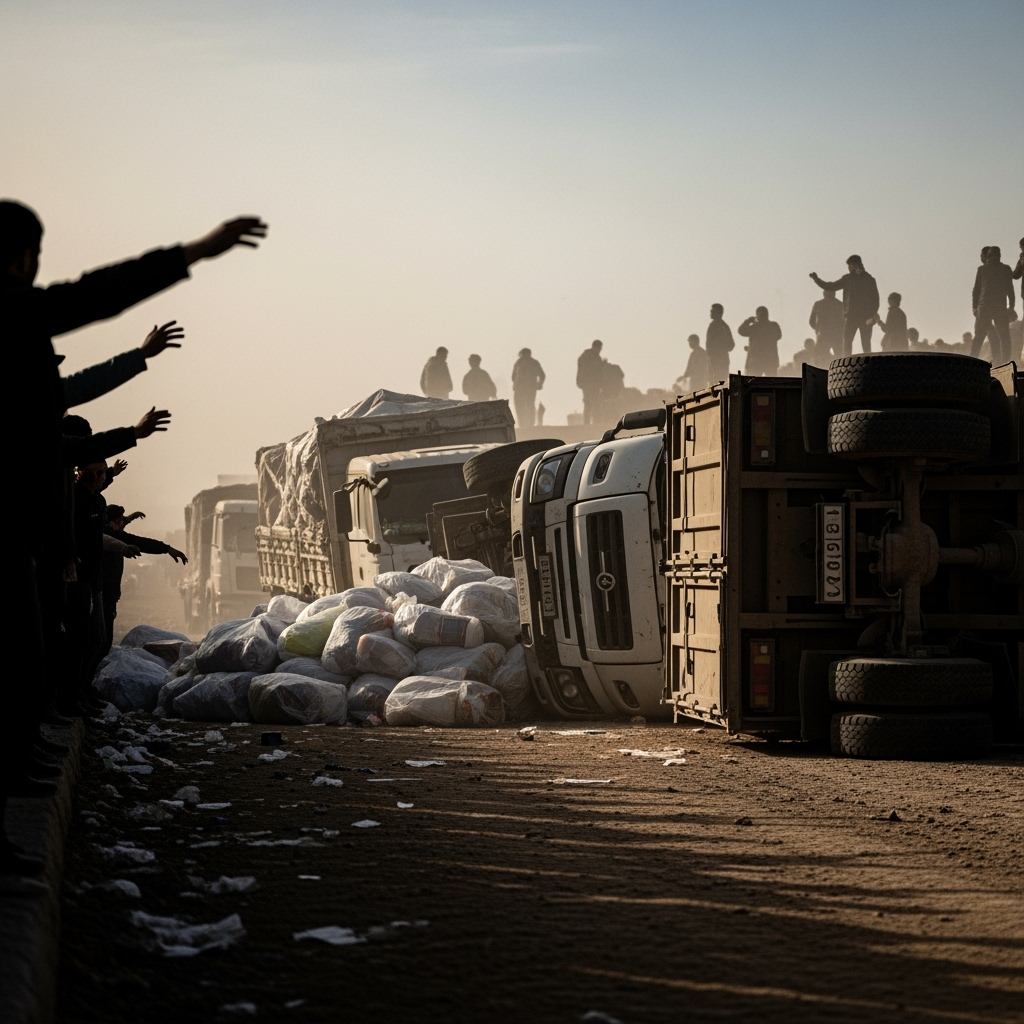
He added in statements to Sputnik that the items being airdropped do not come directly to the United Nations. They fall in certain areas and are not directed to UNRWA or humanitarian organizations for distribution. He explained that the United Nations or UNRWA do not distribute them in the usual way through names and family size, according to the information held by the agency.
He continued, “These trucks take unsafe routes, and the request to the Israeli side was for these trucks to travel on safe corridors, reach UN warehouses, and then have the United Nations distribute them in a fair and organized manner. However, the Israeli military assigns specific routes for the trucks, where hundreds of thousands of hungry people are, so they do not reach their destinations and are subjected to chaos and unreasonable disorder.”
Regarding the humanitarian situation in Gaza, Abu Hasna said that the situation remains dire, with malnutrition spreading widely, and death rates increasing, especially among children and the elderly. Over 95% of Gaza Strip residents suffer from varying levels of malnutrition, in addition to an unprecedented spread of diseases.
He pointed out that UNRWA continues to receive 18,000 patients in its clinics and conducts solid waste collection and water distribution as much as possible in and outside shelter centers. However, the United Nations has not yet fulfilled its role in distributing food supplies amidst this significant chaos in delivering aid.
The Office of the United Nations High Commissioner for Human Rights reported today, Friday, that 1,373 Palestinians have been killed while waiting for aid in the Gaza Strip since late May. The office explained that “in total, since May 27, at least 1,373 Palestinians have been killed while trying to obtain food, 859 of them around the sites of the ‘Gaza Humanitarian Foundation’ supported by the United States and Israel, and 514 along the food convoy routes.”
In the same context, Hamas strongly condemned what it described as “”, warning that it poses a deadly threat to the lives of more than two million Palestinians. The movement, in a press release issued today on its official site, demanded urgent action from the international community and concerned parties to halt this “massacre” and ensure the immediate delivery of food supplies to all areas of the strip without conditions, with guaranteed protection for these aids.
The movement confirmed its full readiness to resume negotiations immediately upon the arrival of humanitarian aid to its deserved recipients and the end of the humanitarian crisis and famine in Gaza.
Israel resumed its bombing of the Gaza Strip on March 18, after a halt of about two months, specifically since the start of the ceasefire agreement with Hamas on January 19, following the failure of negotiations to extend the first phase of the agreement or move to the second phase.