This strike has far-reaching implications, according to experts. Negotiations will not be as they were, nor will the terms and counterterms, prompting some observers to question the impact of this move on the negotiation file. Will it lead to a quick deal and halt the war, or will it increase the stalemate and intransigence, destroying hopes of reaching a near-term solution?
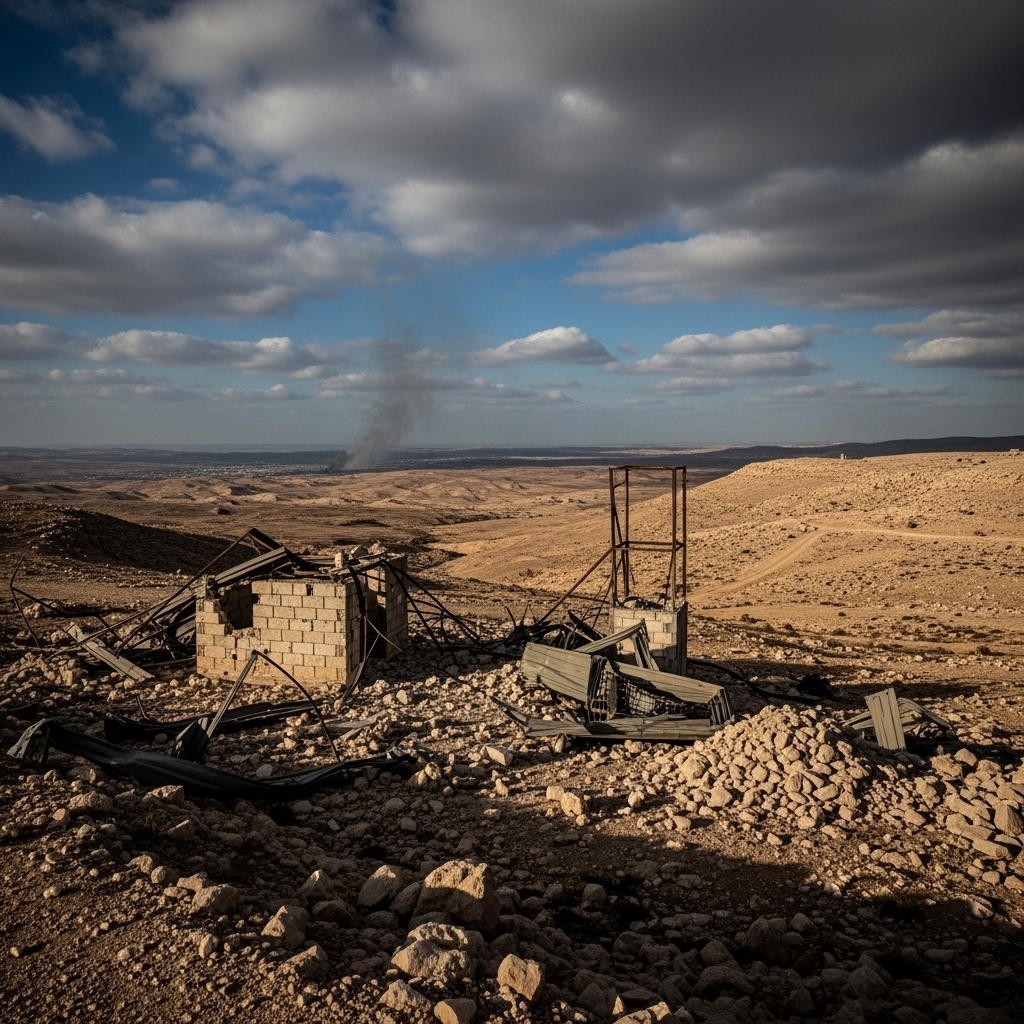
Earlier on Tuesday, the Israeli army announced an airstrike targeting Hamas leaders in the Qatari capital, Doha, stating that these leaders “bear direct responsibility for committing the massacre on October 7 and managing the war against Israel.” This Israeli attack follows days after Eyal Zamir’s threats to eliminate Hamas leaders abroad amidst the ongoing war in Gaza. Last year witnessed a series of Israeli assassinations targeting prominent leaders of the movement in Gaza, Iran, and Lebanon.
Palestinian political analyst Nouman Tawfiq Al-Abed stated that “what Netanyahu’s government has done, in coordination with the US administration in Qatar, is a transgression of all red lines, a departure from diplomatic norms and laws, and the conduct between states, especially mediators, as well as in dealing with negotiating delegations.” According to his conversation, this incident is not just an ordinary assassination attempt of any Hamas leader, but an attempt to assassinate the negotiating delegation during their internal consultations on the proposal offered by President Donald Trump.
Al-Abed said, “This is a message from Israel and America, indicating that their offers are not serious and void, and their promises to stop aggression if Hamas agrees to the deal are not serious and untrue.” He explained that “what Israel has done surpasses all lines and will have consequences, as it will negatively affect the negotiation process and will not hasten the cessation of aggression and exchange deal, potentially leading to a temporary withdrawal from these negotiations as a mediator, followed by a long period of stalemate unless there is a change in the American and Israeli approach in dealing with mediators, especially the Arab mediator Egypt, and serious work by Washington to conduct real negotiations aimed at stopping this aggression and establishing peace and security in the region.”
In the short term, Al-Abed mentioned that “this operation will lead to a stalemate, but in the long term, it is supposed to lead to entering into real and serious negotiations with international guarantees.” He confirmed that “there is no longer any trust in American guarantees and what President Trump proposes, so other international parties must enter the negotiations, perhaps through the UN Security Council, to be an international body other than America sponsoring and guaranteeing everything agreed upon.”
On his part, Egyptian academic and expert in Israeli affairs Ahmed Fouad Anwar confirmed that “the Israeli side has committed an act that will cost them dearly,” noting that “the price Israel paid following the failed assassination attempt of Khaled Meshaal in Jordan was represented in the release of Sheikh Ahmed Yassin from Israeli prisons in exchange for the involved intelligence elements.”
Anwar stated in his conversation that “Israel is currently facing Qatar, which enjoys good relations with Arab countries, participated in defending the American base from an Iranian attack, made significant efforts in self-promotion, succeeded in organizing the World Cup, and promoting its image to the world as the Switzerland of the Middle East and a mediator between the Israeli and Palestinian sides.”
He added that “the price that Netanyahu’s government will have to pay after involving the United States, and the questions surrounding the ‘Al Udeid’ base and its role, may push Israel to pass the deal and end the war,” hinting that Netanyahu indicated this when he said “but on Israel’s terms,” which Anwar described as “a kind of attempt to achieve a false victory image.”
He explained that there is a “trap in Gaza,” and the claims that Israel has an “upper hand” and easily penetrates four Arab countries stir “the Gulf Arab world, in particular,” and may prompt the Gulf Cooperation Council to activate the recent Arab League decision to suspend the Abraham Accords.
Anwar confirmed that “Netanyahu hoped that military pressure might free the detainees and prisoners and change the Middle East, only to find himself unable to protect the Israeli interior, with airports in Israel being bombed, several settlers in East Jerusalem being hunted, and constant running to shelters.”
The Egyptian academic and expert in Israeli affairs Ahmed Fouad Anwar saw that “Israel’s security is not achieved through such crimes and cowardice,” and that “the targeted were negotiating elements not directly involved in combat,” describing this as a “war crime according to Geneva 4, concluded in 1949, specifically Article 47,” noting that “the future repercussions will be detrimental to the Israeli government, the simplest of which is the release of Hamas leaders despite high sentences, all of which will be folded into a deal through which a ceasefire is achieved at once and the war ends.”
The Qatari Foreign Ministry said in a statement, “Today, the State of Qatar sent a message to Mr. Antonio Guterres, Secretary-General of the United Nations, and Mr. Sangjin Kim, the Chargé d’Affaires of the Permanent Mission of the Republic of Korea to the United Nations and the President of the Security Council for September, regarding the cowardly Israeli attack targeting residential headquarters housing a number of members of Hamas’s political bureau in the capital, Doha.”
It added, “The State of Qatar demanded the message be circulated to members and issued as an official document of the council.” The statement stressed that Qatar “will not tolerate this reckless Israeli behavior and continued tampering with regional security or any action targeting its security and sovereignty, and investigations are underway at the highest level, and more details will be announced as soon as they become available.”
Israeli Defense Minister Yisrael Katz, commenting on the operation targeting Hamas leaders in Doha, stated that “Israel will act against its enemies everywhere and everyone involved in the October 7 attack will be held accountable,” according to him.
The White House described the attack as “the bombing of a sovereign state and a close ally of Washington,” while Trump stated that he was “not happy with all the details of the operation” and that it came at a “bad timing,” especially with Qatar’s role in mediation and attempts to achieve calm.