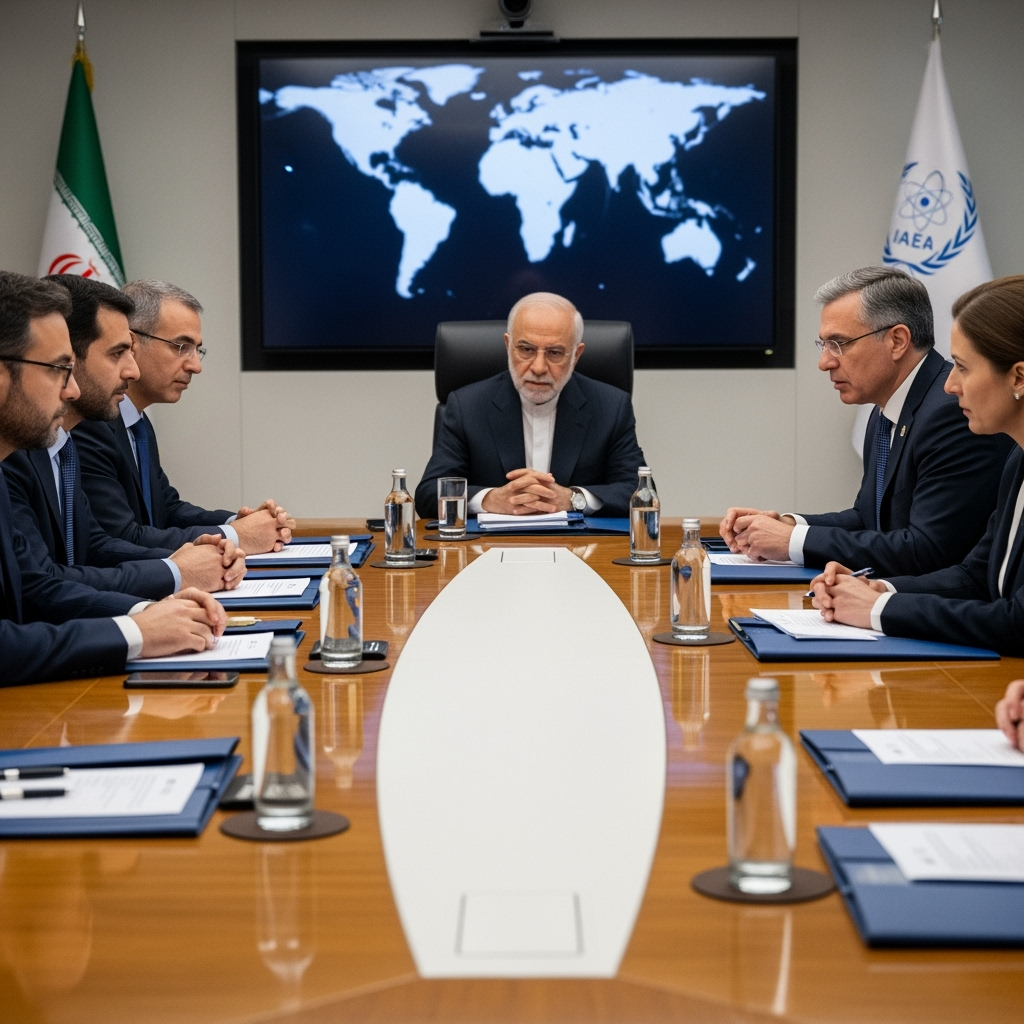
In an interview, Grossi stated that the agency’s talks with Iran on resuming inspections at sites, including those bombed by Israel and the United States, cannot continue for many months. He called for reaching an agreement as soon as possible, possibly this week, according to Iran’s Fars news agency.
Regarding the law passed by Tehran to suspend cooperation with the agency, which requires special approval from the Supreme National Security Council, Grossi noted that Iran emphasized the importance of keeping enriched uranium sites secret. He considered this not something that can continue for many months and hoped to conclude this process soon.
In response to a question about the status of Iran’s stockpile of highly enriched uranium, Grossi replied, “I believe there is a general understanding that the materials are still there in their entirety. However, of course, this needs verification. Some may have been lost,” adding, “We do not have indications of significant movement of materials.”
Grossi confirmed that “the agency has not received any information from Iran regarding the status or locations of its stockpile of highly enriched uranium since Israel launched its first attacks on enrichment sites on June 13.”
A confidential report from the International Atomic Energy Agency, released on Wednesday, revealed that Iran had enriched uranium to a purity of 60%, which is close to the level required for nuclear weapons, before the Israeli attack on its nuclear facilities on June 13.
The report, seen by Western media, indicated that Iran’s stockpile of 60% enriched uranium in the form of uranium hexafluoride, which can be enriched through centrifuges, reached 440.9 kilograms by June 13.
According to the agency’s definition, 125 kilograms of 20% enriched uranium is theoretically enough to produce one nuclear weapon if the enrichment level is increased.
The minister explained that the International Atomic Energy Agency acknowledged the necessity of establishing a new framework for cooperation, according to Iran’s Tasnim news agency.
Iranian President Massoud previously stated that dialogue and communication with America regarding Tehran’s nuclear program “do not mean defeat or surrender.” He emphasized in a meeting with Iranian media that his government “has not taken any steps without interaction and coordination with Iran’s Supreme Leader Ali Khamenei, and will not do so in the future.”