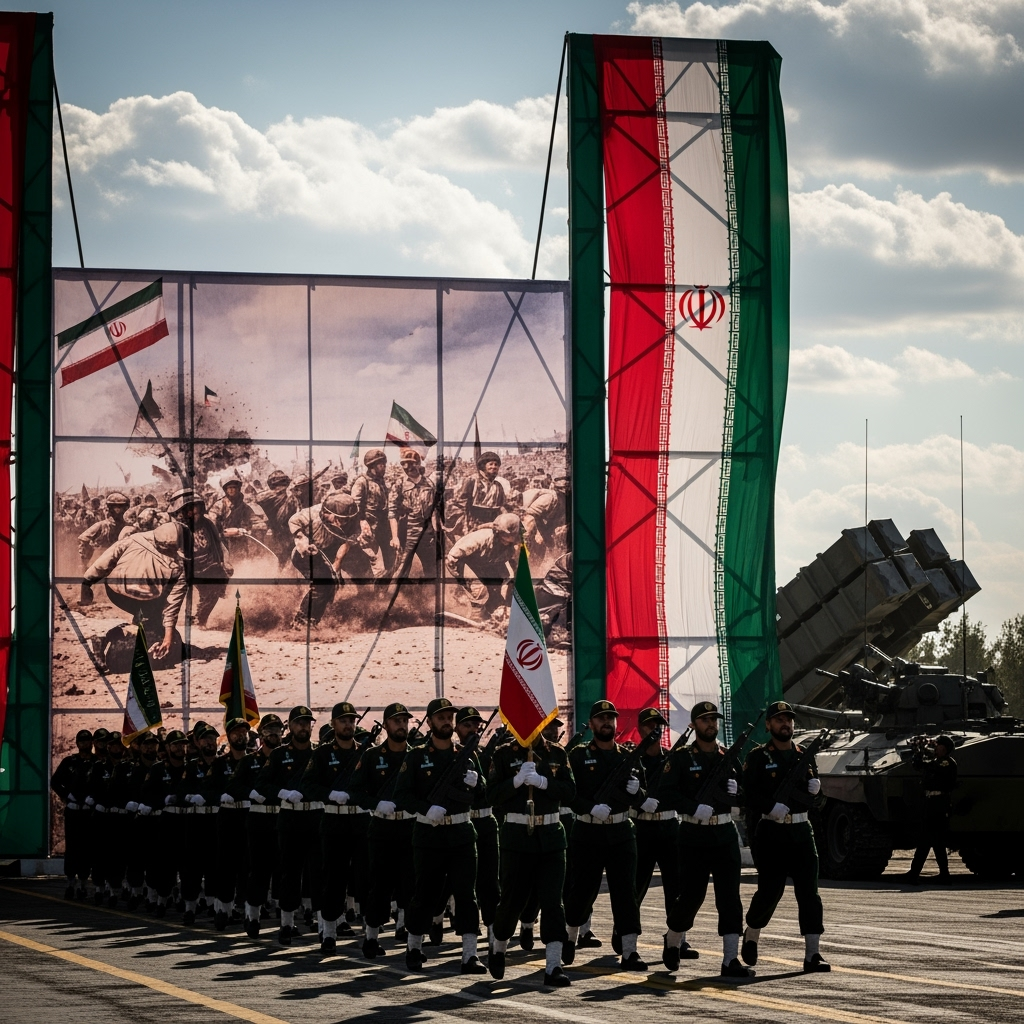
The Iranian army, on the occasion of the “Sacred Defense Week”, stated that “The Army of the Islamic Republic of Iran played an influential and decisive role, quickly overcoming the difficult conditions of that era, thwarting anti-revolutionary conspiracies and separatist groups, and rushed to the battlefield in the early hours of the invasion, blocking the enemy’s aggression as a massive barrier,” according to Iranian news – IRNA.
The statement mentioned that “the courage of the army alongside the Revolutionary Guards in defending Iran’s borders demonstrates the Islamic, revolutionary, and popular nature of the army,” affirming that “Iran will remain steadfast like a mountain until the last breath in defending the security, national interests, and the sacred system of the Islamic Republic, remaining steadfast in its service and sacrifices for the cause of Islam, the Islamic homeland, and the zealous Iranian nation.”
Earlier, the Iranian Revolutionary Guard announced in a statement that “any new miscalculation by the enemy.” As reported by “Fars,” in a statement by the Revolutionary Guard on the occasion of the start of the “Sacred Defense Week,” commemorating the Iran-Iraq war from 1980-1988.
The statement referred to the Israeli attack on Iran that lasted 12 days, saying that “in the face of national unity and cohesion, the defeat of the Zionist and American aggressors and their failure to achieve their malicious and evil goals against the revolution and the Islamic system, we assure the great Iranian people that the strong popular Revolutionary Guard, alongside other armed forces, is enhancing its combat, offensive, defensive, and strategic capabilities day by day.”
The Iranian Revolutionary Guard statement added: “Effective deterrence is the result of constant readiness, creativity in designing strategies, tactics, and operations in facing enemies, and the continuous development of advanced defense and military technologies and systems in all fields.”
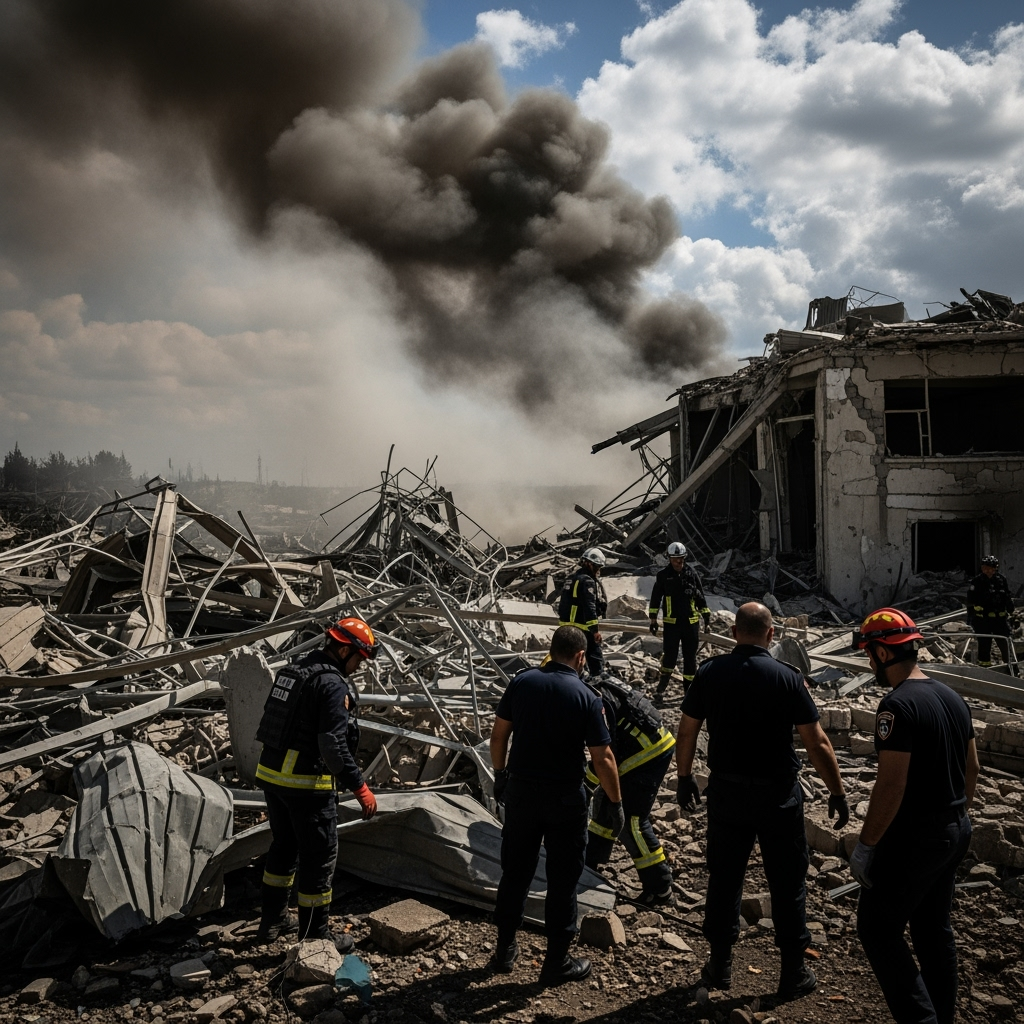
On June 13th, Israel launched surprise airstrikes on Iran in an operation called “Rising Lion”, targeting military sites and nuclear facilities in the country, most notably the main Natanz facility. The Israeli strikes resulted in the deaths of several prominent nuclear scientists, military leaders, and Iranian officials, most notably the Revolutionary Guard commander Hossein Salami, Army Chief of Staff Mohammad Bagheri, and the Commander of the Aerospace Force of the Revolutionary Guard Amir Ali Hajizadeh.
Iran responded with missile strikes against Israel in a military operation called “The True Promise 3”, targeting dozens of military sites and airbases in Israel, confirming that the operation would continue as long as necessary. Israel justified its attacks by stating that Iran had reached the “point of no return” in uranium enrichment and was nearing the acquisition of a nuclear weapon, which Tehran denies, always insisting that its nuclear activities are “intended for peaceful purposes only.”
The United States also launched an attack on three Iranian nuclear facilities in Natanz, Fordow, and Isfahan on the night of June 22nd. According to Washington, “the attack aimed to destroy or seriously weaken them.” Days later, the Iranian Revolutionary Guard announced retaliation against the United States by striking the American “Al-Udeid” base in the State of Qatar.