Araqchi’s reaction was to smile and he said, “Do you really think I would respond to such a question?!” He added, “If there was supposed to be more clarification, the Defense Minister should provide that,” according to Asharq Al-Awsat, which conducted the interview with him in Jeddah, Saudi Arabia, on the sidelines of his participation in the extraordinary meeting of Foreign Ministers of the Organization of Islamic Cooperation.
On the Lebanese file, Araqchi confirmed in the interview that Iran does not interfere in Lebanon’s internal affairs, explaining that its support for the Lebanese Hezbollah falls within the framework of political positions, while the decision regarding the party’s weapons is solely its own. He pointed out that Israel seeks to weaken countries in the region and disarm them.
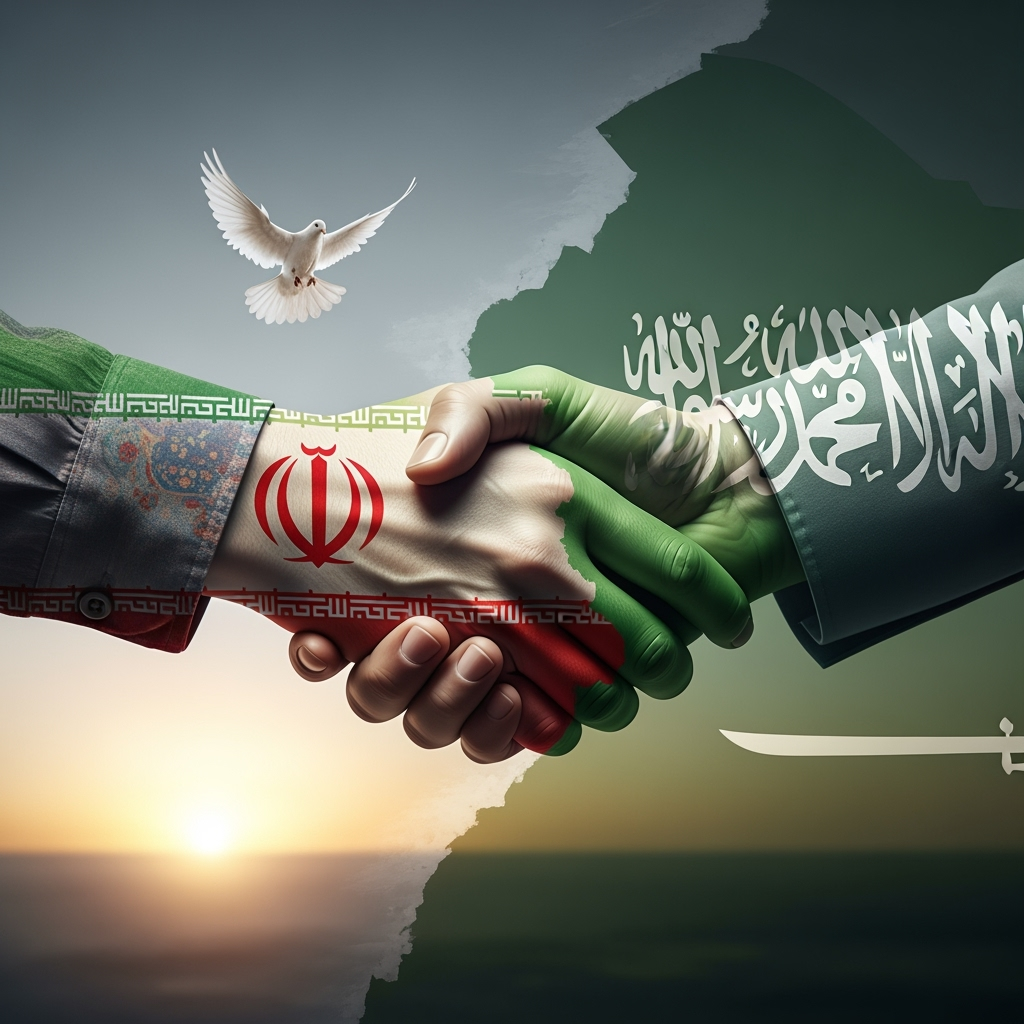
Regarding relations with Saudi Arabia, the Iranian Foreign Minister said, “Saudi Arabia is a major country in the region and the Islamic world, and Iran is also a major country in the region. We have lived together and will continue to live for many years, and stability in the region is in the interest of both sides. I believe that stability, peace, and calm can only be achieved through cooperation between the two countries, as Iran and Saudi Arabia are two important poles in the region.”
He noted that “economic relations with Saudi Arabia are still limited,” despite great opportunities for trade and investment exchange, emphasizing that strengthening economic cooperation requires more joint planning. He explained in this regard, “Many goods that reach Saudi Arabia from distant countries can be secured from Iran, which is nearby, and many of our needs can be secured from Saudi Arabia. The volume of trade exchange between us and one of the countries in the region amounts to about 30 billion dollars, which is evidence that even under sanctions, there can be a large volume of trade between us.”
As for relations with Egypt, Araqchi explained that developing them to higher levels requires the right time, noting that the embassies operate under the name “Interest Section Office.” The Iranian Foreign Minister revealed that he met his Egyptian counterpart, Badr Abdel Aty, in the Egyptian capital, Cairo, “where they had dinner and discussed bilateral relations for two hours,” according to him.