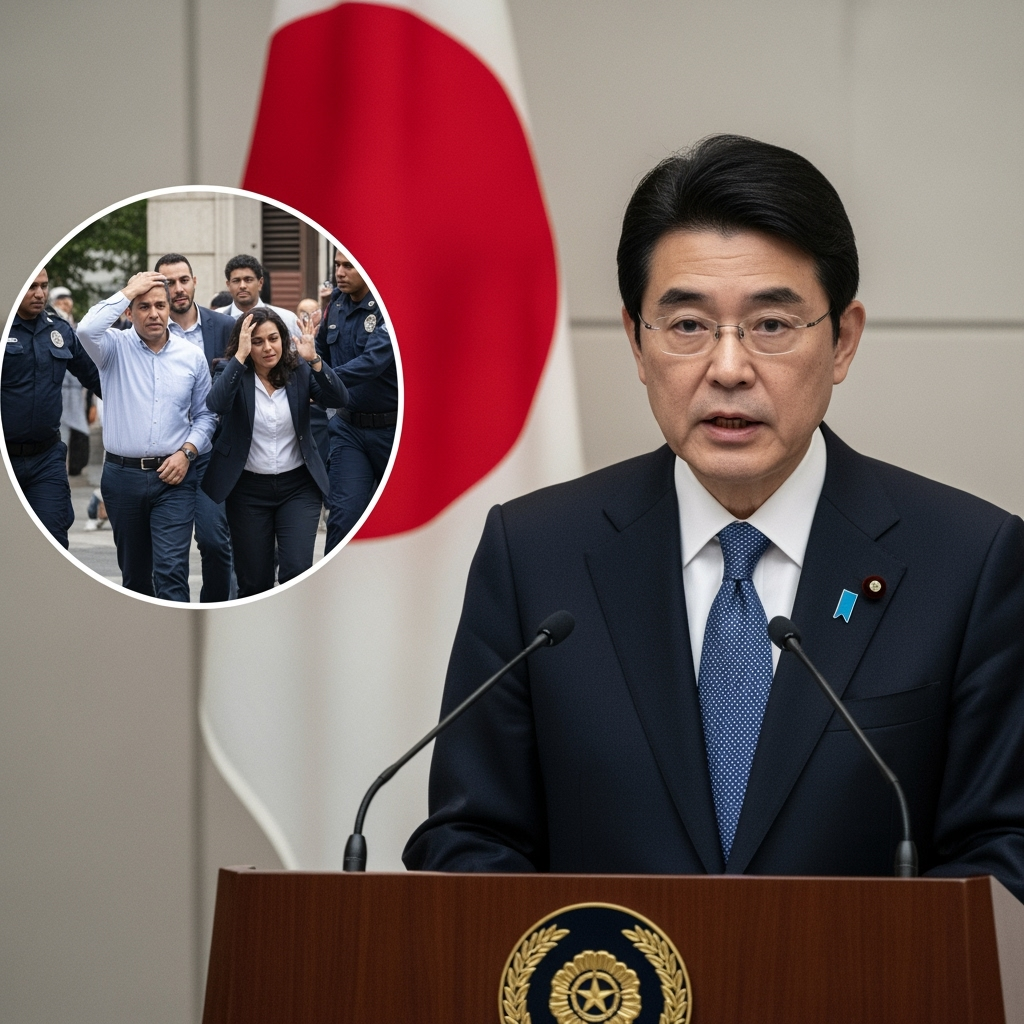
This decision came after a series of stringent measures taken against the delegation. These included not issuing an official invitation, denying them official accreditation badges, preventing them from participating or speaking in conference sessions, and imposing strict security monitoring on their movements, according to the “The North Africa Post” newspaper.
The participation of the delegation in “TICAD 9” was exceptional and limited to attending the conference as part of the African Union delegation, under strict conditions that focused solely on discussions about development in Africa. However, the delegation violated these conditions by attempting to organize a parallel political agenda, which included meetings with parliamentarians, journalists, and NGOs, an act Japan considered a breach of the agreed protocol.
Japanese authorities reaffirmed their firm stance against using the international conference for propaganda purposes, emphasizing the need to respect their sovereignty and hosting conditions. Consequently, they issued an order for the “Polisario” delegation to leave Japanese territory immediately.
It is noteworthy that Morocco controls about two-thirds of Western Sahara’s area (266,000 square kilometers) following the end of the Spanish colonial era in 1975. Mauritania relinquished the southern part of the Sahara after a fierce war with the “Polisario Front” (Popular Front for the Liberation of Saguia el-Hamra and Río de Oro) in 1978.
In 1991, with international support, military operations in Western Sahara between the Moroccan army and the “Polisario Front” ceased, but the ceasefire was breached by Morocco in the buffer zone of Guerguerat on November 13, 2020.
The initial and steadfast Russian position on the Western Sahara conflict is that a just and lasting peace can only be achieved through political means within a known international legal framework, primarily the resolutions of the UN Security Council and the General Assembly within the framework of international legitimacy. Russia calls for actions that align with the principles and objectives of the UN Charter and supports the early resumption of direct negotiations between Morocco and the “Polisario Front”, intensifying efforts to promote settlement, including the appointment of a new personal envoy of the UN Secretary-General for this purpose, ensuring the security and effectiveness of this process.