Journalists often face grave dangers in conflict zones, sometimes paying with their lives. Dr. Abeer Abdallah, residing in the UAE, understands this pain deeply: Her brother, journalist Issam, was killed in Lebanon in 2023, leaving her in mourning for over 18 months.
“We’re only two years apart, so we grew up like twins,” she said. “He was my best friend, my partner, my everything. Only after extensive therapy have I begun to accept that I can’t message him anymore. It’s like missing a part of me, yet feeling the pain, like a phantom limb.”
Issam Abdallah, an award-winning journalist and filmmaker with Reuters, was killed in southern Lebanon while reporting on clashes between the Israeli Defense Forces and Hezbollah. An Israeli tank fired two 120mm rounds within 45 seconds at the journalists, killing Issam and injuring six others.
Stay informed with the latest news. Follow KT on WhatsApp Channels.
Dr. Abeer spoke at a panel on the psychological effects of reporting in conflict areas during the Middle East North Africa Trauma Alliance (MENATA) annual conference, focusing on transforming trauma care in the MENA region.
‘Feeling Helpless’
Gazan journalist Youssef Hammash, BAFTA and Emmy winner, joined virtually from London, sharing the emotional burden of watching the suffering from afar.
Youssef Hammash also addressed the conference, expressing his helplessness seeing his team’s struggles in Gaza. “After filming, my team waits in line for essentials like bread or water,” he said. “Recently, they were displaced to the south of Gaza. I felt helpless, unable to support my old friends on the ground. The hardest part is feeling safe in London while they endure such hardship.”
Hammash elaborated on the fine balance of his work. “I have a Western platform to highlight my people’s plight, yet I must detach from personal emotions. It’s challenging as 70% of my work involves conveying others’ grief and desperation.”
However, he noted his work is a coping mechanism. “I’m alone, having lost two homes and half my family, yet we haven’t developed PTSD because we’re still in the trauma. We take it day by day… Otherwise, witnessing Gaza’s situation and feeling powerless would drive me mad. This job is a responsibility,” he added.
Leaving a Lasting Impact
Mughira Al Sharif, an Emmy award-winning Syrian frontline reporter, highlighted that war journalists often return with “invisible scars” affecting them long after they’ve left the conflict zones.
“They may suffer from PTSD, survivor’s guilt, and stress,” he said. “Trauma rarely affects only the journalist; families feel it too, living with constant anxiety. Early professional support is crucial.”
He shared that his BBC manager encouraged him to seek support after leaving Syria, and therapy proved invaluable. The Dubai session featured an empty chair on stage with a press jacket, honoring over 270 journalists killed by Israel since its Gaza conflict began on October 7, 2023.
The Cost of Truth-Telling
Dr. Abeer recounted how a routine assignment, taken a week after Issam’s 37th birthday, turned fatal, leaving her feeling “utterly betrayed.”
“He traveled to Turkey to cover earthquake survivors, spent a month in Ukraine, went to Syria to interview ISIS families, and covered Egypt’s revolution,” she said. “He had been in every dangerous situation imaginable, but not Lebanon. That day seemed routine. He went to a safe town far from borders, with no indication of danger.”
She noted the hardest part was the silence from journalists and the international community. Youssef mentioned that wearing a Press jacket once offered protection but has now become a target. “We were told we might become collateral damage,” he stated. “No one warned us we’d be systematically targeted.”
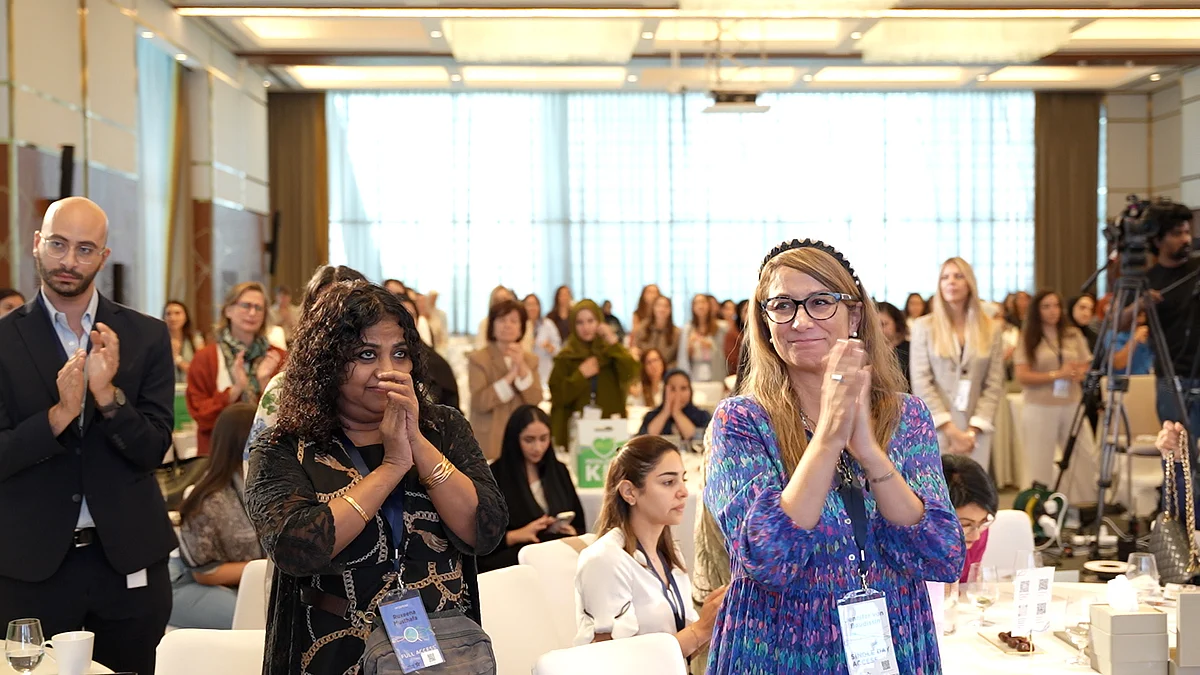
Mughira stressed the need for international journalists to support each other and avoid organizations that don’t protect their staff. The emotional session concluded with a standing ovation lasting over a minute, with many audience members wiping away tears.