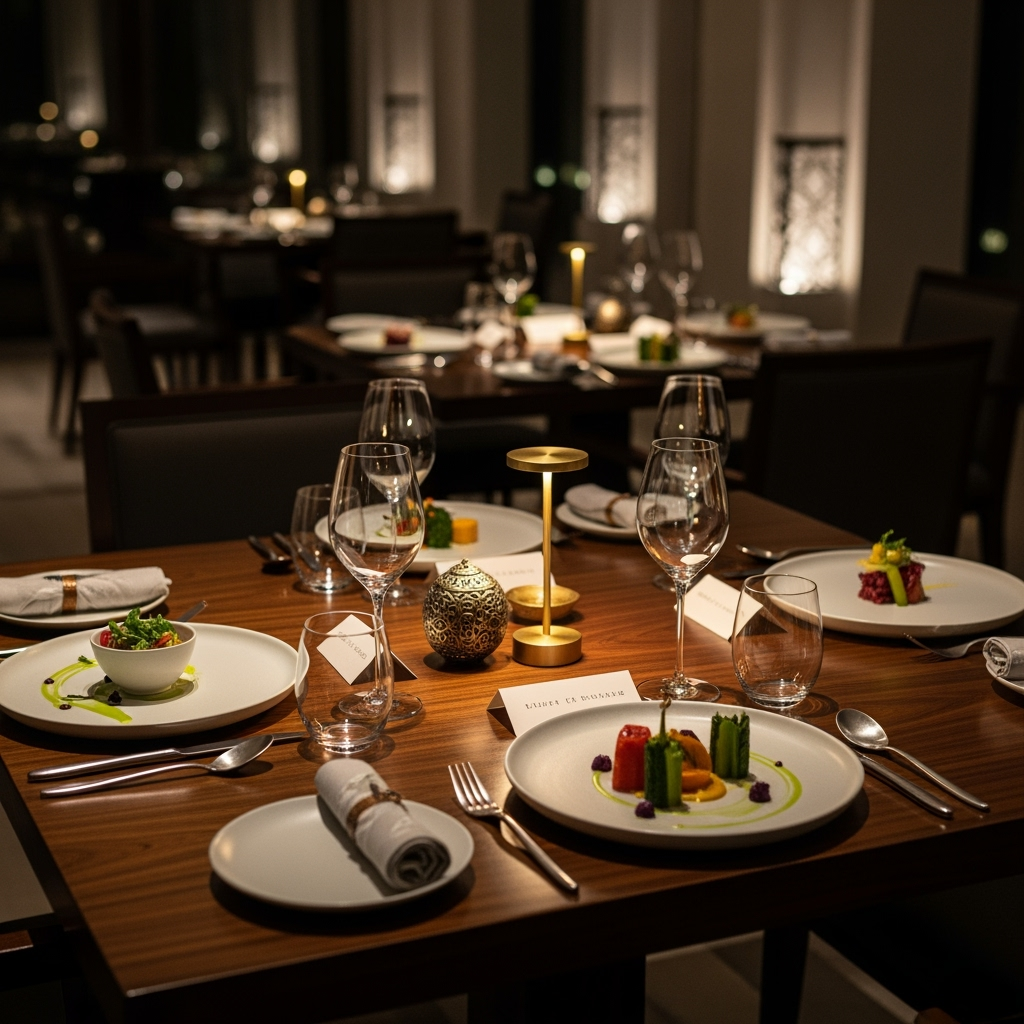
I’ve dined at Fat Duck in London, Noma in Copenhagen, and the French Laundry in Napa Valley—those experiences are theatrical and inventive, turning ideas into cuisine. But at Kigo, it’s devotion in culinary form. It’s discipline paired with delight, offering the finest meal I’ve tasted in Dubai and among the best globally. It’s not just the ingredients but the absence of ego that makes it stand out. No gimmicks or Instagram traps here, just a relentless dedication to excellence.
A distinctive silence fills a top-tier Japanese restaurant—not a hush, but a silence of purpose, of ritual, with sounds of knives slicing fish and rice treated with more care than some marriages.
Kigo, nestled within Dubai’s DIFC Four Seasons, doesn’t just open; it unfolds. Entering feels like stepping into a haiku—dimly lit, minimalist, and filled with the scent of vinegar and charcoal. It evokes Tokyo, not the neon-lit Tokyo of ramen bars, but a solemn, sacred Tokyo where chefs perfect the art of slicing a single fluke over decades.
Although it’s been a while since my last visit to Tokyo—a regret akin to not learning piano—Kigo brought back memories of the unique blend of asceticism and sensuality, discipline and indulgence. It’s a stage, with the counter as the front row to a culinary opera.
The chef, a quiet maestro with surgeon-like hands and hawk-like eyes, starts not with fish but with rice. You may think you know rice, but this was rice that had been tenderly prepared, steeped in red vinegar, and stirred with a bamboo paddle the size of a surfboard. It shimmered and sighed, setting the scene.
Next came the wasabi, a green gem harvested after two years, grated on sharkskin as tradition demands. It’s not showmanship but craftsmanship, an obsession with detail that sets Kigo apart from Dubai’s other Japanese venues, which often feel more like formulaic imitations.
What followed was a crescendo of culinary genius: a temaki of fatty tuna and takuan, wrapped in nori toasted over coals, crowned with sea urchin likely flown in fresh from Hokkaido. The sea urchin melted like butter, with tuna beneath it, a perfect harmony.
There were about 15 more courses—time seemed irrelevant—each explained with monk-like patience by the chef or his team. Nigiri featured flounder, snapper, and exquisite bonito, flown in to stand in for the absent Spanish mackerel. The barracuda, seared over lava stone from Mount Fuji, proved its worth with each bite.
The squid, with lime and salt, was a minimalist masterpiece, akin to a Matisse line drawing.
Mid-meal came an otsumami selection: blackfin seabass, yellowtail, and a delicate hairy crab with matsutake mushrooms—a combination sounding like a Chelsea dinner party but tasting like the last supper of a dying emperor. Then the tilefish, fried with scales intact—a bold move that succeeded gloriously. The crisp scales against tender flesh were wonderfully indecent.
The experience built up further: more sea urchin, varied rice styles, smoky notes, whispers of citrus. The eel arrived, sugarcane-glazed, sweet and broth-like—a fusion of Dickensian dessert and Shogun. The tamago, Japan’s twist on crème brûlée, made with prawns and precision instead of cream and nostalgia.
Dessert, if you can call it that, was a whisper: perfectly peeled Muscat grapes, a minerally pear, and matcha tea, an apology from nature.
It’s not cheap, nor should it be, given its worthiness. Like its name, it will evolve with the seasons, and I eagerly await winter.
Hero dish: Temaki of fatty tuna and takuan—10/10
Senses: Overwhelming aromas and flavors—10/10
Menu curation: Each dish with its own story—10/10
Service: Informative and discreet—10/10