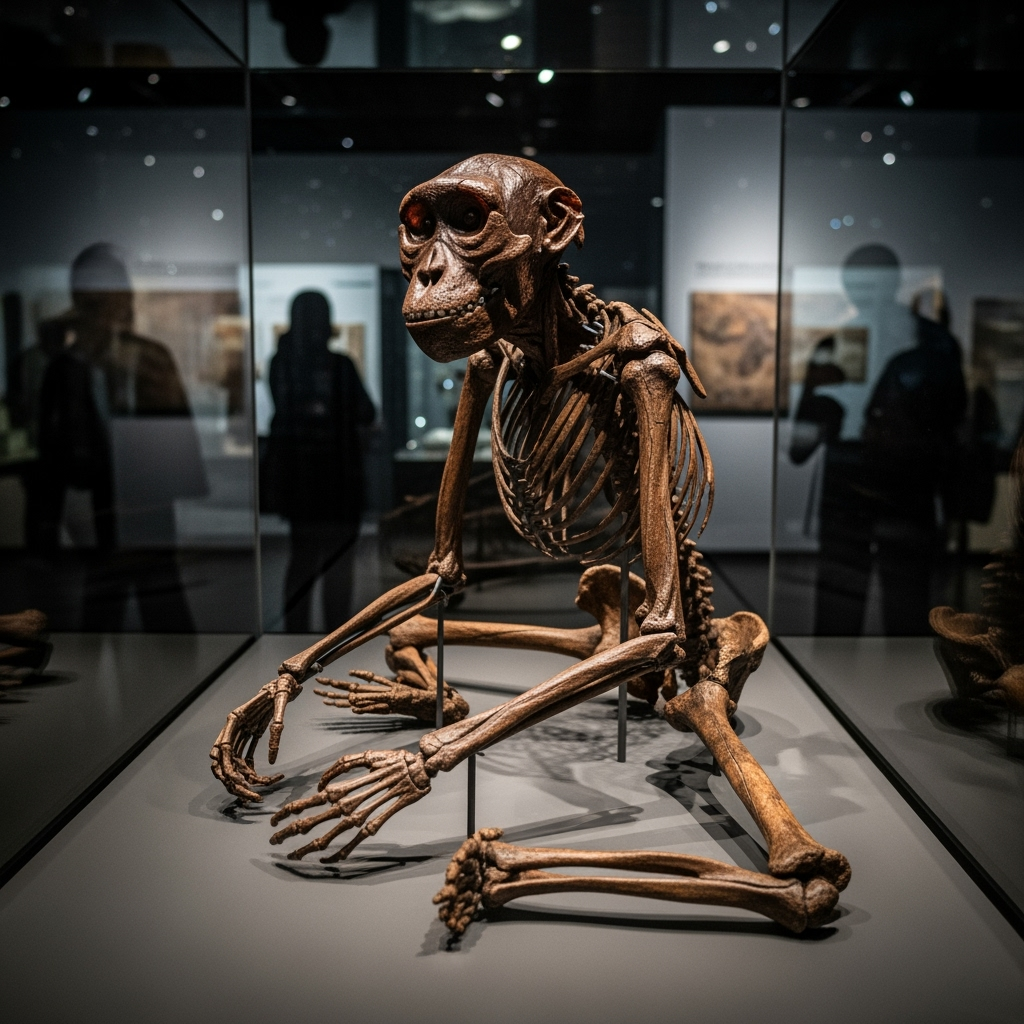
The 3.18-million-year-old bone fragments of Lucy, a human ancestor, will be showcased in Europe for the first time this Monday at Prague’s Czech National Museum, having rarely left Ethiopia.
Discovered in 1974 in Ethiopia, the ancient Australopithecus afarensis remains, once the most complete ever found, significantly advanced the understanding of human ancestry.
Lucy’s fossils will be exhibited alongside Selam, a baby Australopithecus fossil, who lived around 100,000 years before Lucy and was discovered 25 years later in the same region.
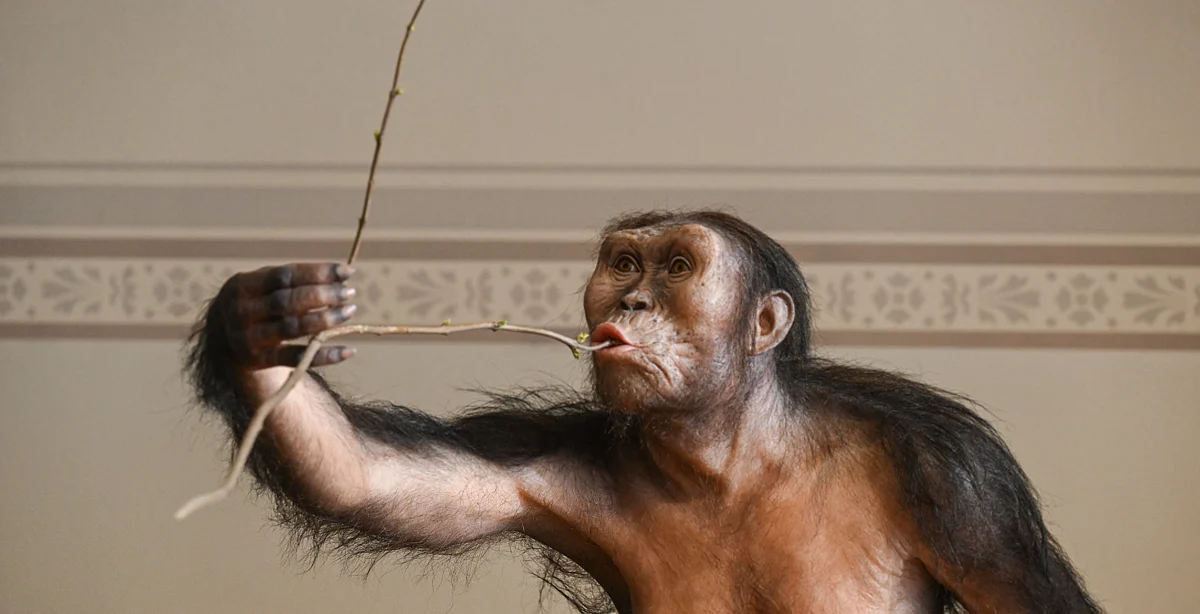
A hyperrealistic artistic reconstruction of Lucy, the female Australopithecus afarensis, based on discoveries from Hadar, Ethiopia, showcased at the National Museum of Prague on February 4, 2025. — AFP
Donald Johanson, Lucy’s discoverer, and Zeresenay Alemseged, who found Selam, will attend the opening in Prague.
“Selam has never been displayed outside of Ethiopia, and Lucy was only exhibited once in the United States,” noted Michal Lukes, director of the National Museum, when the fossils arrived in Prague on August 15.
Lent from Ethiopia’s National Museum in Addis Ababa, these remains are among “the world’s most precious and oldest paleoanthropological exhibits,” he added.
The 52 fragments will be on display for 60 days as part of the “Human Origins and Fossils” exhibition.
Ethiopian Heritage Authority director Abebaw Ayalew Gella stated that the exhibition “highlights Ethiopia as the cradle of human origin.”
“Lucy transformed the study of human ancestors due to its completeness and its age,” Ayalew Gella explained.
He added, “Selam is a unique fossil for its age, representing a baby who died at two years and seven months.”
– Inspired by The Beatles –
Currently, Lucy consists of fossilized dental remains, skull fragments, and parts of the pelvis and femur.
The 1.1-meter (three-foot seven-inch), 29-kilogram (64-pound) Lucy last left Ethiopia from 2007 to 2013 for a US museum tour.
Named after The Beatles’ song “Lucy in the Sky with Diamonds,” played by the discovery team, Lucy walked on two legs and likely died between ages 11 and 13—considered adult for her species.
Once the oldest known human ancestor, Lucy was surpassed in 1994 by Ardi, an Ardipithecus ramidus found in Ethiopia, dating back 4.5 million years.
In 2001, the discovery of the Toumai skull in Chad, dating six to seven million years old, suggested the human family tree extends further back than previously believed.
A 2016 study indicated Lucy had strong upper arms for climbing and nesting in trees, while her weak legs were inefficient for walking. A bone fracture analysis suggested Lucy likely died from falling from a tall tree.