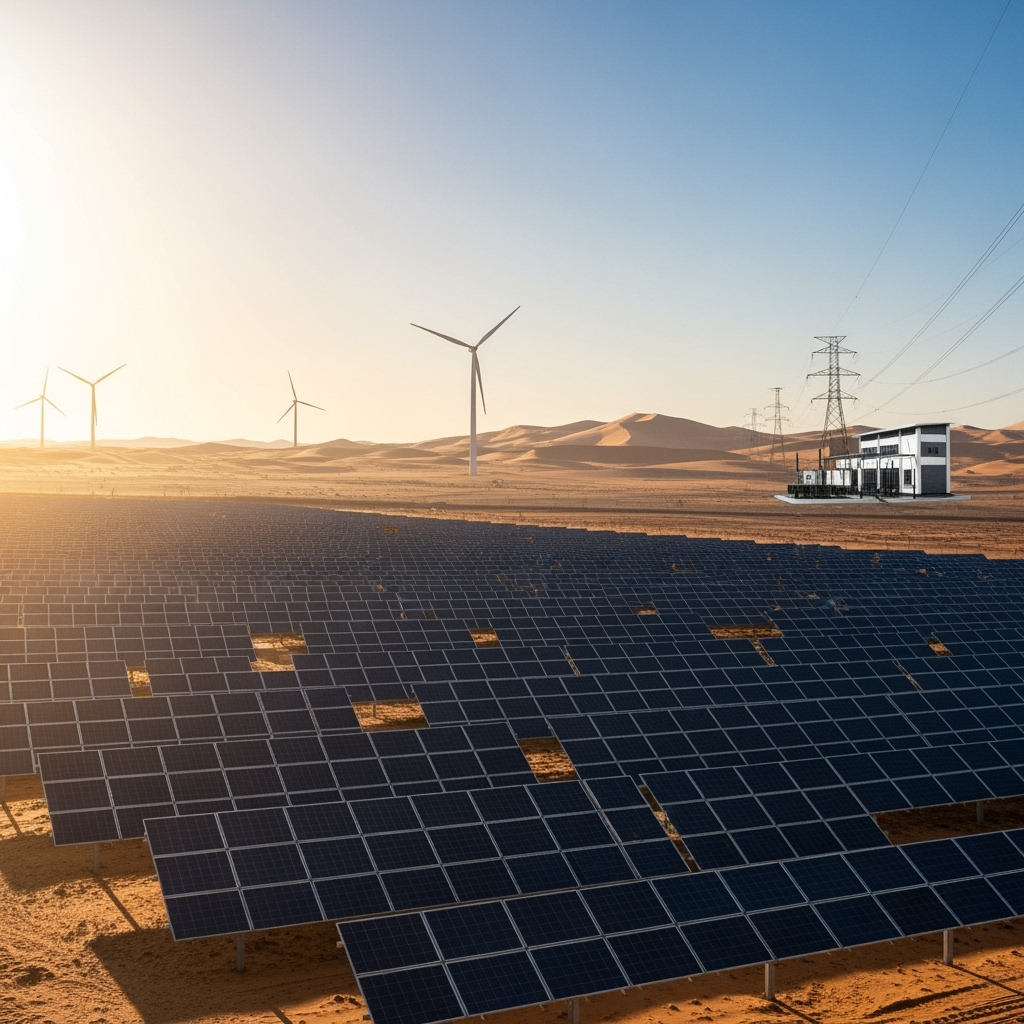
The first contract (PPP) involves the construction of a new power plant with a guaranteed production capacity of 60 megawatts, while the second contract (PPA) includes terms and mechanisms for purchasing the produced electricity. According to the announced data, the total capacity of the plant will be 220 megawatts, distributed between 160 megawatts of solar energy and 60 megawatts, and it will include an innovative energy storage system with a capacity of 370 megawatt-hours, enabling it to provide stable electrical power around the clock. The plant is scheduled to be fully operational in September 2026, producing between 60 to 100 megawatts daily, which will contribute to strengthening the national electricity grid and reducing reliance on imports.
The Mauritanian expert mentioned in his discussion with ‘Sputnik’ that with its vast area of one million square kilometers, mostly consisting of deserts with sunshine throughout the year, along with its 700-kilometer-long coastline, it possesses geophysical attributes that make it an excellent site for hybrid energy production from solar and wind. He believes that the country’s significant resources have led to a wide-open door for their exploitation, especially since it heavily relied, up to 75%, on oil for generating the necessary energy for industry and daily use, making it dependent on global markets and causing an energy deficit.
The economic expert pointed out that 2007 marked a turning point, opening the door to thinking about renewable energy, and the first investment in this field began in 2013 with the establishment of the Sheikh Zayed plant, reaching nearly 380 megawatts of production by 2016, representing 15% of total production from renewable energy at that time. The government approved two new projects allowing for independent power production (IPP), which are expected to add 559 megawatts to the national grid.
Regarding investments in this field, the Mauritanian expert explained that investments began in 2019, reaching a value of around 40 billion dollars, aimed at developing and studying laws related to clean energy and green hydrogen. This culminated in financing a hybrid energy project in partnership between the public and private sectors worth 300 million dollars. Since 2018, Mauritania has been striving to achieve 50% electricity by 2030 from clean sources, of which 38% has already been achieved, according to the economic expert. The goal of energy self-sufficiency from clean sources is to reduce dependence on fossil fuels and reallocate resources dedicated to imports to support the country’s development.