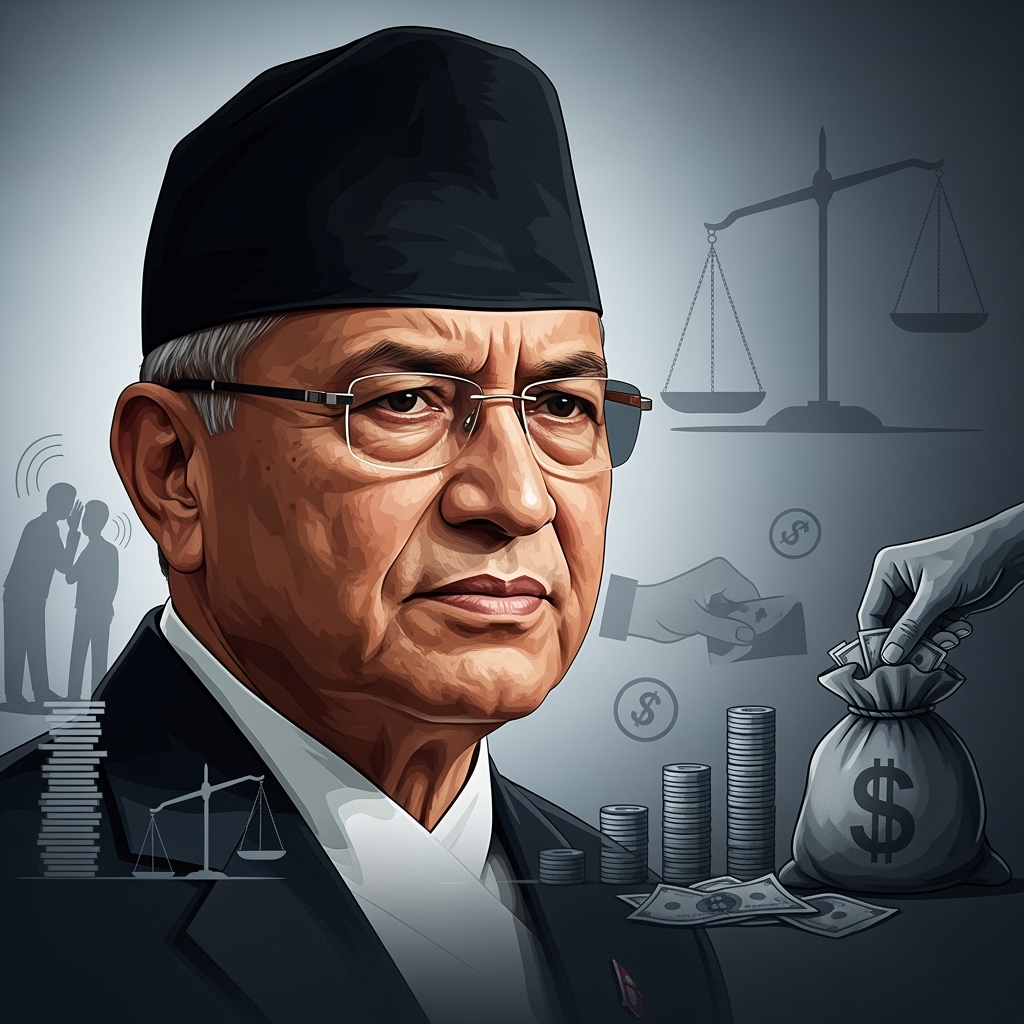
Selected for her integrity following deadly anti-corruption protests, Nepal’s Prime Minister Sushila Karki now confronts her most formidable challenge: responding to the demands of protesters who ousted her predecessor and organizing elections within six months.
The ‘Gen Z’ activists are urging the 73-year-old leader to arrest senior party members accused of corruption, remove politically-tied bureaucrats from crucial positions, and investigate the deaths of 74 people during the recent protests.
While they back Karki, who has shown no tolerance for corruption as Nepal’s first female chief justice, they are eager for tangible results.
In a social media post earlier this week, Sudan Gurung, representing the ‘Gen Z’ faction, supported the calls for the “immediate arrest” of ministers from the recently deposed government of K.P. Sharma Oli.
“We mainly want her (Karki) to combat corruption. She is like our mother, and we trust she will shield us,” said 36-year-old Gurung, founder of the non-profit Hami Nepal, to Reuters.
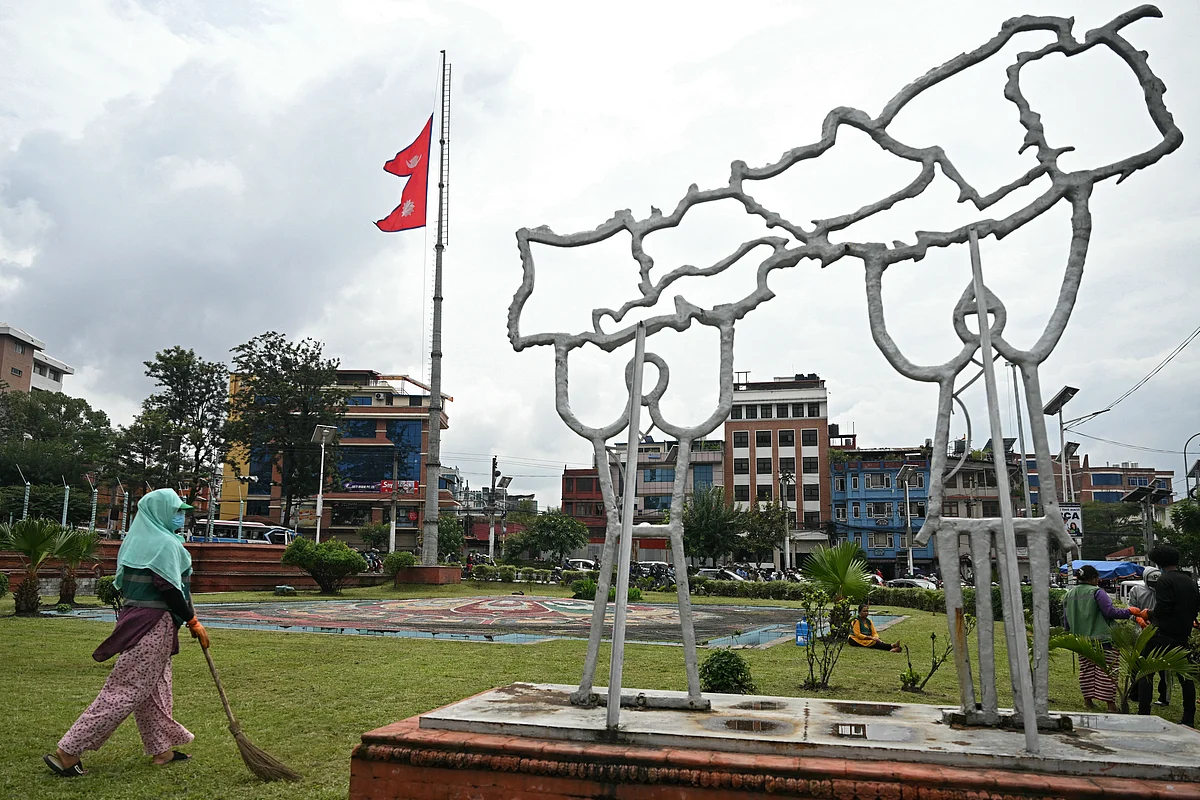
A civic worker walks past Nepal’s national flag at half-mast beside a structure shaped like the country’s map, in Kathmandu on September 17, 2025. — AFP file
Nepal was ranked 107 out of 180 countries in Transparency International’s 2024 Corruption Perceptions Index.
Reuters was unable to reach Karki on her mobile, and messages sent to her phone were left unanswered.
The protests ignited after Oli’s government declared a ban on social media. Initially peaceful, the rallies escalated out of control on September 8, leading to the government’s collapse in just over 28 hours.
Alongside dozens of deaths, over 2,000 people were injured as protesters targeted government buildings and businesses linked to the former government.
“There is no room for failure … and six months is a fair timeframe,” Gurung stated, threatening to topple Karki’s government too if the group’s demands aren’t met.
Karki has already started taking action.
She has vowed to establish an anti-corruption committee and has formed a panel to investigate the attacks on protesters.
However, experts caution she must tread carefully against powerful figures like Oli, who remains president of the Communist Party of Nepal (Unified Marxist–Leninist) and retains strong support.
“There could be another uprising from the traditional political parties accused of mismanagement,” noted Binoj Basnet, a former army general now an independent analyst.
Other political experts suggest Nepal is at a pivotal moment, similar to when the Maoist movement dethroned the monarchy in 2008 after over a decade of unrest, leaving the government unstable and the economy weakened.
Nepal has had 14 governments since, with ongoing uprisings fueled by stark income inequality and youth unemployment exceeding 20%. A third of its young population—mostly in their 20s—have left the country for work.
Little inspiration comes from a similar uprising in Bangladesh, where Nobel laureate Muhammad Yunus faces sporadic protests even while guiding the country through a fragile transition before a general election.
“If the Karki experiment fails and cannot pave the way for a credible next government, the risk is that the country could plunge into another decade of unrest,” stated Puranjan Acharya, an independent analyst and former government adviser in the 90s.
CHALLENGES FOR KARKI
Amid a political crisis, Karki must also address Nepal’s $43 billion economy, which has suffered from declining tourism and investment sentiment since the protests.
Fitch Ratings notes that “a period of extended political stress” would increase risks for the sovereign credit profile of the Himalayan nation, hindering economic activity and near-term growth prospects.
Karki’s government plans to hold an election on March 5, although analysts suggest this could be postponed by another six months.
They argue that Karki will need to give the unorganized youth time to determine their leadership, while the Nepali Congress and Communist Party-UML, which have dominated politics for decades, need time to find candidates untainted by corruption allegations.
“This movement focuses on corruption. Therefore, leaders like Oli and Sher Bahadur Deuba (Nepali Congress President) and their close aides won’t contest elections,” Acharya observed, adding that the parties will have to introduce fresh faces.
Youth leader Gurung is considering forming a new youth-centered party.
He emphasized that the elections must be fair for all sides to accept the results and prevent further protests.
“The next elections will represent a generational clash between old and new,” Acharya concluded.