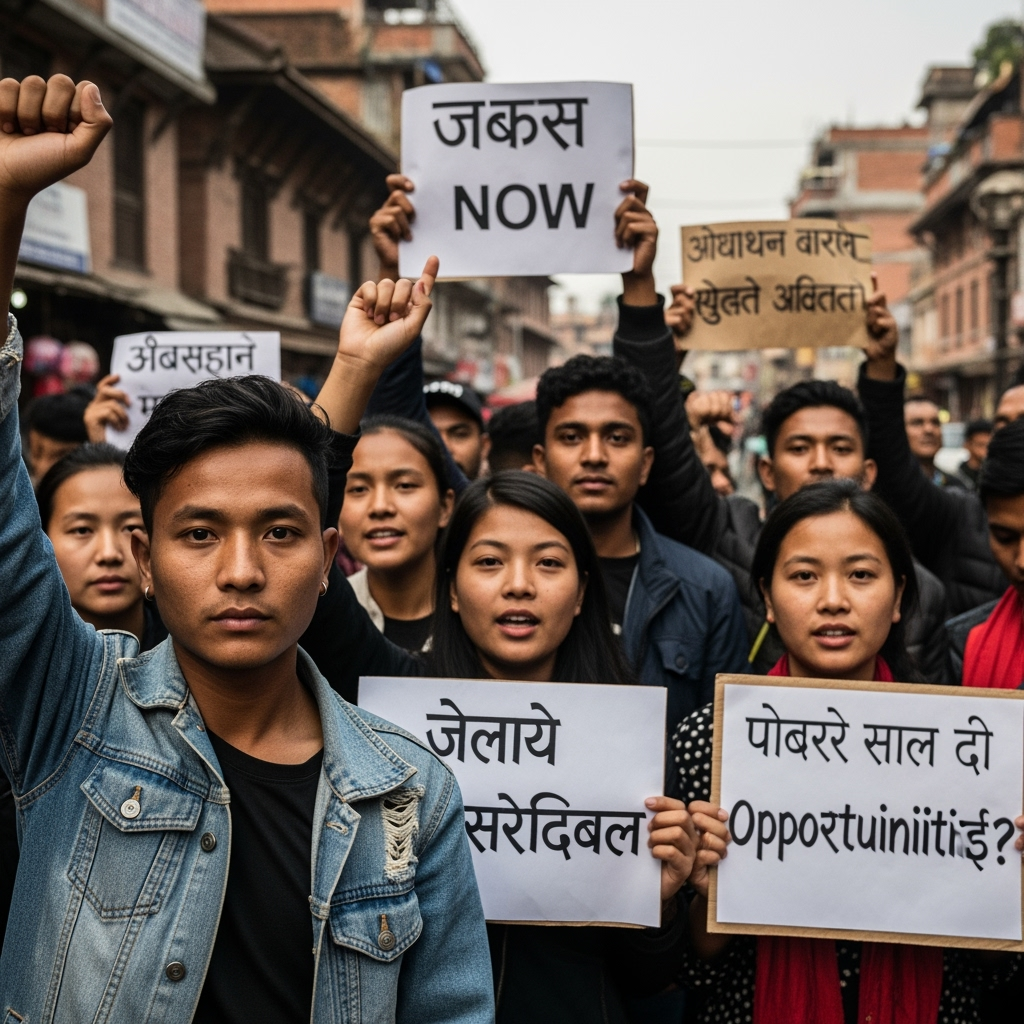
Nepal’s digitally adept youth, burdened by unemployment and few opportunities, reached a boiling point this week, upset with an out-of-touch elderly ruling class.
Frustration has been mounting over political instability, corruption, and sluggish economic growth in the Himalayan nation of 30 million.
This frustration erupted into street protests on Monday, ignited by a government social media ban—which was later revoked—resulting in at least 19 deaths as police attempted to suppress the unrest.
The resignation of 73-year-old Prime Minister KP Sharma Oli did little to appease demonstrators, who set fire to parliament and several other government and political buildings.
Many argued that the social media ban was merely the catalyst for the protests.
Here are some reasons behind the government’s downfall.
– Economic Challenges –
The World Bank reports that a staggering 82% of Nepal’s workforce is engaged in informal employment, significantly higher than global averages.
Remittances play a vital role in Nepal’s economy, constituting a third of the country’s GDP last year and ranking fourth-highest globally, according to the World Bank.
Social media is essential for maintaining contact with family members abroad.
“Nepal’s dependence on remittances has been central to its growth but hasn’t resulted in quality domestic jobs, perpetuating a cycle of missed opportunities as more Nepalis seek employment abroad,” stated the World Bank in its latest report.
Economic growth has picked up; real GDP rose by 4.9% in the first half of 2025, up from 4.3% in the same period of 2024, largely driven by the agricultural and industrial sectors.
Government statistics show that young people aged 16-40 make up more than 12 million, nearly 43% of the population.
“With approximately 500,000 youth entering the workforce annually, it’s urgent to create jobs that alleviate poverty and drive sustainable development,” said World Bank Vice President for South Asia, Johannes Zutt, following a recent visit.
– Corruption –
Transparency International ranks Nepal 107th out of 180 countries.
TikTok videos contrasting the hardships of ordinary Nepalis with politicians’ children flaunting luxury goods and vacations have gone viral.
Puja Manni, a 23-year-old who has worked abroad, said the ruling elite’s excesses have been “exposed through social media.”
Among the youth, dissatisfaction is widespread with long-standing leaders.
Nepal became a federal republic in 2008 following a decade-long civil war and a peace deal that integrated Maoists into the government, abolishing the monarchy.
Since then, a cycle of aging prime ministers and political maneuvering has reinforced public perception of an out-of-touch government.
– Fear of Rights Loss –
Nepal’s National Human Rights Commission warned that the social media ban undermined “the spirit of democratic governance.”
Santosh Sigdel of Digital Rights Nepal called the ban a “slippery slope,” while the Kathmandu Post said it “struck a nerve” with the frustrated youth.
“They use these platforms to express frustrations, connect with friends, and stay informed globally,” wrote the newspaper, whose office was torched by a mob Tuesday.
“They were already fed up with the country’s poor health and education systems, rampant corruption, and nepotism, making many see no future in Nepal.”