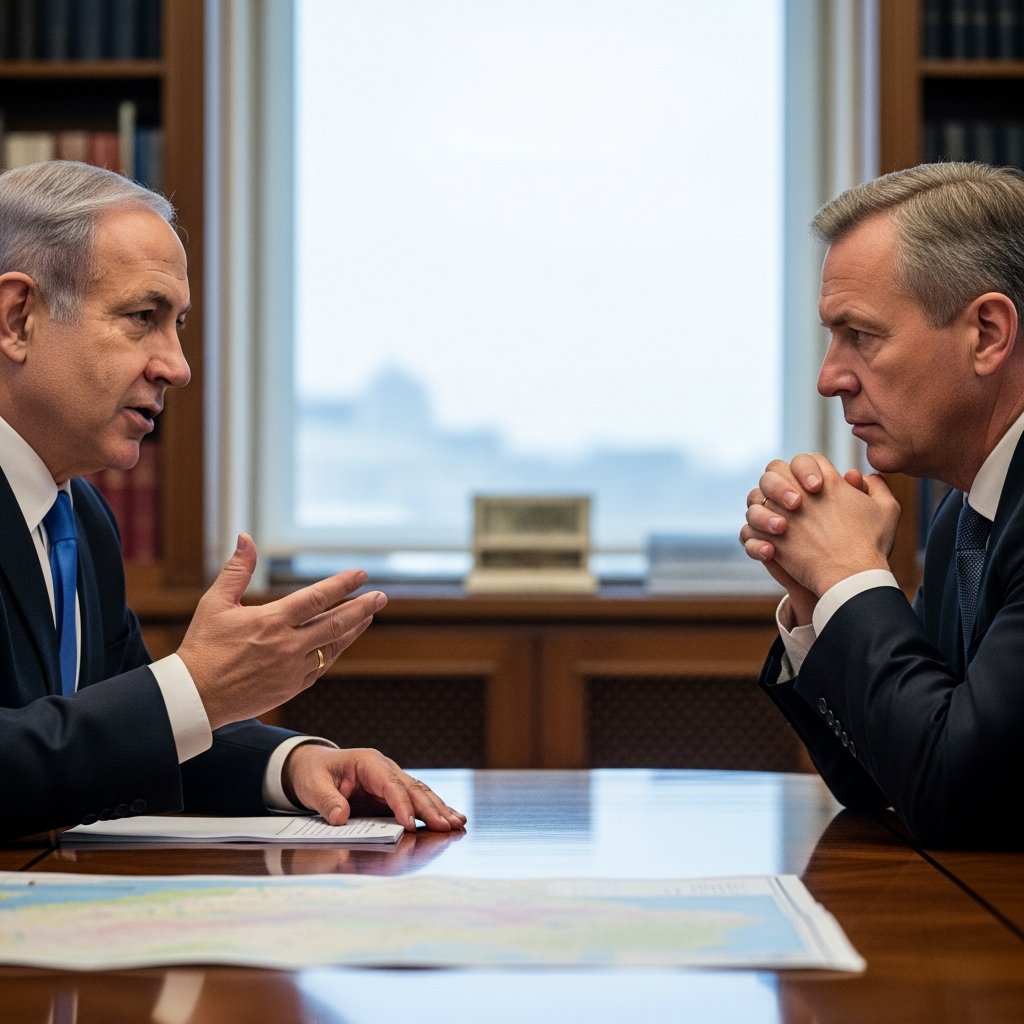
Netanyahu added in a press conference with the German Chancellor, Friedrich Merz, in Tel Aviv that “the chances for peace have become closer after Israeli military operations targeted the Iranian resistance axis in Gaza, Lebanon, and Iran in recent years.” He indicated that he would discuss with US President Donald Trump, when he meets him later this month, “how to end the rule of the Palestinian Hamas movement in Gaza to ensure a different future for the region and Israel,” according to The Times of Israel.
Netanyahu continued: “We have completed the first part, and after the hoped-for return of the last Israeli hostage’s body, First Sergeant Ran Gavili, we expect to soon move to the second phase, which will be more difficult.” He explained that the third phase of the ceasefire plan in Gaza will focus on “combating extremism in Gaza,” noting that Germany’s experience after World War II represents a model in this field.
Israeli Prime Minister Benjamin Netanyahu confirmed that the discussion with German Chancellor Friedrich Merz was honest and open, despite some differences between them. The agreement came into effect on October 10, 2025, and on the 13th of the same month, US President Donald Trump, Egyptian President Abdel Fattah el-Sisi, Emir of Qatar Sheikh Tamim bin Hamad Al Thani, and Turkish President Recep Tayyip Erdogan signed a declaration to stabilize the ceasefire in Gaza.
Under the agreement, the movement released 20 who survived since the events of October 7, 2023, in exchange for Israel releasing about 2,000 Palestinian detainees from Gaza, including those serving long sentences.