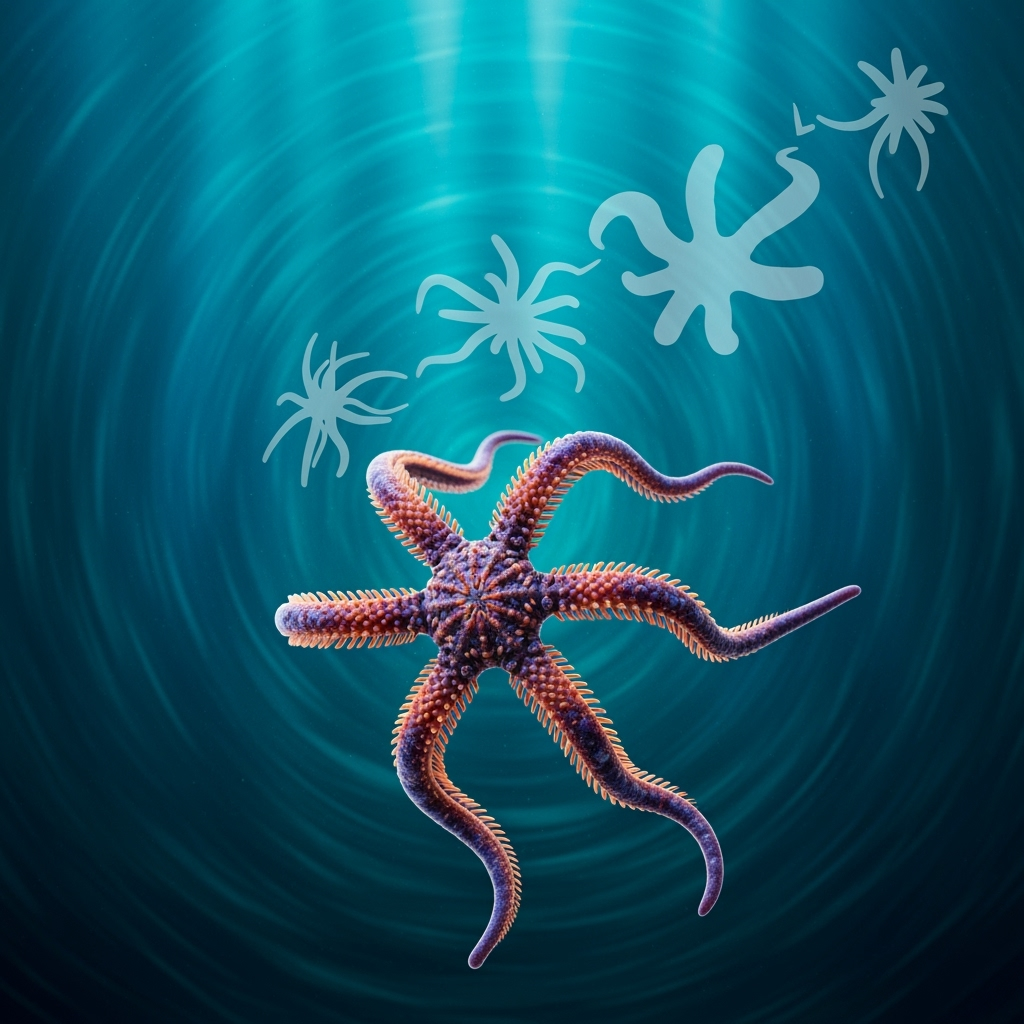
The study, published by ‘Science Tech Daily’, presents the most detailed map so far of brittle star (Ophiuroidea) locations and their evolution. Using DNA from thousands of brittle star samples collected during hundreds of research expeditions and preserved in natural history museums worldwide, scientists discovered that these creatures have crossed entire oceans over millions of years. Their gradual migrations have formed hidden connections between distant ecosystems, such as Iceland and Tasmania. This exceptional dataset offers a completely new perspective on the evolution and global spread of deep-sea marine life over the past 100 million years. Dr. Tim O’Hara, senior curator of marine invertebrates at the Victoria Museum Research Institute and lead author of the study, stated: ‘You might think the deep sea is a remote and isolated area, but in reality, for many deep-sea animals, it’s a connected highway.’ He added: ‘Over long periods, deep-sea species have expanded their ranges by thousands of kilometers. This connectivity is a global phenomenon that has been overlooked until now.’ This study is the most comprehensive of its kind, using DNA from 2,699 brittle star samples preserved in 48 natural history museums around the world. These animals, which have lived on Earth for over 480 million years, are found on all ocean floors, including depths greater than 3,500 meters. Unlike shallow-water marine life, restricted by temperature limits, deep-sea environments are more stable, allowing species to spread over vast distances. Research shows that deep-sea communities, particularly at temperate latitudes, are more connected across regions than their shallow-water counterparts. For example, marine animals living off southern Australia share close evolutionary ties with those in the North Atlantic, on the opposite side of the planet. This research not only changes our understanding of deep-sea evolution but also highlights the enduring scientific value of museum collections. The DNA analyzed in this study came from samples collected during 332 research trips, many conducted decades ago, and preserved in institutions including the Victoria Museum Research Institute.