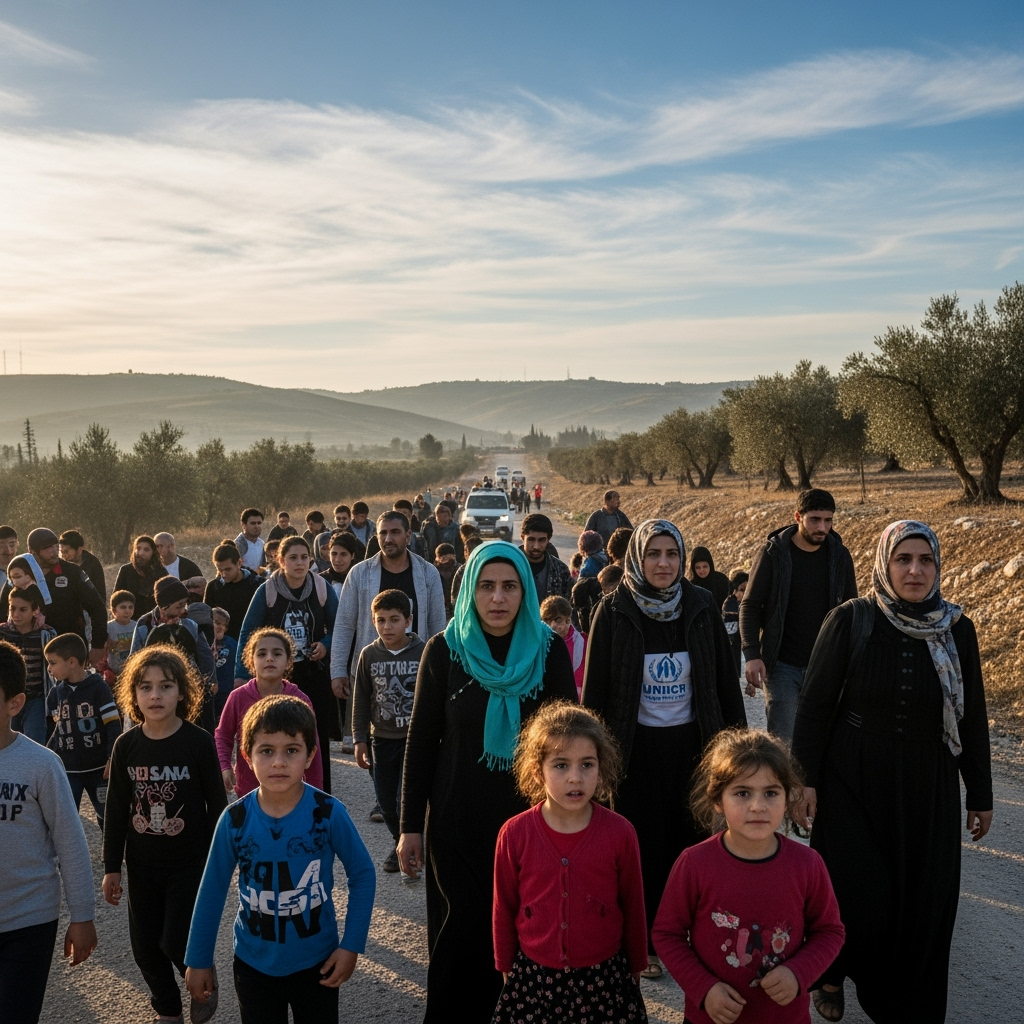
On both the official Lebanese and international fronts, especially within the United Nations High Commissioner for Refugees in Beirut, there is an atmosphere of optimism regarding the potential of this convoy to mark the beginning of an organized and safe return process. This is particularly because it is accompanied by a package of financial, logistical, and legal assistance aimed at facilitating the process.
She added, “For individuals who have decided to return, when they contact the UNHCR and their situation is assessed, they receive a hundred dollars per person to help them return to their country. In addition, they receive legal advice and assistance with the necessary documents they need to return sustainably, such as birth registration documents or enrolling children in schools, and more.”
She explained, “In addition to the material support they will receive in Lebanon and the legal advice and other types of support, they can also access what we call ‘organized return,’ where they are transported by buses supported by the UNHCR and the International Organization for Migration from certain points in Lebanon to their areas in Syria.”
She continued, “When they return to Syria, their situations are monitored by UNHCR teams located in different areas, and they may be eligible for additional financial support within Syria, which amounts to 400 dollars per family.”
She added, “Since we launched the return support program at the beginning of July, more than 72,000 refugees have contacted us, expressing their desire to return through this program to their country. Moreover, from the beginning of 2025 until now, 168,000 Syrian refugees have been removed from the UNHCR records in Lebanon due to their return to their country, even before the launch of the plan.”
About a month ago, there was a large number of refugees returning from Lebanon to Syria on their own. She clarified that for the return of refugees, “The return of every refugee in the world to their country is the most appropriate solution, which is the safe and sustainable return that enables them to settle in their homeland.”
Regarding the changes that have occurred in Syria since December 2024 after the departure of former President Bashar al-Assad, those who have told us they want to return to their country. One of the major problems they face, whether in Lebanon or Syria, according to Abu Khaled, is “the issue of funding, as Syria is a country that has undergone many years of war, and it needs support, which requires continuous assistance even within Syria. Therefore, we urge donors to continue this support to enable a larger number of people to return to their country and stay there after returning.”
She added, “We had not seen this percentage before, but we see it today on the ground in Lebanon through the volume of calls we receive, and even through the number of refugees who have returned before receiving any support from the UNHCR from Lebanon to Syria.”
He pointed out that “in cooperation with the state in Syria, everything returns as it was,” and confirmed that “everyone is waiting for the right circumstances and time, and those who return can start anew,” praising the plan set for return.
Mukhtar of the town of Dikwa, Maayouf Al-Askar, said, “We can say that 25 or 30% have returned to Syria, and we support their return, but we felt laziness regarding the livelihood issue. However, in general, we support the plan of the UNHCR and the Lebanese state, which is a safe return, but at the same time, we need them, and we will stand by them and recover from them according to the conditions of the Lebanese General Security, because we need them as a workforce.”
On the political level, Lebanese Deputy Prime Minister Tarek Mitri announced on June 19, 2025, that the Lebanese government “approved a clear plan confirming the rejection of resettlement in all its forms and places safe and sustainable return at the core of its priorities, in cooperation with Lebanese and Syrian agencies and United Nations agencies.”