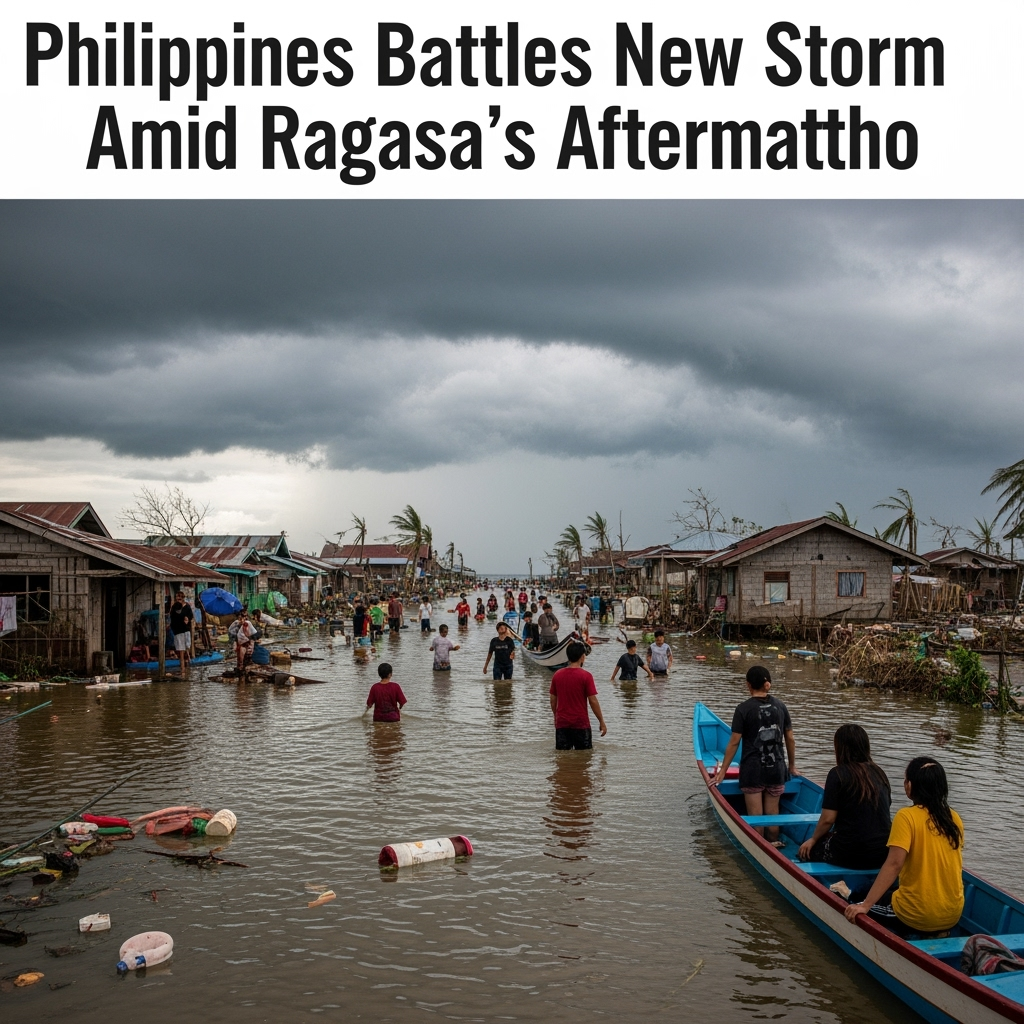
The Philippines has evacuated hundreds of thousands as a severe tropical storm has claimed at least three lives, while the country still reels from Super Typhoon Ragasa.
In the Bicol region of southern Luzon, civil defense officials reported three fatalities due to collapsing walls and uprooted trees caused by Severe Tropical Storm Bualoi, which is moving west-northwest with sustained winds of 110 km/h.
In one province, evacuees sought shelter under pews as the storm tore off the roof of a church.
Stay informed with the latest updates. Follow KT on WhatsApp Channels.
“Around 4am, the storm destroyed the church’s door, windows, and ceiling,” said Jerome Martinez, a municipal engineer in Masbate province, southern Luzon, to AFP.
“This is among the strongest winds I’ve ever felt,” he mentioned, noting that some children sustained minor injuries requiring stitches.
“I anticipate more evacuations due to the destruction of many homes and rooftops,” he added. “Debris is blocking roads.”
About 400,000 people have been evacuated, stated Bernardo Alejandro, a civil defense official, at a press briefing on Friday.
“We’re clearing fallen trees and electric posts as many roads are blocked,” Frandell Anthony Abellera, a rescuer in Masbate City, Bicol, told AFP by phone.
“The rain was intense, but the wind was fiercer,” he added.
Social media videos, verified by AFP, showed people using boats or wading through waist-deep water on flooded streets in the Visayas islands in central Philippines.
The Philippines is struck by around 20 storms and typhoons annually, leaving millions in disaster-prone areas constantly vulnerable.
Scientists caution that storms are intensifying due to human-induced climate change.
Authorities warned of a “high risk of life-threatening storm surge” up to three meters with the impending storm.
Thousands are still displaced from Super Typhoon Ragasa, which hit the far northern Philippines and caused at least nine deaths earlier in the week.
The storms come amid public outrage over a scandal involving fraudulent flood-control projects that allegedly cost taxpayers billions.