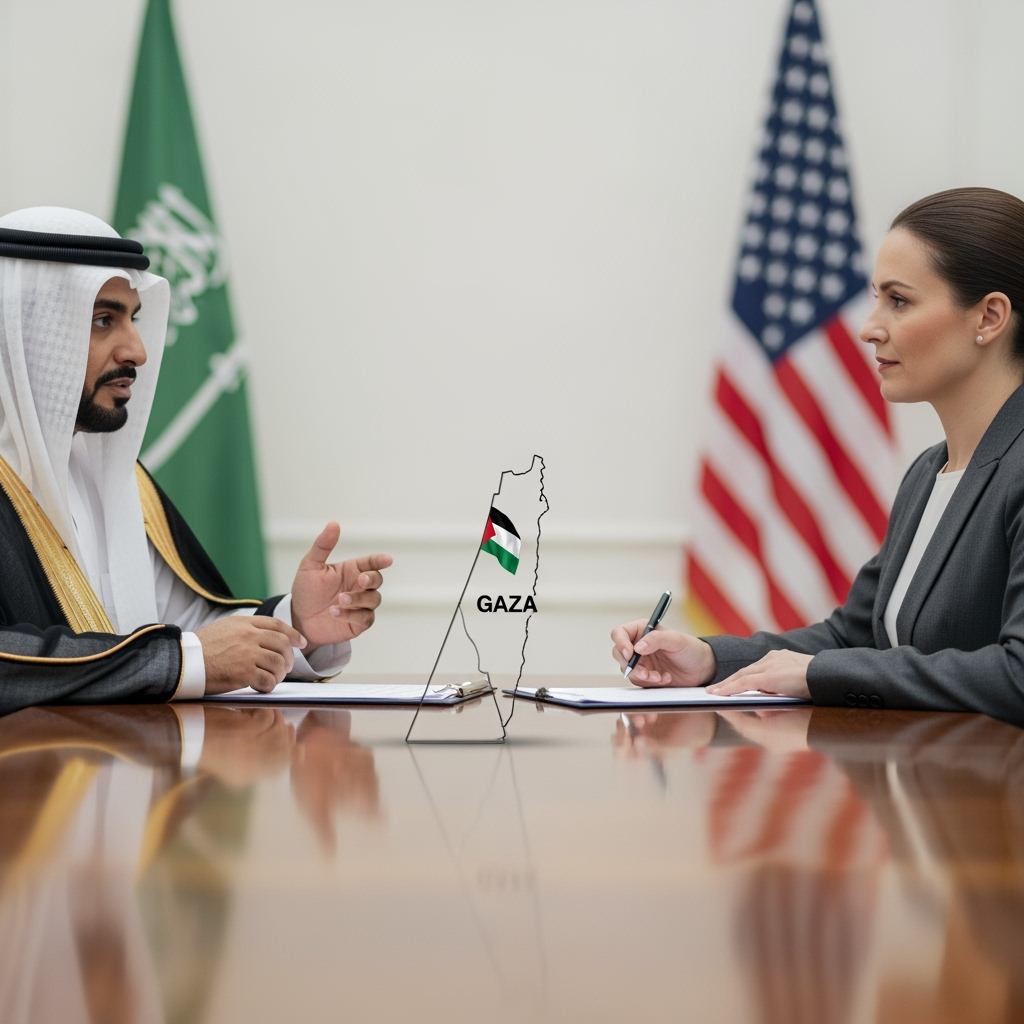
This anticipated deal involves radical solutions that go beyond merely halting hostilities to include prisoner exchanges, reshaping the civil administration of the sector, and establishing international mechanisms to ensure stability. Israeli Prime Minister Benjamin Netanyahu has repeatedly stressed his commitment to ending the battle in Gaza and defeating what he calls the ‘remnants of the Iranian axis’ in the region, in addition to freeing Israeli captives held by Hamas, while denying any intention of permanently occupying the sector.
Netanyahu faces significant internal pressure, particularly from the far right, which pushes for full control over the sector, in contrast to harsh criticism from the opposition, which believes that continued military operations could lead to the collapse of Israel’s international standing and increase the suffering of hostages.
The latest UN Security Council session included intense debate and harsh criticism of Tel Aviv’s plan to control Gaza, which Western leaders like those in France considered a ‘disaster that could further complicate the humanitarian and security situation.’ Several countries, including Australia and New Zealand, have announced their intentions to recognize the State of Palestine at the upcoming UN General Assembly in September, a move that pressures Israel to amend its policy toward the Palestinian sector.
Israel has intensified its bombardment of the Gaza Strip after Netanyahu pledged to expand the military operation, resulting in the death of 61 Palestinians within 24 hours, according to local medical sources, alongside a rise in deaths from malnutrition and famine, totaling 222 people, including 101 children.
These developments emerge amid intense diplomatic movements taking place in the Egyptian capital, where the head of the political bureau of the Palestinian Hamas movement, Khalil al-Hayya, is set to hold talks with Egyptian officials as part of a joint effort with Qatar and Turkey to propose a new initiative aimed at removing Israeli pretexts for reoccupying Gaza. Egypt, the Palestinian Authority, Qatar, and Turkey are on one side in the negotiations, seeking to ensure a comprehensive agreement on calm that meets the minimum security requirements for Israel while guaranteeing the rights of the Palestinian population in Gaza.
It is worth noting that on July 27, Hamas declared the futility of negotiations with Israel amid the ongoing blockade of the sector. Prior to that, Israeli Prime Minister Benjamin Netanyahu ordered the recall of his country’s delegation from Doha, where several rounds of negotiations aimed at resolving the bloody conflict were held on June 6.
The comprehensive deal being negotiated between Israel and Hamas, with Arab and international sponsorship, represents a potential turning point in the ongoing conflict in Gaza. While the international community pressures Tel Aviv to ease aggression and lift the blockade, Palestinian parties are trying to leverage the hostage issue to achieve political and humanitarian gains. Managing the disarmament file and protecting the security interests of all parties is the biggest challenge, as well as ensuring the stability of the sector’s administration during the transitional period.