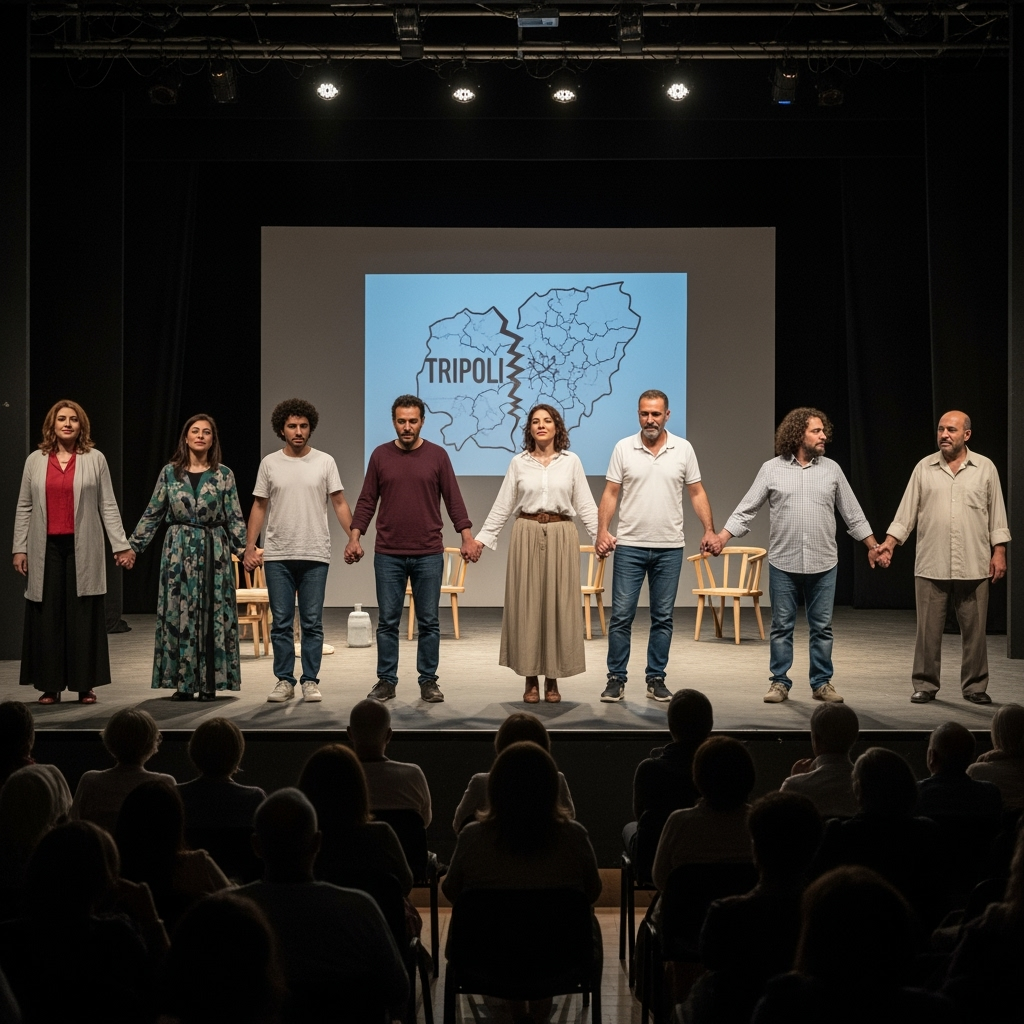
In the war-torn city of Tripoli, former adversaries from street battles found a new camaraderie on stage, telling their own stories. This unlikely reconciliation initiative, led by Lebanese activist Lea Baroudi, became a compelling example she shared at the “WPS Agenda & the Arab World” panel in Abu Dhabi.
Baroudi, the founder of March Lebanon, emphasized to the audience at the Anwar Gargash Diplomatic Academy (AGDA) that her experiences demonstrate why the Women, Peace, and Security (WPS) agenda needs to be “localized” and grounded in real-life experiences, rather than imposed through distant global frameworks.
“The language of the WPS agenda often feels detached from on-the-ground realities. Using it with communities might even lead to resistance,” Baroudi explained, detailing how her work in Tripoli showed the importance of connecting with people through culture and empathy, rather than bureaucratic language.
Stay informed with the latest news. Follow KT on WhatsApp Channels.
She recounted how her organization began by engaging in areas with active fighters, using art, theater, and dialogue as tools. What started as small cultural workshops eventually brought young men from rival neighborhoods together to perform on the same stage.
“Through theater, these young men began acting out their own stories and the tales of war. They transitioned from fighters to actors,” Baroudi stated. This transformation, she noted, was both personal and communal. Former fighters went on to rebuild the streets they once fought over and became local mediators. “They became the bridge between communities. When a conflict arose, they were the ones defusing it,” she shared with the panel.
Baroudi warned that while global frameworks like the WPS agenda are crucial, they risk alienating communities if not translated into local contexts. “The real conflict isn’t always political or ideological—it’s also emotional. People carry burdens of humiliation, exclusion, and trauma. If these aren’t addressed, peace cannot be built.”
Initially, Baroudi’s idea was met with skepticism. “When I first approached the young men who had been fighting, asking them to perform in a play inspired by their lives, I was laughed at for six months,” she recalled. “I persisted, trying to gain access and convince them. Finally, after half a year, I managed to hold auditions and gathered an initial group of 16.”
The play Love and War on the Rooftop emerged, staged in locations where much of their conflict occurred. “They shared that rooftops were central—places where snipers shot, friends played cards, and secret lovers met due to a lack of public spaces,” she explained. The production united young men who initially brought weapons to rehearsals until they realized through acting how similar they were.
Baroudi said this inspired her to open a cultural space on the former dividing line between the two communities, creating a safe haven for all. From there, her team launched new initiatives, including reconstruction projects training former fighters in brickwork and carpentry to rebuild the neighborhoods they once destroyed. Women later joined to bridge educational and organizational gaps.
Calls for a “revolutionary” approach
Other panelists reflected on the successes and failures of the WPS agenda as it marks its 25th anniversary. Samira Rashwan, Senior Gender Expert on WPS from Egypt, noted that the world still neglects women in conflict zones. “We spend $2.7 trillion on war tools, and less than half a percent on peace tools,” she highlighted, adding that women in the Arab region live in “the least peaceful places.” Rashwan argued that the WPS agenda is often seen as optional and called for a shift from advocacy to enforceable rights. “The powerful change we can make is to stop asking for our rights and start enforcing them,” she said, citing the CEDAW Convention as a legal tool for stronger leverage.
Heba Zayyan, Regional Advisor on WPS and Humanitarian Action at UN Women, emphasized that Resolution 1325 and its frameworks first recognized women as peace actors. “Before 1325, women weren’t seen as negotiators or mediators. Now, women are negotiating ceasefires and shaping community solutions,” she acknowledged, though progress remains uneven, with some national action plans funded and others incomplete. “Challenges are global, but solutions must be homegrown, crafted by women in their own contexts,” Zayyan stressed.
The session, moderated by Dr. Sara Chehab, Senior Research Fellow at AGDA, was part of a working group convened ahead of the upcoming UN Security Council debate on WPS. Chehab highlighted the goal of ensuring that women’s voices and experiences in the Arab world inform the global framework. “We want the United Nations to hear directly from our region about the gaps in the WPS agenda and how to address them,” she stated. Her insights served as a reminder that peacebuilding extends beyond resolutions—it’s about transforming lives at the grassroots. “Peace isn’t just about ending war—it’s about dignity, inclusion, and giving people a sense of purpose,” she concluded.