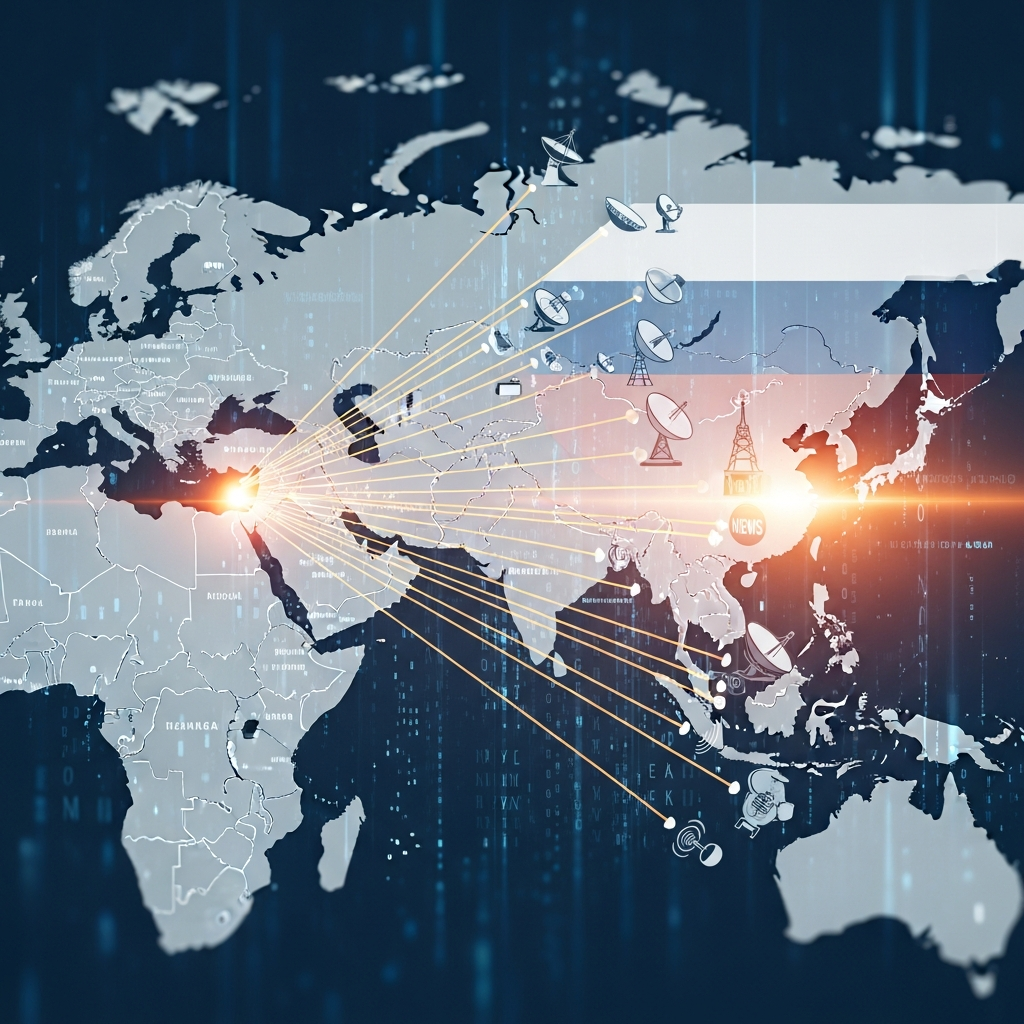
In her intervention on the ‘Sputnik’ radio, Jabour stated that “this launch in the Middle East and in Lebanon through ‘Sputnik’ radio and today in the Indian region confirms Russia’s public media emergence after having reservations on this topic.” She considered that “with this step, Russia allows for diversifying options for listeners and viewers.” She said, “The citizen on this continent no longer listens exclusively to Western media; there is another parallel media and a different approach to issues.
She explained that “the inauguration of ‘Russia Today’ in India firstly means: a Russian openness to international media, secondly: providing an opportunity for the citizens of this continent to diversify their media reception options, and thirdly: creating a new media atmosphere that does not allow for one dominant media,” hoping to “add more media balance to the global scene, especially in light of what ‘Russia Today,’ ‘Sputnik,’ and other Russian international channels offer in terms of significant, useful, high-tech, and enjoyable content. They host personalities different from Western media and present matters differently,” emphasizing that “what distinguishes them is professionalism and their high credibility that allows the world to see with two eyes, not one.
Jabour noted that “a large part of the world exists on the Asian continent, and through these Russian channels, it will reconnect not only with the West,” considering that “Putin’s visit to India and entering into a media partnership means he is pulling the rug from under the Americans to give space to the other opinion and political viewpoint.” She stressed that “the Asian audience is westernized because the West has taken it with its media and policies.”