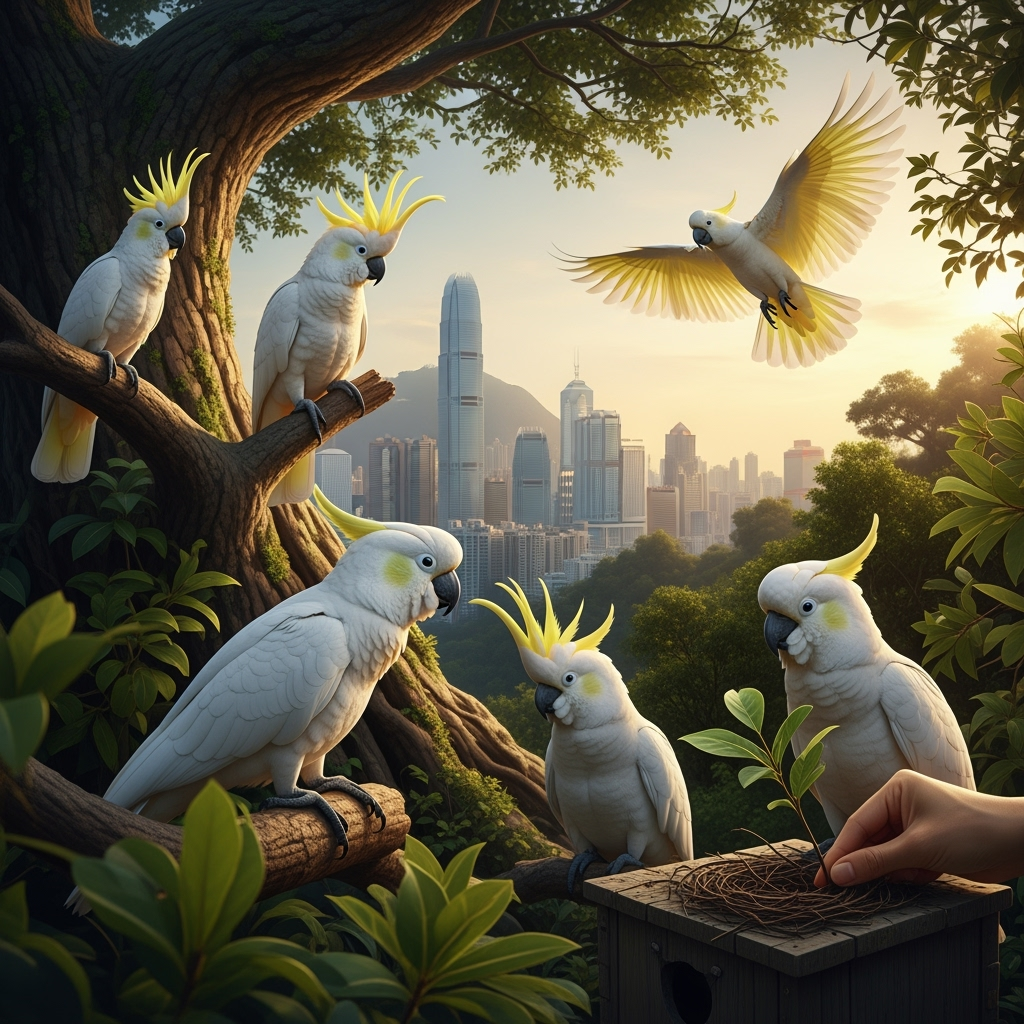
In the bustling streets of Hong Kong’s Causeway Bay, a crucial battle to save one of the planet’s most endangered birds is taking place atop an ancient cotton tree.
Amidst its wide branches lies a specially designed nest box for the yellow-crested cockatoo, with only 1,200 to 2,000 remaining worldwide.
These birds, native to East Timor and Indonesia, have found refuge in Hong Kong, which hosts about one-tenth of their global population, noted as one of the largest remaining wild groups by Astrid Andersson, a postdoctoral researcher at the University of Hong Kong.

Their survival is precarious due to habitat destruction and a suspected illegal trade market for these rare birds.
The population has stagnated, especially among young birds, since Andersson began her research nearly a decade ago.
These cockatoos rely on natural tree cavities for nesting, but 80% of these have disappeared due to typhoons and government trimming.
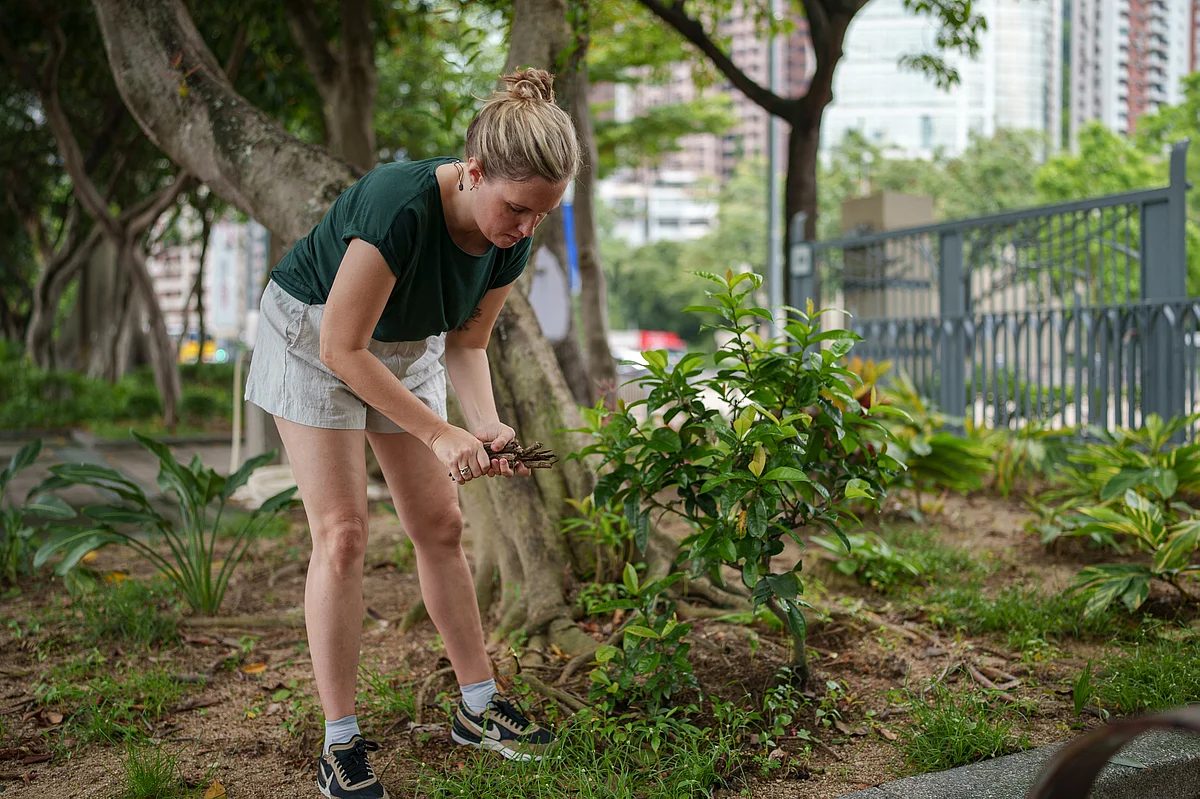
Astrid Andersson, postdoctoral researcher at the University of Hong Kong, collects wood chips for an artificial nest box for yellow-crested cockatoos in Victoria Park, Causeway Bay, Hong Kong. — AFP
Andersson’s nest boxes aim to mimic the natural hollows these birds seek, with plans to install about 50 throughout the city.
“Without these nest boxes, the cockatoos may struggle to replenish their numbers,” she said.
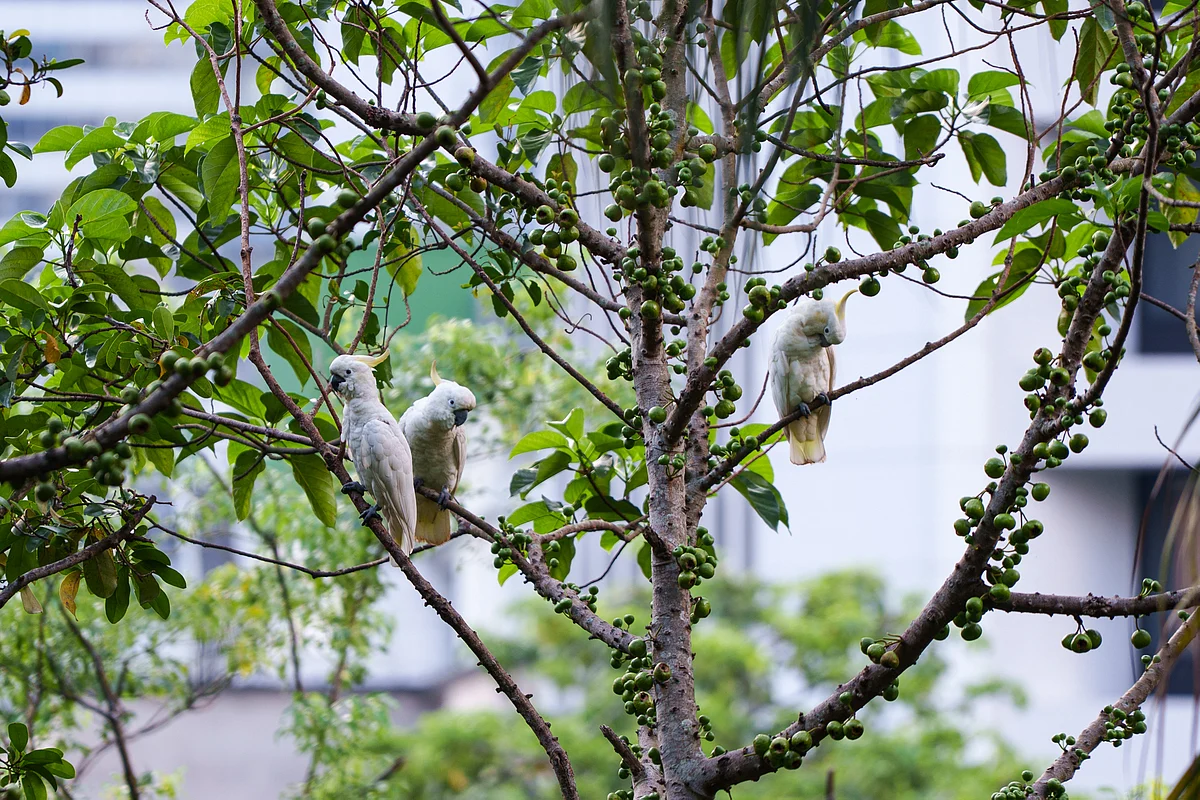
Three yellow-crested cockatoos perched in Hong Kong Park, Central district. — AFP
The boxes also provide a rare opportunity to study their reproductive behavior, a subject yet to be fully explored.
– Harmony with Nature –
The presence of cockatoos in Hong Kong exemplifies a successful case of human-wildlife coexistence, according to Andersson.
This population originated from escaped pets, not from an aviary released by a British governor, as urban legend suggests.
Hong Kong’s parks, abundant with food from mature trees, have become a haven for them, Andersson noted.
These birds are now integral to the city, their calls echoing as night falls.
They perch calmly on streetlights, watching the traffic below.
Many residents are unaware of their endangered status.
“We thought they were just common parakeets,” said Erfan, a local resident.
Yellow-crested cockatoos are often confused with the more common Australian sulphur-crested cockatoos.
However, they are genetically distinct, and the Australian species is not endangered.
– Illegal Trade? –
At Hong Kong’s bird market, the difference is well understood.
While sulphur-crested cockatoos are sold openly, yellow-crested ones are shown only on request.
A young bird can fetch up to HK$56,000 ($7,000), while a chick might sell for HK$14,000.
Since 2005, trading wild-caught yellow-crested cockatoos has been illegal.
Captive-bred sales are allowed with proper CITES licenses, but Hong Kong has no registered breeders.
Sharon Kwok Pong of Hong Kong Parrot Rescue suspects a “black market” exists.
“Some individuals locate and raid these birds,” she told AFP.
Captive-bred cockatoos should have leg rings and documentation, but these can be forged.
“A crackdown is needed,” Kwok said.
“Protecting such a unique species requires comprehensive measures.”
‘A Genetic Reserve’
Andersson has developed a forensic test to determine a cockatoo’s origin based on its diet, aiding the enforcement of sales bans.
In their native regions, poaching and habitat loss have drastically reduced their numbers.
Hong Kong’s birds could one day help repopulate their native lands.
“They might hold genetic lineages now lost,” Andersson remarked.
This population could serve as “a genetic reserve for wild Indonesian counterparts”.