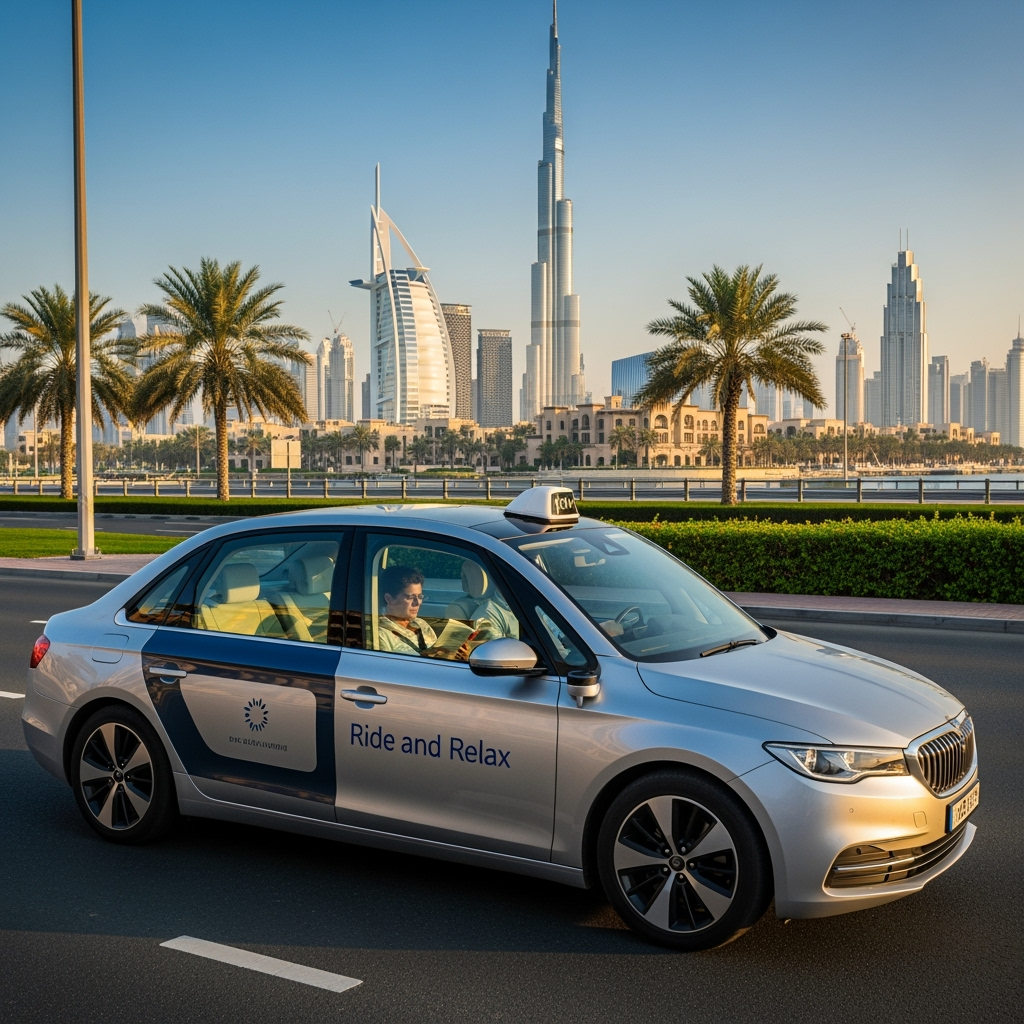
Dubai is set to welcome self-driving cars on its roads sooner than expected, offering not just safety and comfort, but also a touch of luxury.
With the launch of Baidu’s Apollo Go self-driving taxis next year, passengers can book a ride and enjoy a “free massage”. This unique feature was experienced by a Khaleej Times journalist during a trial organized by Dubai’s Roads and Transport Authority (RTA) and Baidu at the Dubai World Congress and Challenge for Self-Driving Transport.
The trial took place on a pre-planned route along Jumeirah Road. Currently, autonomous taxis in Dubai are in the testing phase, operating in specific areas like Jumeirah and Umm Suqeim, where companies such as Pony.ai, WeRide, and Apollo Go are collaborating with RTA to test their vehicles.
Stay informed with the latest updates. Follow KT on WhatsApp Channels.
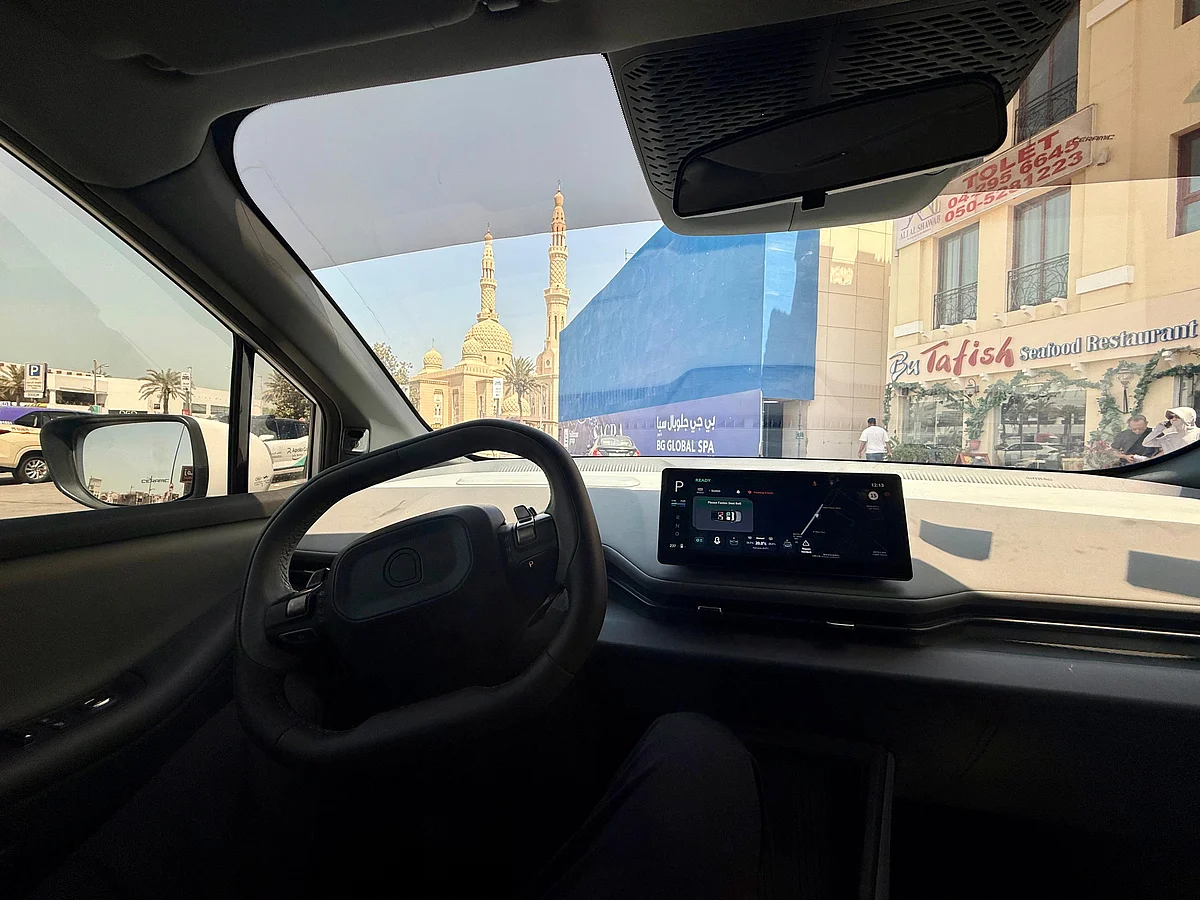
The Apollo Go taxi reached speeds of up to 72km/h and smoothly changed lanes. Photo: Angel Tesorero
Starting at Jumeirah Mosque, the trial covered a 4-kilometer stretch along Jumeirah Road. Traffic was light to moderate, and the Apollo Go taxi reached a top speed of 72km/h, demonstrating effective lane changes.
A human driver was present for safety, but Liang Zhang, Apollo Go’s managing director for EMEA, noted that once commercial operations start next year, the service will be entirely driverless.
RoboTaxis will be introduced to the public in the first quarter of next year, as Khaled Al Awadhi, director of transportation systems at RTA’s public transport agency, informed Khaleej Times.
Currently, Apollo Go operates 50 sixth-generation autonomous vehicles testing on Dubai roads in areas like Jumeirah, Zabeel, and Dubai Festival City. This marks Apollo Go’s first operation outside China, where they run fully driverless services in 10 cities.
Plans are underway to expand the fleet to over 1,000 driverless vehicles in the UAE within three years, the company announced.
How to book a massage-equipped ride
The online booking platform for Apollo Go taxis is not live yet. Accessing these cars is akin to Dubai’s pay-by-the-minute car rentals: no key, just a pin code entry.
The autonomous taxi is spacious, accommodating up to three passengers — one in front and two in the back — as the front seat is reserved during trials.
In China, Apollo Go is voice-controlled, starting with ‘Nihao Luobo’. This feature is being integrated for the UAE fleet.
The taxi won’t start until all passengers have fastened their seat belts.
Excitingly, the rear seats double as massage chairs with three levels and modes, including ‘wave’ and ‘butterfly’ massages.
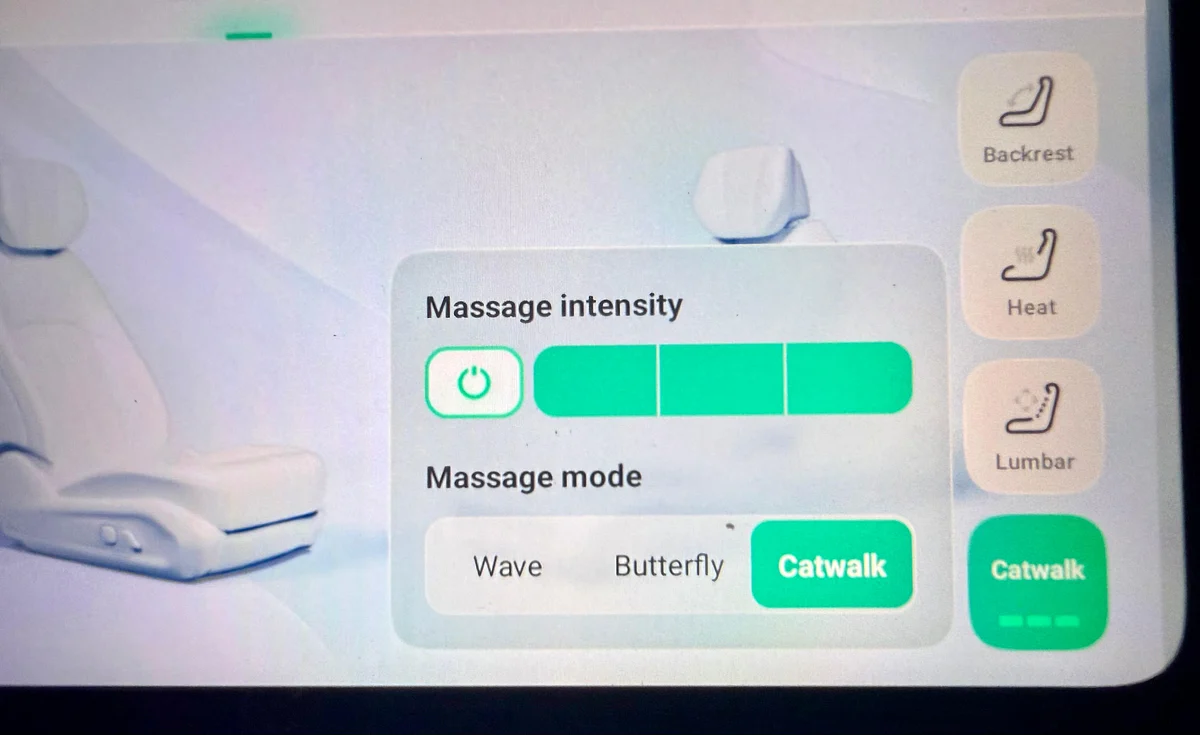
The massage options available. Photo: Angel Tesorero
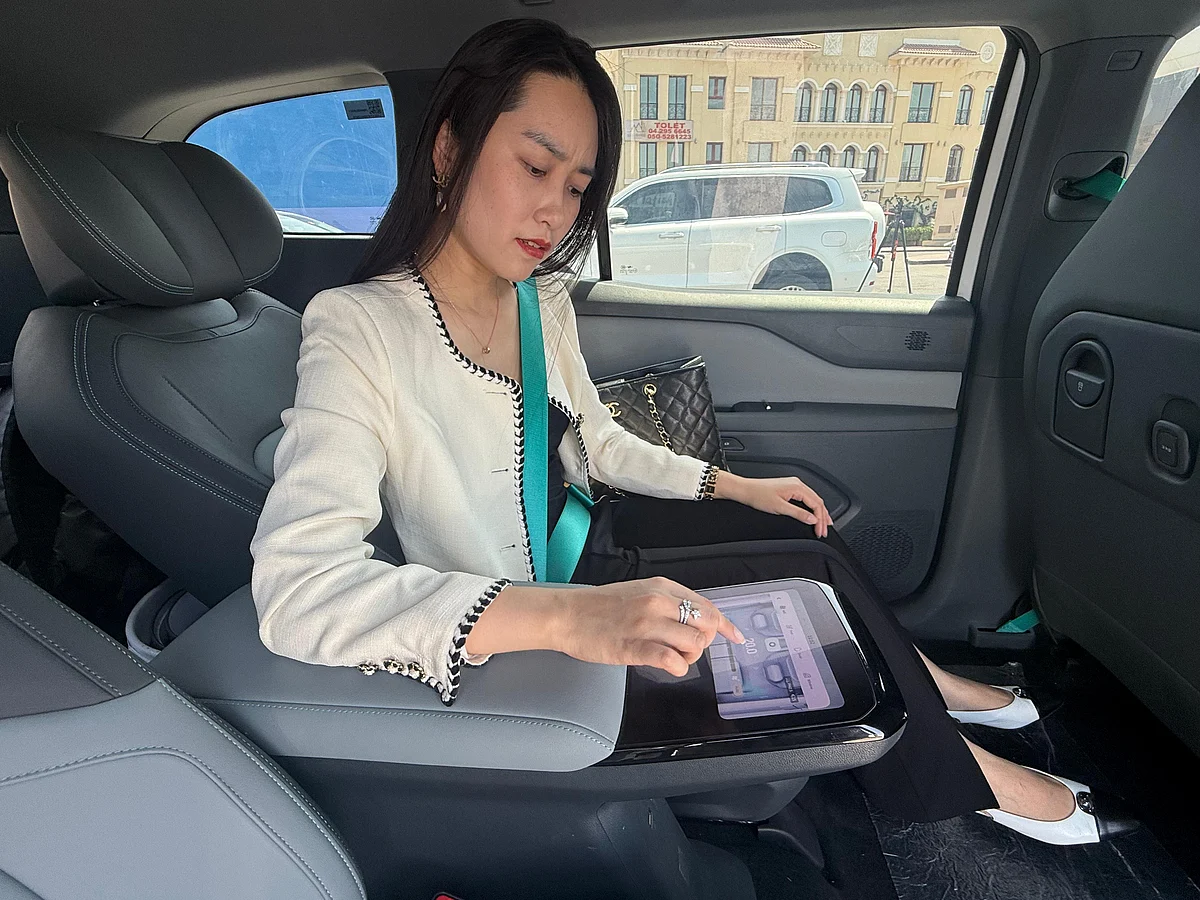
Elena from Baidu tests the massage feature. Photo: Angel Tesorero
In China, massages are voice-activated, while in Dubai they use a control panel in the rear seat.
Safety first
Zhang highlighted Apollo Go’s advanced technology and extensive safety record, boasting 200 million kilometers of safe driving and 14 million autonomous rides in China.
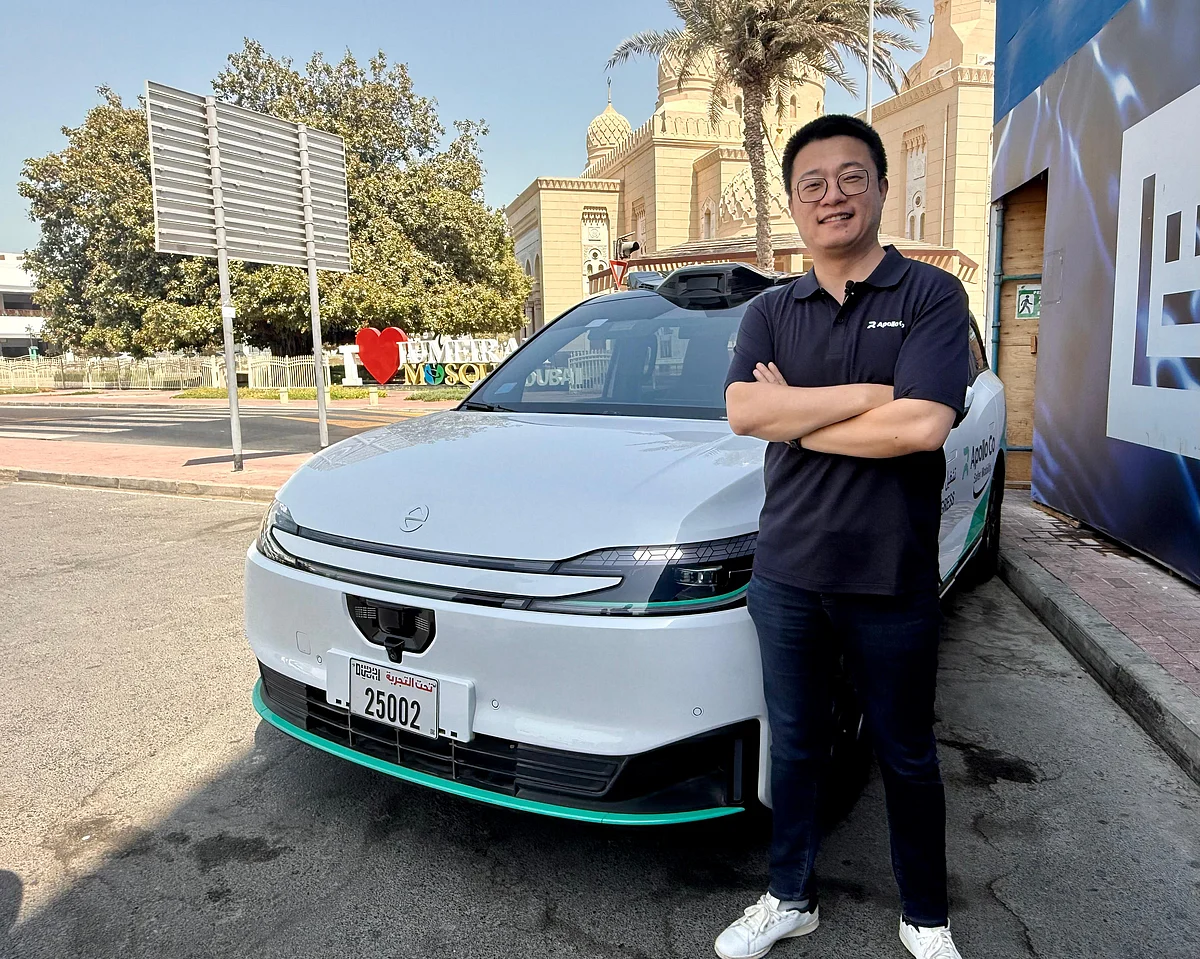
Liang Zhang, Apollo Go’s EMEA managing director. Photo: Angel Tesorero
With Level 4 autonomous driving, Apollo Go can function independently in most scenarios, featuring 1,200 TOPS of computing power and 38 sensors for environmental awareness.
Daily tests are conducted in Jumeirah, Zabeel, and Dubai Festival City. Zhang assured the taxis are robust enough to handle Dubai’s hot summers, having been rigorously tested in China’s extreme conditions.
The vehicle is manufactured by Jiangling Motors in China, with software tweaks for local adaptation. Zhang noted that roundabouts present a unique challenge compared to China.
‘Quite unnerving’
Emirati road safety expert Dr. Mustafa Aldah, who tested the taxi, found the experience unusual, noting the steering wheel’s rapid U-turns were unexpected.
He observed, “Lane changes in tight spaces might need algorithm adjustments to prevent potential passenger risks when doors open unexpectedly.”
For safety, Aldah suggested larger signage indicating self-driving mode, providing clear awareness to other motorists. He leads MA Traffic Consulting in Dubai.
Dubai on target
Aldah is optimistic about Dubai’s mobility future, aiming for 25% smart, driverless transport by 2030.
He believes that self-driving fleets can optimize road networks, reducing congestion caused by improper merging.
“Achieving 25% smart transportation by 2030 is the right gradual approach towards this vision,” Aldah concluded.