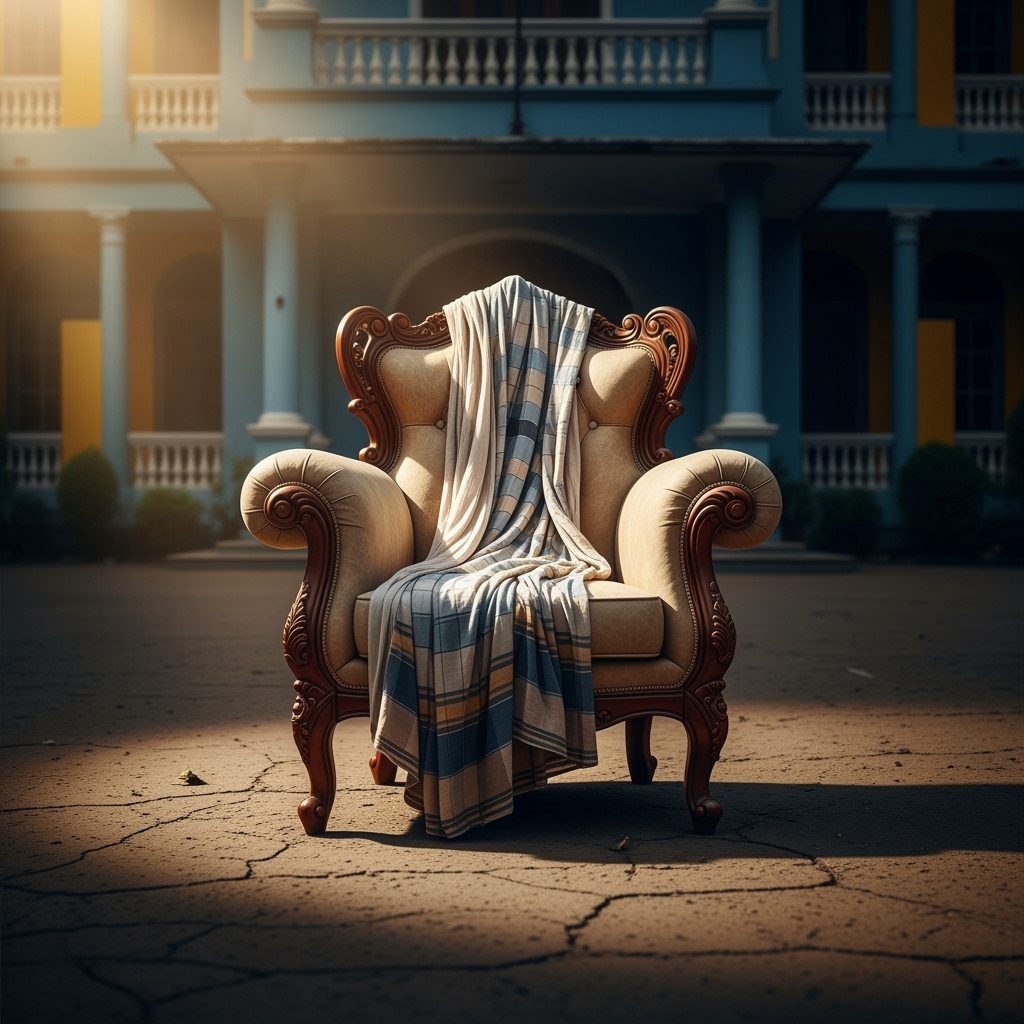
On Tuesday, Sri Lanka’s Supreme Court removed the last legal obstacle to evict former presidents from luxurious residences and revoke their privileges like luxury cars, bodyguards, and pensions.
President Anura Kumara Dissanayake’s left-wing administration introduced a bill to annul a 1986 law that granted opulent state housing and other benefits to former presidents and their widows.
This legislation aligns with Dissanayake’s strategy to enforce stricter austerity measures following the worst economic crisis in the nation’s history.
Parliament Speaker Jagath Wickramaratne announced that the Supreme Court dismissed all six challenges against the bill.
Wickramaratne informed parliament that the court ruled the bill could be approved with a simple majority, which the government comfortably holds with a two-thirds majority.
The ruling came after former leader Mahinda Rajapaksa’s refusal to vacate a luxurious Colombo residence despite multiple requests. His party was among those opposing the bill.
The 1986 law also entitled former presidents to luxury vehicles with government fuel, secretarial support, and security services.
When Dissanayake assumed office a year ago, Rajapaksa had 243 bodyguards, including 63 elite commandos and 23 drivers.
Earlier this year, the government reduced his security team to 60 and limited his vehicle fleet to three, including a Mercedes-Maybach and a high-end SUV.
Rajapaksa made no immediate comment, but an aide told AFP he would likely vacate the residence.
In 2021, as prime minister, Rajapaksa spent approximately 800 million rupees ($2.7 million) of public funds renovating the house.
The residence’s monthly rental value is estimated at 4.6 million rupees, over 150 times his official entitlement.
His younger brother, Gotabaya Rajapaksa, stepped down from the presidency in 2022 due to accusations of economic mismanagement and corruption, left a state bungalow after a brief stay post-resignation.
Two other former presidents, Chandrika Kumaratunga and Maithripala Sirisena, reside in government housing in Colombo’s upscale diplomatic area.
Many of these estates were originally constructed during British colonial rule for senior civil servants from London.
Late last year, the government significantly reduced security personnel for former leaders, saving taxpayers over 1.2 billion rupees annually.
Last year alone, the Rajapaksa brothers’ security cost the state over a billion rupees, according to government data.
Together, they governed Sri Lanka for a decade until 2015 and again from November 2019 to July 2022.