In the mist-covered mountains of Sri Lanka’s tea region, rescue teams were still retrieving bodies from the reddish-brown mud on Tuesday following last week’s cyclone, marking the island’s worst natural disaster in decades.
Disaster officials reported at least 465 fatalities, with 366 others missing.
Sri Lanka’s Air Force has been scouring the landslide-impacted areas, assessing the damage and delivering food and essential supplies to stranded residents.
Although the rain has ceased, the recovery effort has just begun.
As the first international journalist on a relief mission over the tea-producing region, AFP photographer Ishara Kodikara witnessed the extensive havoc caused as landslides obliterated everything in their path, including roads and vehicles.
Some house roofs protruded from the mud, while the rest of the structures were buried under the soil torrents unleashed by Cyclone Ditwah.
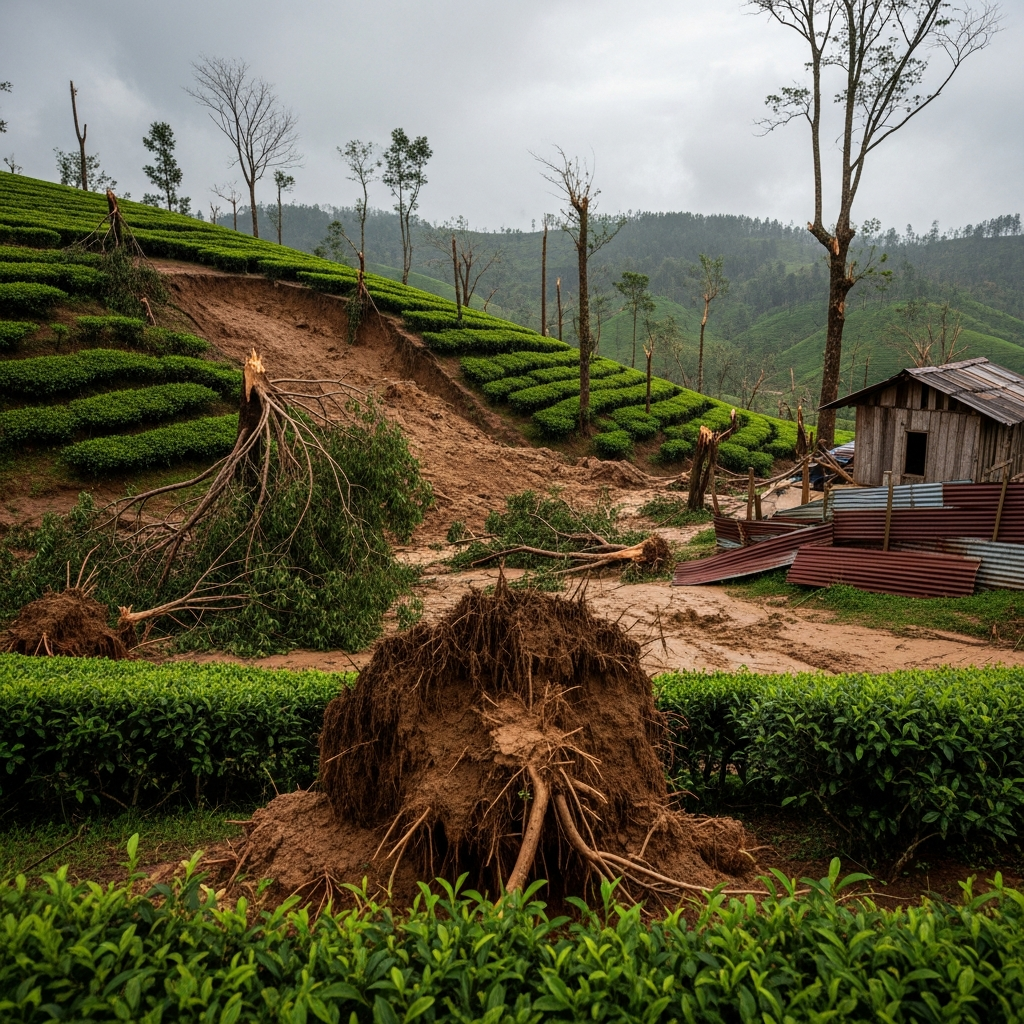
Ragged tears in the mountainsides exposed churned-up earth, with a few patches of lush vegetation still clinging nearby in stark contrast. Human life was absent in the devastated landscape.
In the central Welimada area, now inaccessible to heavy vehicles, rescuers retrieved 11 bodies from the mud on Monday and called for more assistance to find dozens more.
In some areas, entire slopes have been stripped away, leaving ochre scars cutting through the dense plantation greenery.
– Devoured by landslides –
The full damage to tea plantations, factories, and workers remains unclear, but local reports indicate the industry has suffered significantly.
What were once dense, continuous tea canopies are now wide channels of mud and debris.
The main road has been swallowed by landslides, buried under layers of mud, rock, and uprooted vegetation. Only a few remnants of tarmac hint at the road’s former location.
Authorities have prioritized reopening road access to the region, which is currently supplied by air.
Helicopters from neighboring India and Pakistan have also been deployed to evacuate tourists and the sick.
During the relief mission attended by AFP on Tuesday, the VVIP Bell-412 aircraft had its seats removed to accommodate food and other vital supplies.
It delivered water and dry rations to marooned residents of Nuwara Eliya, in the heart of the tea country, 100 kilometers east of Colombo.
Rescuers anticipate the death toll to increase as they regain access to areas cut off from power and communication for days.
The disaster is already the deadliest since the 2004 Boxing Day earthquake and tsunami that devastated Sri Lanka’s coastline.
This time, the entire country has been affected by landslides or floods.
President Anura Kumara Dissanayake has declared a state of emergency and appealed for international aid.