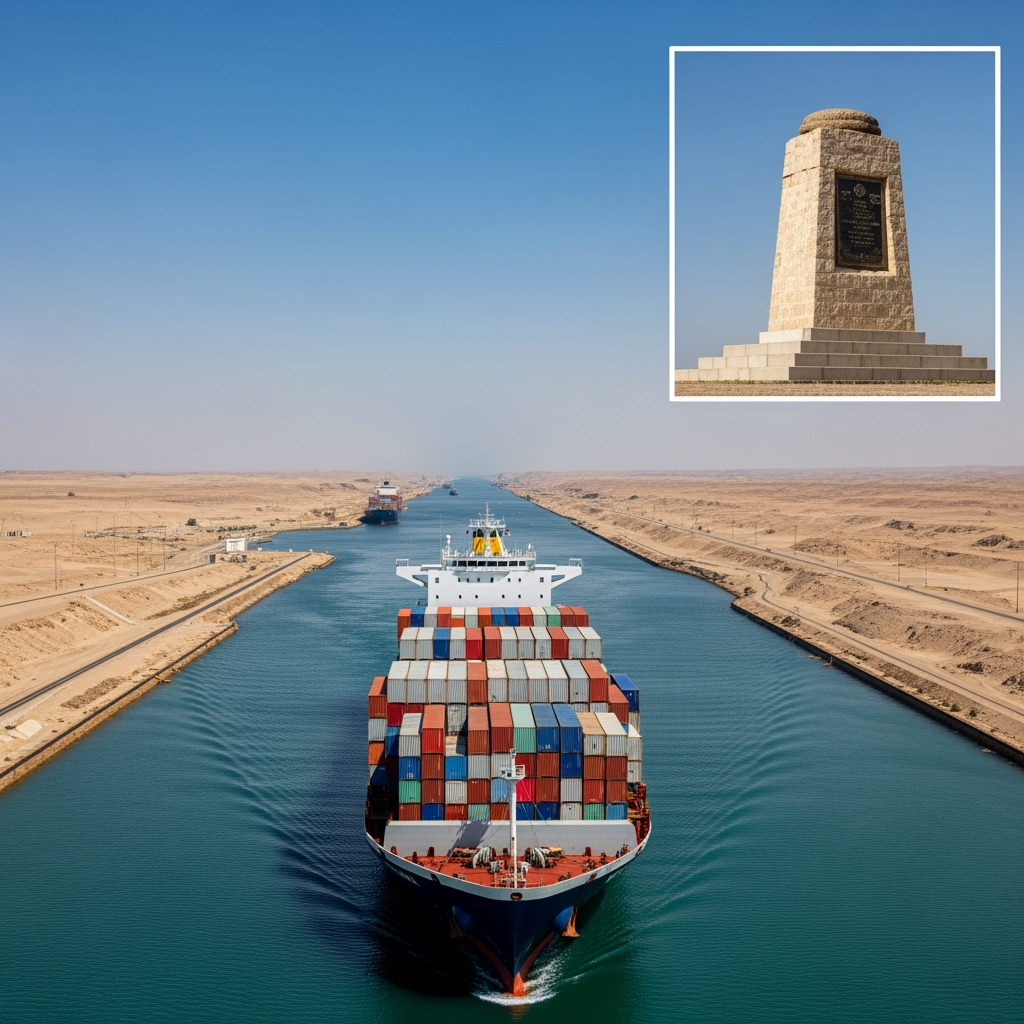
During the Suez Canal Authority’s celebration of the 69th anniversary of the canal’s nationalization, Rabie affirmed that “the Suez Canal is the most important maritime passage globally despite global conditions,” noting that “more than 1.1 million ships have passed through the canal over the past 69 years, with total revenues exceeding $153 billion.”
Rabie stated that “this self-achievement confirms the remarkable success of the national administration in maintaining the sovereignty of this vital and globally essential maritime passage,” adding that President Abdel Fattah el-Sisi continuously oversees the canal’s development projects, especially in the southern region, which has become a key hub for enhancing navigation.
The Chairman of the Suez Canal Authority emphasized “the achievement of sustainability for global supply chains, working according to international covenants and treaties that regulate safe navigation freedom, without compromising Egyptian sovereignty over the canal.”
The Chairman of the Suez Canal Authority stressed “the success of the Egyptian administration in maintaining the canal’s leading position through continuous development projects in the canal’s waterway, making it the shortest, fastest, and safest maritime passage.”
Admiral Rabie pledged “to exert efforts to continue the journey and preserve the status and position to which the Suez Canal has risen,” thanking all the authority’s employees and canal pilots. Following the nationalization decision, Britain filed a protest which Gamal Abdel Nasser rejected, on the grounds that nationalization was an act of Egyptian sovereignty, leading the Suez Canal Users Association to withdraw foreign pilots from the canal.