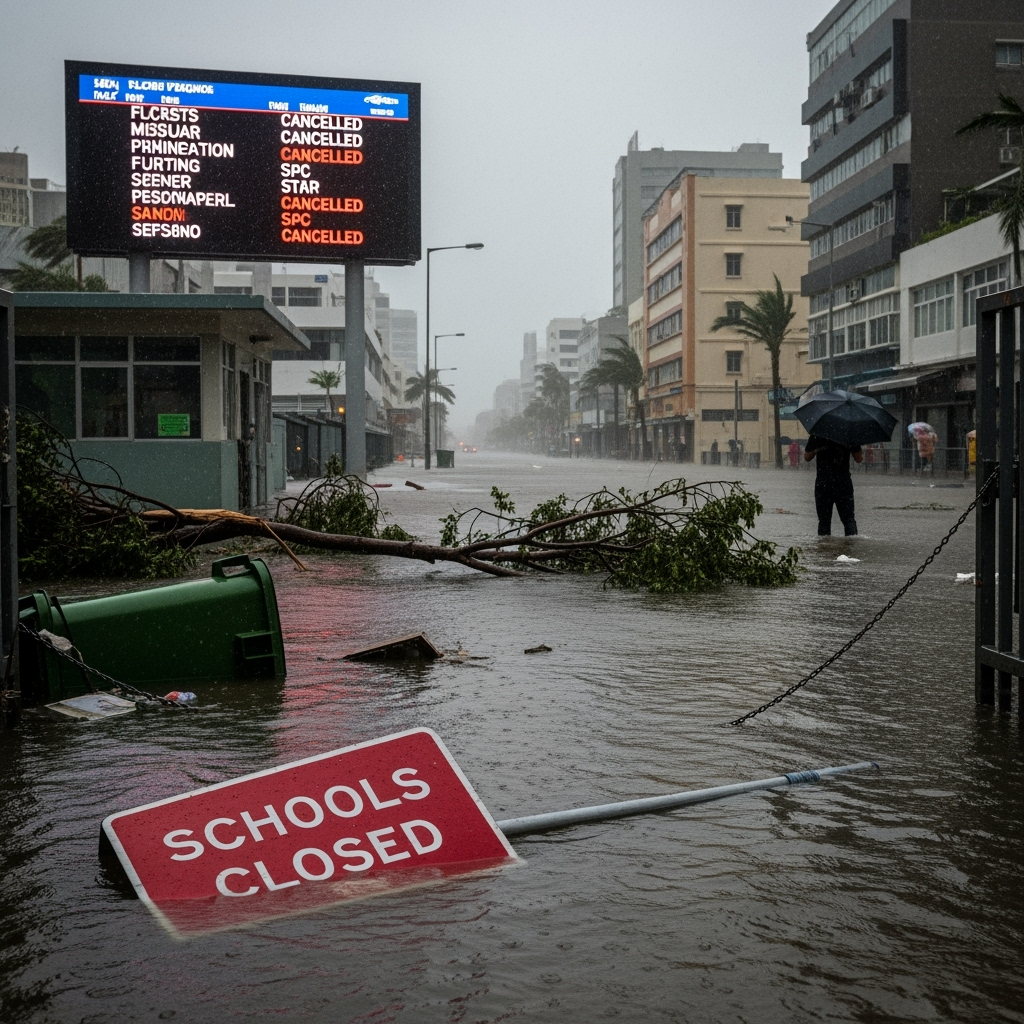
Hong Kong closed schools and canceled flights on Tuesday as Super Typhoon Ragasa approached the financial hub, bringing what officials described as one of the city’s most destructive storms in recent history.
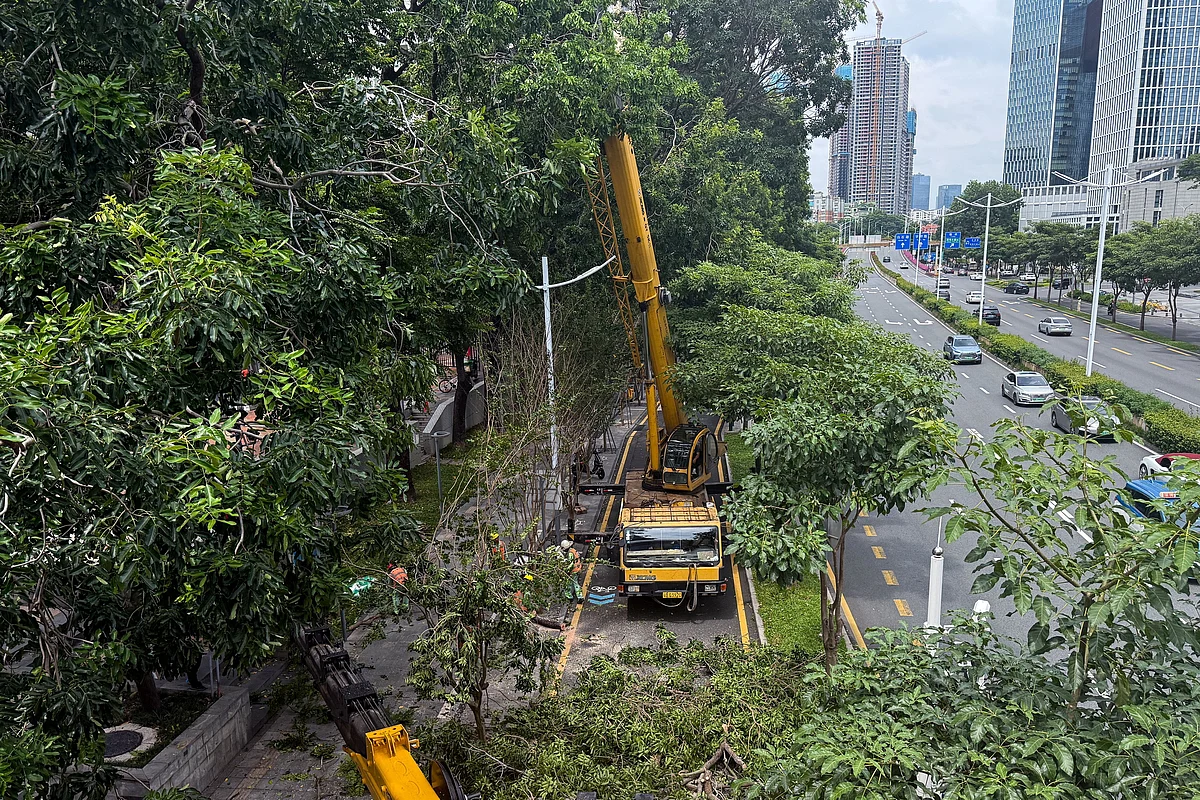
Workers trim tree branches along a street in preparation for Super Typhoon Ragasa in Shenzhen, Guangdong province, China, on September 23, 2025. — Reuters
The fierce storm posed significant dangers to lives and properties, prompting mainland Chinese authorities to shut down businesses and schools in at least 10 southern cities, impacting millions.
Ragasa had already uprooted trees, ripped roofs off buildings, and caused a deadly landslide in the northern Philippines, where thousands took refuge in schools and evacuation centers.
The super typhoon was generating maximum sustained winds of 220 kilometers (137 miles) per hour near its center, moving west across the South China Sea, according to Hong Kong’s weather service.
The Hong Kong Observatory issued its third-highest typhoon alert, T8, at 2:20 pm (0620 GMT) on Tuesday, stating that Ragasa “has a broad circulation with intense winds”.
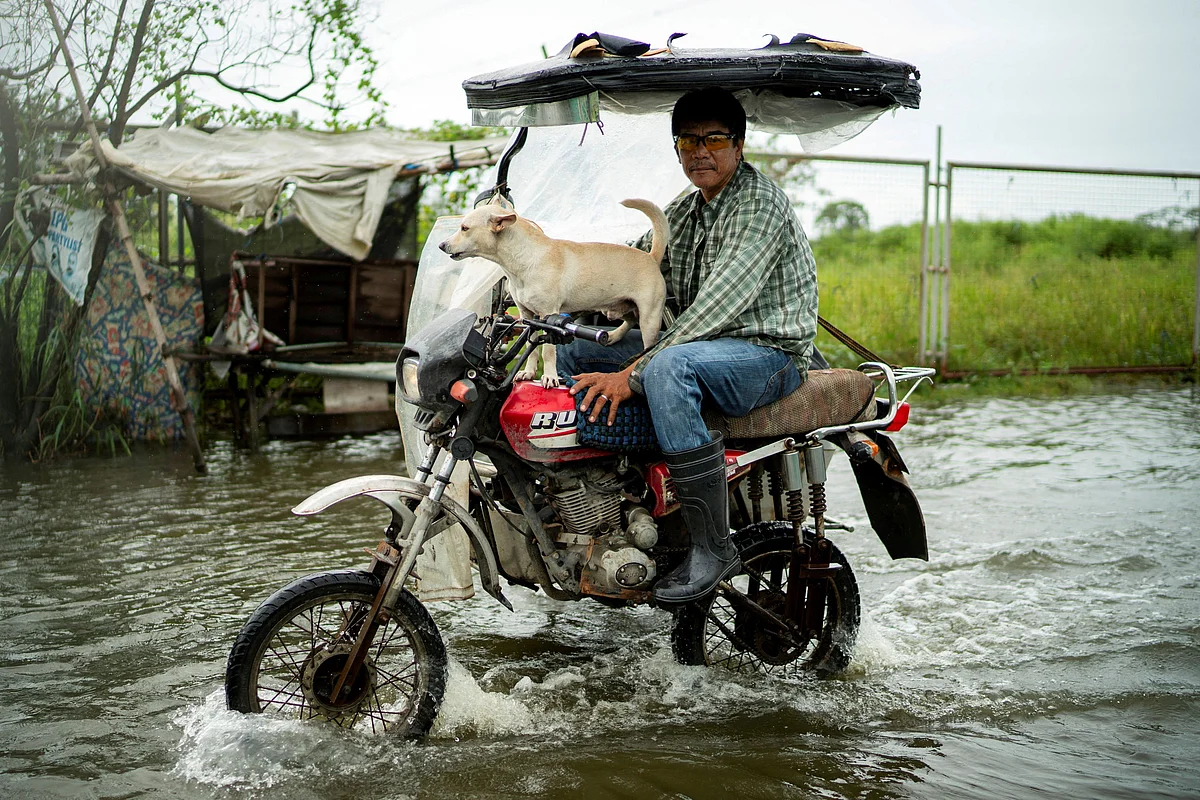
A motorist and a dog navigate a flooded street following heavy rains intensified by Super Typhoon Ragasa in Apalit, Pampanga province, Philippines, on September 23, 2025. — Reuters
“The weather is expected to rapidly worsen later today, with winds swiftly strengthening,” the observatory noted, adding that a “significant” storm surge could elevate water levels up to four meters by Wednesday morning.
Yang Lee-o, a 40-year resident of the seaside community of Lei Yue Mun, mentioned that government workers spent a day installing sandbags.
“Lei Yue Mun is hit hardest whenever there’s a typhoon or rainstorm,” said the 71-year-old, noting that water reached her thighs during a previous super typhoon.
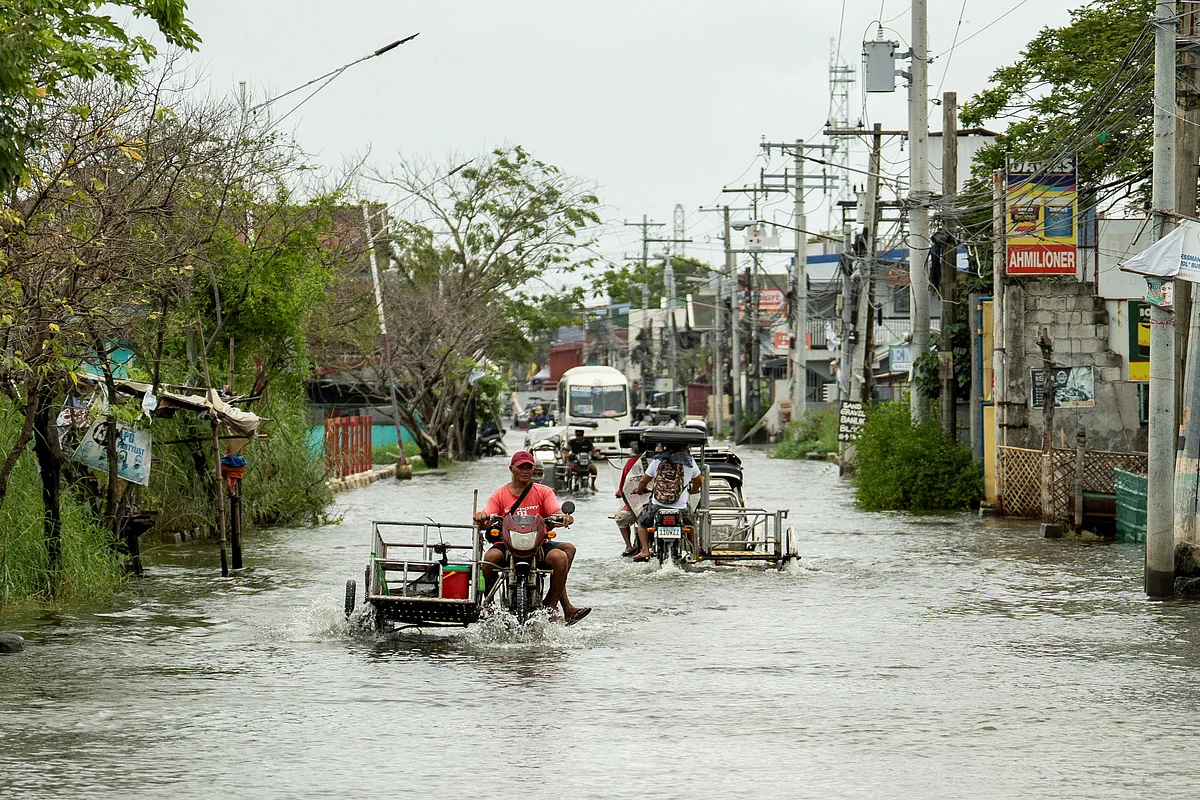
Motorists navigate a flooded street after heavy rains intensified by Super Typhoon Ragasa in Apalit, Pampanga province, Philippines, on September 23, 2025. — Reuters
Numerous workers erected barricades and elevated walkways, with some business owners relocating their inventory.
Hong Kong’s Deputy Chief, Eric Chan, previously warned that Ragasa posed a “serious threat” similar to the super typhoons of 2017 and 2018, which inflicted hundreds of millions in property damages.
Scientists caution that storms are becoming more potent as global temperatures rise due to climate change.
Hong Kong’s airport will remain operational, though “significant disruptions to flight operations” are expected from 6:00 pm (1000 GMT) Tuesday until Wednesday, according to the Airport Authority.
Over 500 Cathay Pacific flights are anticipated to be canceled.
Student Lilly Rober, 24, intended to travel to Japan but her flight was postponed.
“We had to book a new hotel here, which cost us extra, so we’re quite disappointed,” she told AFP at Hong Kong airport on Tuesday morning.
Thousands of workers hurried home Tuesday afternoon following the T8 signal announcement, with bus operators indicating reduced service later in the day.
Classes were suspended for Tuesday and Wednesday, and the Hong Kong Jockey Club canceled Wednesday’s horse-racing event.
Hong Kong’s stock exchange altered its rules this year to keep markets open during typhoons, with the operator informing Bloomberg News it was “closely monitoring” the situation.
Ragasa — named after the Filipino term for rapid movement — is forecasted to make landfall in central and western coastal Guangdong within 24 hours, stated the province’s emergency management bureau on Tuesday morning.
Shenzhen previously ordered the evacuation of 400,000 people.
Emergency management in the Chinese tech hub advised, except for emergency responders and essential personnel, “do not go out casually”.
Other Southern Guangdong cities implementing such measures include Chaozhou, Zhuhai, Dongguan, and Foshan.