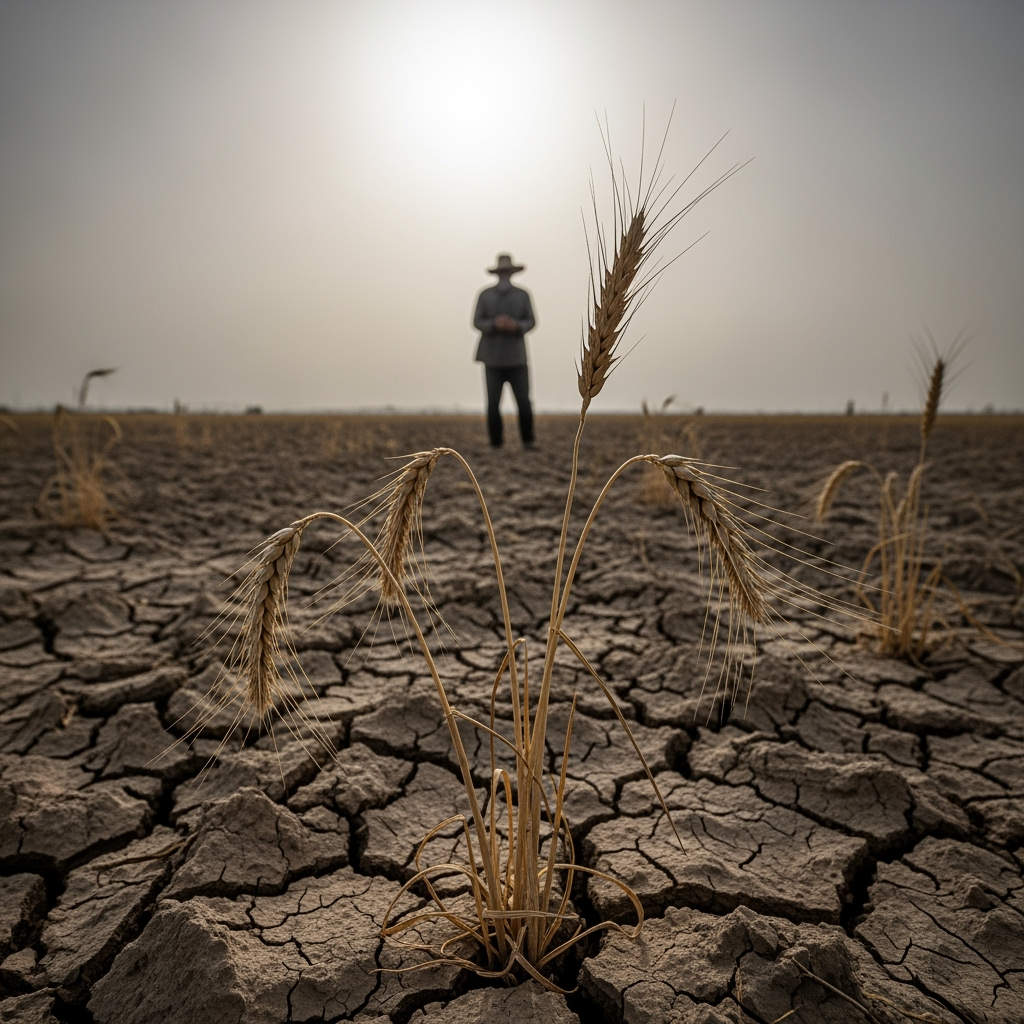
Syria is on the brink of a food crisis following the most severe drought in 36 years, which has cut wheat production by 40%, pressuring the financially strained government unable to make significant purchases.
According to the United Nations’ World Food Programme, nearly three million Syrians are at risk of acute hunger, although no specific timeline was provided.
The UN reports that more than half of Syria’s 25.6 million population is currently food insecure.
A June report by the UN’s Food and Agriculture Organisation (FAO) highlighted a wheat deficit of 2.73 million metric tonnes this year, enough to feed about 16 million people for a year.
This situation challenges President Ahmed Al Sharaa as his administration works to rebuild Syria after a 14-year civil war, which ended with Bashar Al Assad’s removal in December.
Wheat is Syria’s key crop, critical to a state-subsidized bread program, essential in daily life.
However, the government has been slow in attracting international support for large wheat purchases.
Interviews with a Syrian official, traders, aid workers, and industry sources reveal an urgent need for increased imports and financing to mitigate the looming shortage.
This season, only 373,500 tonnes of wheat have been acquired from local farmers, just half of last year’s amount, according to a Syrian official.
The government aims to import 2.55 million tonnes this year, but no major deals have been announced.
Thus far, reliance has been on minor private shipments, totaling about 200,000 tonnes, via direct contracts with local importers.
The information ministry did not respond to requests for comments.
“Half of the population faces drought-induced bread scarcity,” Toni Ettel, FAO’s representative in Syria, told Reuters.
Emergency aid has been minimal, including 220,000 tonnes of wheat from Iraq and 500 tonnes of flour from Ukraine.
‘The worst year’
Syria consumes around four million tonnes of wheat annually. This year, production is expected to drop to 1.2 million tonnes, a 40% decrease, as per FAO data.
“This year has been the worst since I began farming,” said Nazih Altarsha, with family land in Homs since 1960.
Abbas Othman, a farmer in Qamishli, part of Syria’s northeast breadbasket, reported zero harvest.
“We planted 100 donums but harvested nothing,” he told Reuters.
Only 40% of farmland was cultivated, much of it now ruined in key areas like Hassakeh, Aleppo, and Homs, FAO reported.
Farmers were encouraged to sell what they could to the government at $450 a tonne, well above market price, as an incentive.
“In a good year, I sell 25 tonnes to the government; this year, only eight,” Altarsha said, hoping for better rains in December.
Before the civil war, Syria produced up to four million tonnes of wheat annually, exporting about one million.
US policy shift
In May, President Donald Trump announced lifting sanctions on Syria to aid economic recovery.
The US Department of Agriculture forecasts Syria will need to import a record 2.15 million tonnes of wheat in 2025-26, a 53% increase.
Yet, the main grain agency has not revealed a new procurement strategy.
Wheat imports face payment delays despite sanctions being lifted due to financial issues.
While food wasn’t directly restricted by Western sanctions, banking restrictions hindered trade with Damascus.
Russia, a key wheat supplier and Assad supporter, has largely suspended shipments since December, citing payment delays and government instability.